Get Full Government Meeting Transcripts, Videos, & Alerts Forever!
Get email alerts on the Water Quality topic
No spam. Unsubscribe anytime.
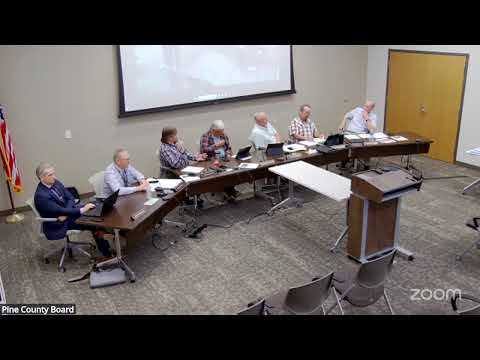
Pokegama Lake group launches nanobubble pilot, asks Pine County to aid permitting and funding
Summary
A Pokegama Lake Association pilot using nanobubble oxygenation was installed June 5 to address algae, muck and water‑quality impairments; association leaders asked the Pine County Board to advocate with the DNR and BWSR for permitting guidance and to consider funding support.
Kathy Nielsen, co-chair of the Pokegama Lake Association, told the Pine County Board that the association has installed a nanobubble pilot on the lake’s North Bay and will run the pilot through September to test whether the technology reduces algae, muck and internal nutrient loading.
Nielsen said the association raised more than $53,000 from more than 210 lake owners and businesses, matched by $50,000 from the association, to fund a $100,000 pilot. She said the group estimates a full-lake system at about $2.2 million and asked the board to “advocate with the DNR” and the Board of Water and Soil Resources (BWSR) to develop permitting protocols and to consider county funding partnership or assistance with a future lake improvement district.
Nut graf: Pokegama Lake (presented by speakers as the county’s second‑largest lake) has been listed as impaired for recreation and fish‑tissue mercury and other impairments in prior assessments. The lake association said conventional in‑lake treatments are costly or disruptive, and they brought nanobubble oxygenation—an aeration approach intended to oxygenate sediments and bind phosphorus—as a pilot to evaluate a nonchemical option for long‑term restoration.
Jonathan Morales of Moliere (the vendor/consultant on the project) described how nanobubbles differ from traditional aeration: because the bubbles are very small they remain in the water column longer and can deliver oxygen nearer the sediment, encouraging aerobic bacteria and changing phosphorus chemistry so phosphorus becomes bound rather than released from sediments. Morales said the vendor is using concentrated oxygen and locally serviceable pumps and compressors; the only proprietary component is the nanobubble generator itself.
Speakers showed a recent case study where an adjacent lake treated with nanobubbles cleared while an upstream control remained covered with algae. Morales said nanobubble systems can reduce algae, reduce fish kills, mitigate odors and help “digest muck” by shifting sediment chemistry, though he cautioned reversal of decades of nutrient accumulation takes time and monitoring.
Board members and staff asked technical and regulatory questions. A commissioner asked how soon results could appear; the presenters said visible changes may begin within a year but sediment oxygen demand and full lake recovery can take longer. Nielsen said the association is treating the North Bay first because it is one of the most impaired areas and has a cooperating private landowner willing to host equipment.
The association described additional steps alongside the pilot: a subwatershed assessment to identify upland practices, a homeowner shoreline grant program, and coordination with the Snake River Watershed Partnership and the Soil and Water Conservation District. Nielsen asked the board to support permitting discussions and to consider funding help, and she invited commissioners to a July 24 media day at the Pokegama Lake Association building.
Ending: The board heard the presentation and discussed next steps; presenters said they will collect scientific monitoring data from the pilot and submit results to the Minnesota DNR. The association said a full-lake rollout could take about two years, contingent on regulatory permitting and additional funding.