Get Full Government Meeting Transcripts, Videos, & Alerts Forever!
Get email alerts on the Council Rules topic
No spam. Unsubscribe anytime.
Freeport council adopts revised meeting rules after debate over agenda access and speaking time
Summary
The Freeport City Council approved ordinance 2025-37 updating council rules, including allowing two aldermen (with a supporting memo) to place items on the agenda and limiting member remarks to two turns of four minutes each after a contentious debate and public comments about silencing.
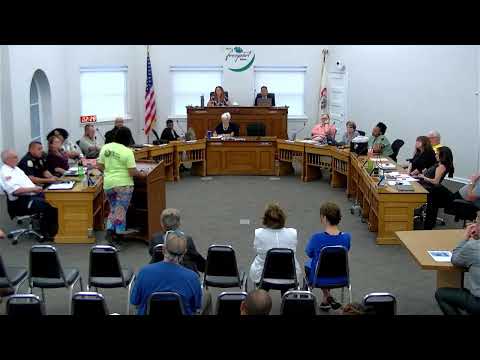
The Freeport City Council adopted Ordinance 2025-37 on second reading on a 5-3 vote, changing the council’s rules for placing items on the agenda, the order of business and member speaking time.
The ordinance, as amended, lets two aldermen place an item on the agenda provided they supply a supporting memo; it also updates the "order of business" to include informational and ceremonial presentations and sets each alderman’s two speaking turns at up to four minutes unless extended by majority vote.
Why it matters: The changes alter how individual council members can put items before the council and how meetings are structured. Supporters said the revisions clarify long-practiced procedures; opponents said the changes threaten minority voices and were not sufficiently discussed before being put on the agenda.
Attorney Zito summarized the proposal at the start of the discussion: “As proposed, there was a change that said that it would require a majority of the aldermen to place an item on the agenda. Alderman Johnson proposed to change that language to say that 2 aldermen could still place an item on the agenda provided that they provide a, a memo, that kind of explained the reason for the, agenda item.”
Alderman Johnson moved the amendment to let two aldermen submit agenda items with a memo; the council approved that amendment 6-2. The council then voted to update the order of business and to set member speaking turns; after negotiations from an initial two-minute proposal Johnson and others agreed to four minutes and that change passed 6-2. The full ordinance as amended passed 5-3.
Debate and public reaction: Public commenters and several aldermen framed the vote as part of a larger conflict over representation and free speech. During the public-comment period, several speakers from the Fifth and Third wards criticized what they described as efforts to limit aldermanic authority and silence dissenting voices. Wendy Pearson told the council, “We voted them in. They’re our voice,” and urged council members not to take that power away.
Alderman Stacy said the proposal would “suppress council from speaking” and criticized how the ordinance was introduced and discussed. Other council members urged use of existing channels—phone calls, weekly meetings and the committee of the whole—to address questions before placing items on the formal agenda.
What changed in the ordinance: The adopted version (1) replaces a majority requirement with a two-alderman threshold for placing agenda items when accompanied by a memo; (2) inserts “informational presentations” and “ceremonial presentations” into the order of business to reflect current practice (proclamations, awards, swearing-ins); and (3) sets a time limit of four minutes per speaking turn for aldermen and allows a majority vote to extend time.
Implementation and next steps: The changes take effect as the ordinance is now adopted. Council members discussed practical items—how memos should be formatted and what constitutes an informational presentation—but did not adopt further procedural rules at the meeting. Attorney Zito said he would incorporate the amendment language into the ordinance text for the final version.
The vote: Amendment to allow two aldermen with memo — approved 6-2; amendment updating order of business — approved 6-2; amendment changing member speaking time to four minutes — approved 6-2; final ordinance adoption — approved 5-3.
Background: Council members said the package was drafted to update an older code that reflected a prior council structure and to codify practices already in use. Opponents said portions were introduced without adequate prior discussion and that the changes would chill minority viewpoints. Public commentators who spoke on the topic urged the council to protect aldermen’s ability to represent ward constituents.
Looking ahead: Several aldermen asked for clearer internal guidance on memo content and the mechanics of placing items on the agenda; those operational clarifications were not formalized at the meeting and may be considered later.