Get Full Government Meeting Transcripts, Videos, & Alerts Forever!
Get email alerts on the Public Safety Dog Control topic
No spam. Unsubscribe anytime.
State Rep. Kevin Weller outlines House Bill 247 to rewrite Ohio dangerous-dog law
Summary
State Representative Kevin Weller told Newark's safety committee that House Bill 247 ("Avery's Law") would rewrite Ohio Revised Code section on dogs, allow immediate seizure after serious incidents with a mandated probable-cause hearing within 10 days, raise penalties, and add new owner requirements including insurance and confinement rules.
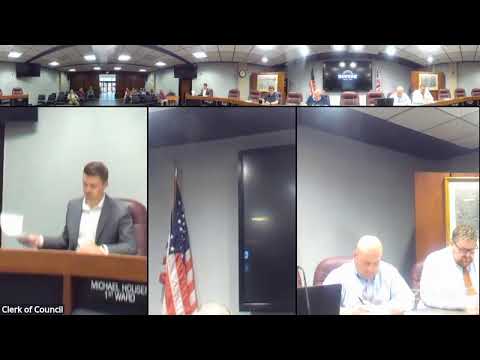
State Representative Kevin Weller told members of the Newark City Council safety committee on Monday evening that House Bill 247, known locally as "Avery's Law," would comprehensively rewrite the state dog-control code and change how dangerous and vicious dogs are handled.
Weller said the bill would make the Ohio Revised Code section on dog control more "user friendly," allow dog wardens to immediately seize dogs after a serious incident and require a probable-cause hearing within 10 days, and raise penalties for owners who repeatedly fail to contain designated dogs. "We're not just taking people's dogs and making unilateral decisions. There's a process that's put in place for this," Weller said.
The bill, Weller said, would require euthanasia when a dog causes death or certain very serious injuries, remove judicial discretion in some of those cases, and increase mandatory owner responsibilities: higher designation fees (from $50 to $100), mandatory liability insurance for owners of designated dogs, stronger fencing standards the dog warden can reject, and a requirement that designated dogs be confined indoors when an invitee or guest is present. The legislation would also require owners to notify veterinarians and trainers when a dog has a dangerous or vicious designation.
Committee members and audience speakers pressed Weller on definitions and enforcement. Weller described how the bill defines "serious physical injury" and distinguished the three designations used in the bill: nuisance, dangerous and vicious dogs. He said a dog that causes injury by physical contact can be designated dangerous; a vicious dog kills a person, causes serious physical injury, or engages in a dangerous act after prior designation. On enforcement, Weller said local practice varies: counties with dog wardens typically handle cases, some counties assign dog-control duties to the sheriff, and the bill leaves primary enforcement to local authorities while adding a small misdemeanor penalty for officials who fail to enforce certain sections.
Audience members raised questions about whether owners could recover veterinary or other losses in civil court; Weller said that civil remedies were not changed by the bill. He said the bill has gathered support from prosecutors' associations, the American Kennel Club, Nationwide Children's Hospital and others, and that he expected further committee action the next day and hoped for a floor vote later in the week. "I would like to see this across the finish line by the end of the year," he told the committee.
No vote or formal action on the legislation was taken by the safety committee; Weller's appearance was an informational briefing.
The discussion highlighted local concerns about enforcement capacity and reporting: committee members and Weller noted that many bites are not reported and that enforcement resources and county practices vary across Ohio.