Get AI Briefings, Transcripts & Alerts on Local & National Government Meetings — Forever.
Young County tables plan for 14‑spot RV area at Fort Belknap after neighbors raise concerns
Loading...
Summary
Commissioners discussed using hotel-occupancy tax dollars to build a 14‑space RV area across from Fort Belknap but took no action after residents voiced worries about utilities, long‑term use and neighborhood impacts.
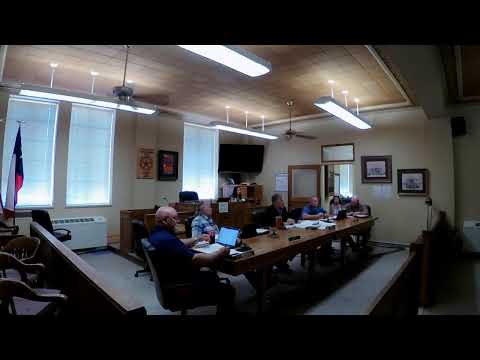
Young County Commissioners discussed plans to use hotel-occupancy tax dollars to build a 14‑space RV area across from Fort Belknap but did not vote on the proposal and tabled it for further planning.
Commissioner/County presenter Mister Shirk opened the discussion, saying the county had purchased land across the street from the Fort Belknap grounds and "the idea had been brought up that we, use the hotel occupancy tax money dollars to fund a 14 spot RV space" that could be rented for short stays around events. He said the idea was "to move the RVs from inside the grounds for historical, aesthetic to the outside of the park," and described the conversation as a planning stage.
The conversation drew multiple nearby residents who said the proposal raised practical and neighborhood concerns. One former caretaker and several residents pointed out that existing RV hookups inside the fort are limited: "Inside the park RV spots are minimal — electricity, no water, and no sewer," said a resident. Neighbors urged the court to consider placing additional hookups adjacent to the fort caretaker's house to improve oversight and reduce the risk of long‑term occupancy.
Speakers repeatedly emphasized uncertainty about utilities and maintenance costs. A resident noted water and electric reliability problems in the area and asked whether the court had done a full engineering or utility study. Shirk replied the county had not yet obtained bids and was still in a planning phase: "We haven't even got a bid on that. We're still on the plan. I mean, we haven't bid out yet."
Residents also warned about the risk that short‑term allowances could evolve into long‑term occupancy. One community member described how short‑term stays can turn into permanent ones: "Somebody's gonna move in there, take the wheels off of their RV, and say, no. I haven't broke. I can't move." Others pointed to nearby examples where unmanaged camping had caused problems.
Court members and speakers framed the proposal as a tourism and revenue effort: Shirk said the intent was to generate county‑wide economic activity — gas, restaurants and retail — rather than just revenue for the fort. Commissioners also noted there are an estimated 75 to 100 RV campers per year who currently use the fort area.
The court emphasized the discussion was for planning and input only. "We are in the planning and discussion stage, and that's why we're here today," Shirk said, adding that the court was tabling the item and would not vote at the meeting. Commissioners asked staff to collect more information on utilities, placement alternatives (including inside the park near the caretaker), maintenance needs and community notification before returning the item for decision.
Next steps outlined by the court included gathering bids, engaging utility providers, further neighborhood outreach and returning with more detailed cost and operational plans. The item was tabled for further study without a vote.
Ending: The court did not adopt any ordinance or contract. Commissioners asked staff to pursue engineering and cost estimates, consult Fort Belknap Electric and water providers, and continue neighborhood engagement before bringing a formal proposal back to the court.