
Johnson County commissioners defer body-camera purchases pending November public-safety tax outcome
Get AI-powered insights, summaries, and transcripts
Subscribe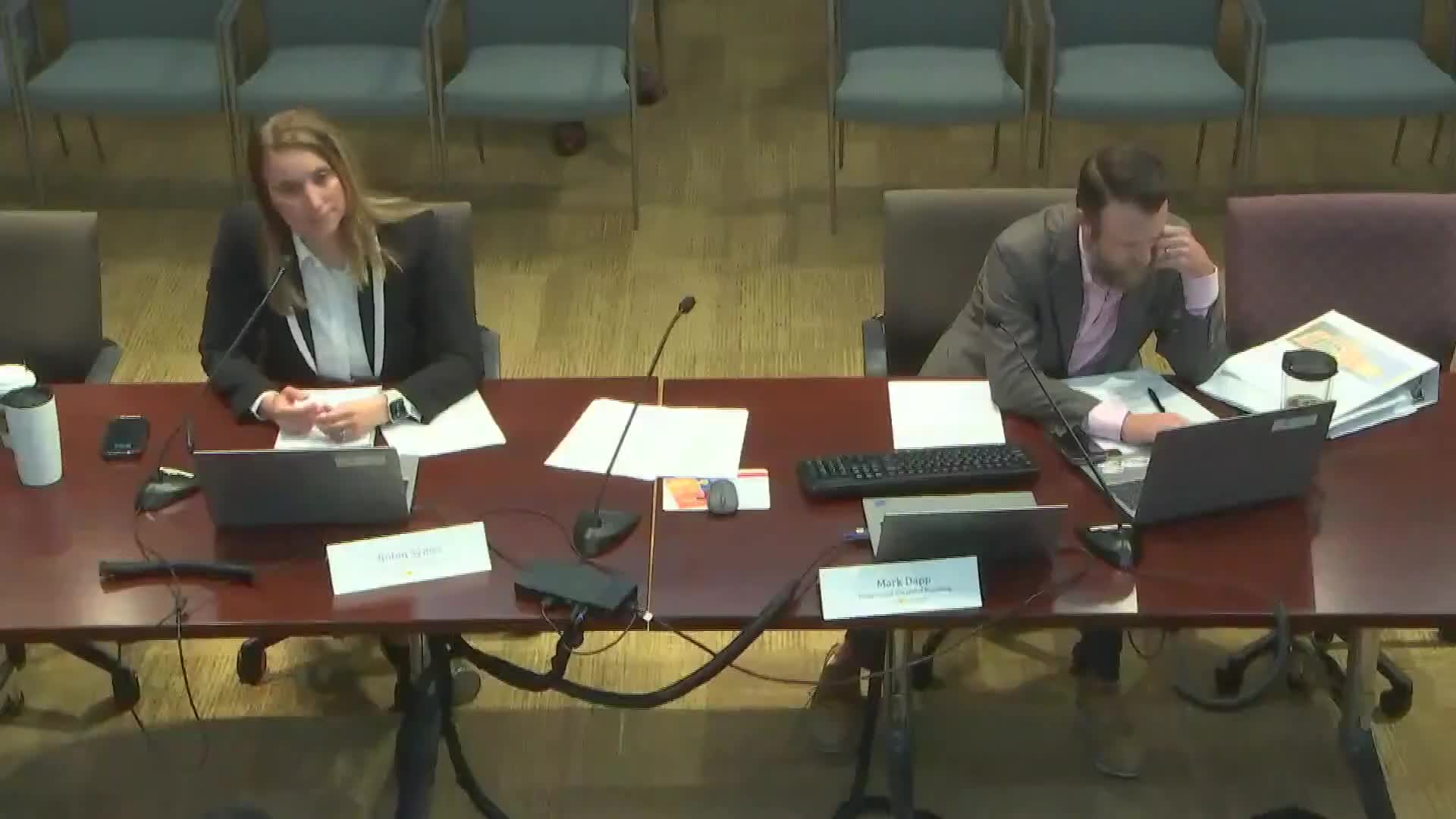
Summary
Johnson County commissioners discussed funding body cameras for corrections and MEDACT and agreed to leave the equipment requests unfunded in the FY2026 budget until after the November public-safety sales tax vote; staff said revised assessed valuations may free up additional funds.
Mike Kelly, chair of the Board of County Commissioners for Johnson County, opened a continued committee meeting on the FY2026 budget by asking the board to revisit items on the ‘revisit’ list, including a request for body cameras for corrections and MEDACT.
The body-camera requests were discussed as part of a larger conversation on public safety funding. Mark Dapp and Robin Simes of the budget department told the commissioners revised assessed valuation numbers were likely to be released that day or the next, and that those valuations could produce “a few 100,000” dollars of additional capacity that might allow the county to keep a flat mill levy.
Mister Sullivan, the corrections director, described body cameras as “a strategic investment in our program so that we could…increase public…safety for our officers, increase transparency,” and said footage would be used for quality assurance and training. Commissioners repeatedly framed the purchases in the context of a proposed public-safety sales tax renewal on the November ballot: if voters approve the sales tax, the county could use reserves for 2026 purchases and repay those reserves with the sales-tax revenue beginning in 2027, budget staff and other presenters said.
Several commissioners expressed support for the cameras but said spending decisions should wait until after the ballot measure. Commissioner Shirley said the cameras would be “good for training, safety” and that she was “100% for this,” while Commissioner Allen Brandt urged patience and a November revisit. Chair Kelly summarized the approach: the body-camera requests remained in the revisit list but were unfunded in the current budget; the board agreed no motion was necessary and that staff could bring back an agenda item to purchase cameras if the sales tax passes.
The board did not adopt any appropriation for body cameras at the meeting. Budget staff said they could present a purchase agenda item shortly after election results if the sales-tax renewal passes and the board chooses to obligate reserves in 2026 and reimburse them with 2027 sales-tax receipts.