
Solid waste director reports transfer‑station fire risk tied to batteries, C&D capacity strong after expansion permit
Get AI-powered insights, summaries, and transcripts
Subscribe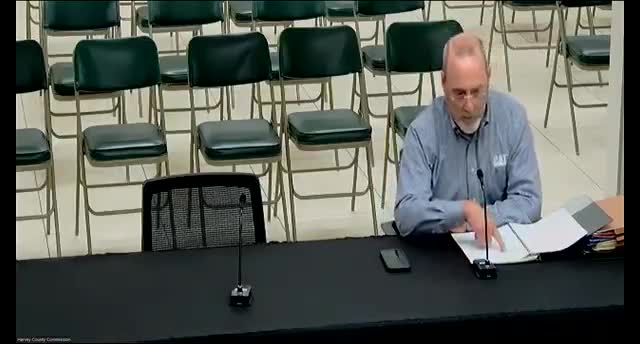
Summary
Solid Waste Director Justin Blaine reported May 28 that transfer‑station recycling operations passed inspections, the C&D cell expansion increased site life to roughly 60 years and that lithium‑ion batteries present an ongoing fire risk; he recommended capital planning for the compactor and proposed supplemental maintenance funding.
Harvey County Solid Waste Director Justin Blaine told the Board of Commissioners on May 28 that the county’s transfer station and C&D operations are stable but that new hazards and equipment pressures require focused capital planning.
Blaine said the county completed permit work and received KDHE approval for the C&D (construction and demolition) cell expansion; preliminary volume calculations indicate roughly 60 years of remaining capacity given current inflows. He also reported diversion numbers: staff picked 887.29 tons of C&D for reuse and recycled about 108.7 tons of metal from the tipping floor in 2024.
But Blaine warned that lithium‑ion batteries are an emerging and serious fire threat in both recycling and landfill settings. After a recent transfer‑station trailer fire, he said thermal‑imaging detection and active suppression options are being explored — but those systems are expensive and complicated because the recycling building is not climate‑controlled. "This could we could've lost the whole building," he said of the recent small fire; staff and the fire department contained it, and damage was limited, he reported.
On equipment and budgeting, Blaine proposed a supplemental to increase equipment‑repair funding because routine repairs and warranty work often exceed current allocations. He also confirmed the department’s plan to acquire a new semi trailer this year (delivery expected soon) and to continue saving in the capital improvement fund for a planned compactor replacement in 2027 and a bulldozer in 2029. He emphasized the department’s strategy of spreading equipment purchases over multiple years to avoid bonding for short‑lived items.
Blaine said the department is evaluating an option to do its own refrigerant and appliance evacuation (to capture refrigerants and recycle metals), which requires certified training but could add service offerings and reduce vendor costs. He noted that metal and pallet salvage diversion is saving tipping fees by reducing waste sent to Reno County.
Commissioners asked about the capital fund balance and the trade‑cycle for semis; Blaine said the county runs a two‑year rotation plan for semis (three trucks on the road in rotation) and trades them to keep resale value. He said he would provide the precise capital fund balance on request and noted that special‑waste projects in a given year can produce net revenue that is often transferred into the capital fund.
Blaine recommended continued investment in safety, preventive maintenance and a targeted truck/equipment replacement schedule so the county can avoid service interruptions and larger emergency purchases.