
Harvey County planning director seeks legal funds to tackle long‑standing zoning violations, begins zoning code update
Get AI-powered insights, summaries, and transcripts
Subscribe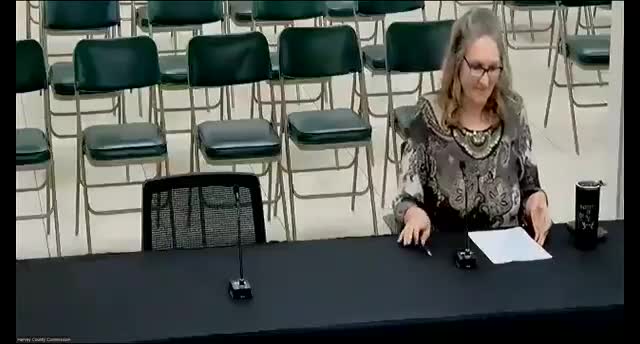
Summary
Planning Director Karen reported the county is updating its zoning regulations and is requesting supplemental legal counsel funding to pursue long‑standing enforcement cases on properties in violation of zoning, sanitation and floodplain rules.
Harvey County Planning, Zoning and Environmental Director Karen presented the county’s proposed department budget on May 28 and asked commissioners to approve a supplemental for legal counsel to pursue long‑standing zoning violations and support a major rewrite of zoning regulations.
Karen said the office enforces permit and setback requirements, oversees well and septic permits and conducts environmental inspections related to property sales. She told commissioners the planning commission and the board of appeals are currently the same body by state statute and that a major undertaking is now under way: updating zoning regulations to ensure compliance with state statutes and to modernize the county code. "It will require legal counsel to overview the compliance to the state statutes," she said.
A primary reason for the requested supplemental is enforcement. Karen described multiple properties with violations — including large accumulations of salvage vehicles, pallets and debris and properties in floodplain with unpermitted salvage — some of which have existed for a decade and resisted prior corrective efforts. "Some of those violations have been there for 10 years," she said, and requested additional legal expertise in Wichita to bring nuisance and code enforcement matters to court when necessary.
The director also explained recent fluctuations in planning fee revenue: a fee schedule change to start charging for lot splits produced greater fee receipts in 2024 compared with prior years when lot splits were not charged. She said newspaper legal notice costs and water‑analysis lab fees are line items that vary by volume and external rate changes.
Karen described operational details of the planning commission — reimbursed for mileage and occasionally a dinner or gift certificate when budgets allow — and said the office will continue permitting and inspections for sewer, well, and land‑use activities. She also said much of the department’s work is driven by state statute because Harvey County is zoned but does not have building codes.
Commissioners asked for examples of violations; Karen cited properties with dozens of vehicles and heavy debris, and said agricultural exemptions limit enforcement in farming areas. She also noted complexities when municipal extraterritorial jurisdiction applies to subdivisions and how cities sometimes require higher construction standards or annexation for rural subdivision proposals.
Karen asked the commission to approve the supplemental legal funds and to support completion of the zoning rewrite. "If we have legal counsel in Wichita who primarily does zoning cases, it would help out to have some legal funds to be able to address some of those long term violations and start being at having time someone who has time to take those to court," she told the board.