Wyandotte County officials say personnel costs threaten 2026 budget under revenue-neutral option
Loading...
Summary
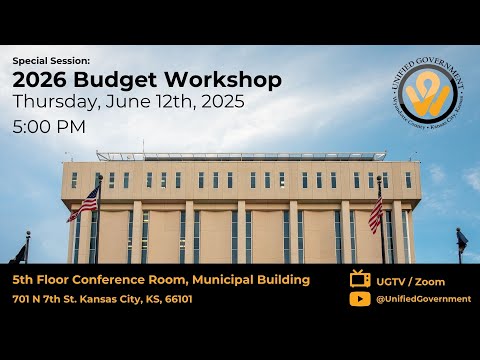
At a June 12 special budget workshop, Unified Government staff presented personnel data and revenue scenarios showing that keeping property tax revenue flat (revenue neutral) would create multi‑million dollar shortfalls in both county and city general funds unless spending or revenues change.
Wyandotte County officials warned at a June 12 special budget workshop that personnel costs make a revenue‑neutral path for 2026 unsustainable without further cuts or additional revenue.
County Administrator David Johnston, presenting the budget overview to the Board of Commissioners, said staff’s forecast shows the county and city could face multi‑million dollar deficits if property tax revenue is kept flat. “We are not getting more revenue to cover all that,” Johnston said, describing growing demands for services and limits on expected valuation growth.
The warning followed a human resources presentation by Renee Ramirez, director of human resources, and a budget analysis from Reginald Lindsay, unified government budget director. Ramirez told commissioners the unified government employed 2,123 people as of June 1 and had about 305 unfilled positions — roughly a 13% vacancy rate. She noted large departments’ vacancy snapshots: Police 463 filled (about 11% vacancy), Fire 488 filled (about 1% vacancy), Public Works about 217 filled (about 18.7% vacancy). Lindsay and budget staff showed models that compared revenue scenarios (0%, 3%, 5% property tax growth and a “fully fund personnel” model) and the resulting fund balances.
Those models used the staff assumptions presented in the meeting. On the county general fund staff projected 2025 revenues of about $85 million and expenditures of about $87.3 million, leaving the fund balance lower than expected; in a revenue‑neutral (0% growth) 2026 scenario staff showed the county would need roughly $9.3 million in cuts to balance the budget. On the city general fund staff showed a potential $7 million shortfall under a 0% property‑tax‑growth scenario. Staff told the commission that fully funding personnel without other changes would require increases in property tax revenue on the order of the high teens (staff modeled a 17% county / 21% city increase to reach structural balance in the scenarios shown).
Staff also quantified personnel cost components. Lindsay said annual wages and salaries for the current workforce were about $168 million as of June 11; total employer personnel costs including employer retirement and payroll taxes rise to about $204 million. Health‑benefit budgeting staff described averages of about $24,000 for an employee with family coverage and about $12,000 for single coverage. Turnover was presented as roughly 4.31% year‑to‑date (benchmarked against a national Mercer average of about 13.5%), and staff described hiring spikes in 2023 that changed prior budget trends.
Human resources described steps already taken and recommended near‑term actions. Ramirez said the county administrator had imposed a 90‑day hiring pause effective May 20, 2025; HR removed about 32 job postings from the recruitment website and is meeting with departments to review position inventories. Staff said they are evaluating sign‑on, referral and retention bonuses, pursuing reclassifications where possible, and targeting a staffing inventory that matches 2024 levels in many departments. Michael Peterson, deputy budget director, clarified that the budget scenarios shown assume current filled positions and do not assume filling all 305 open positions.
Budget and HR staff outlined additional measures under consideration, not formal decisions: continuing the hiring pause through the end of 2025, evaluating vacant positions for elimination or freeze, identifying separation payout dates to delay hiring until payouts occur, and consideration of pausing cost‑of‑living adjustments (COLAs) for nonunion employees in 2026 (staff said they could not unilaterally change negotiated union contracts). Debbie Johnson, deputy chief financial officer, warned the commission that without adjustments the county’s cash‑basis ending fund balance in the staff model for 2026 would be negative about $4.3 million.
Commissioners pressed staff for options and timing. Commissioner McCain expressed strong concern for employees, saying he was “disappointed to the point where I’m pissed” about the prospect of job reductions and urging clearer recommendations. Commissioner Davis emphasized the political and service tradeoffs inherent in revenue‑neutral budgeting and asked whether the board could both honor voted labor agreements and remain revenue neutral; staff answered that maintaining current negotiated raises without offsetting budget cuts or additional revenue would not be possible under the 0% model presented.
No formal vote was taken during the special workshop; staff emphasized the session was informational and said County Administrator Johnston will present a proposed budget on August 7. Commissioners were reminded that the clerk must be notified by July 20 whether the county will “exceed” revenue neutral; otherwise the county defaults to revenue neutral for notice purposes. Staff repeatedly distinguished discussion items and options from formal recommendations or final decisions and said further work with departments, unions and the commission would continue before any ordinance or budget adoption.
Why it matters: Personnel is the largest single expense in both general funds (staff presented personnel as about 68% of the county general fund and about 78% of the city general fund in the models shown). The choices the commission makes about property‑tax revenue growth, negotiated labor agreements, hiring and vacancies will determine whether planned services can be maintained, deferred maintenance can be reversed, or staff reductions become necessary.
Ending: Administrators and finance staff said they will return with more detailed budget proposals and asked the public and stakeholders to engage. The commission set procedural dates on the calendar: budget presentation in August and the final notice deadlines in July and October as required by statute.