Get Full Government Meeting Transcripts, Videos, & Alerts Forever!
Get email alerts on the Zoning And Land Development Code topic
No spam. Unsubscribe anytime.
Wasilla council postpones overhaul of land-development code after hours of review
Summary
The Wasilla City Council entered committee of the whole to examine Ordinance Serial No. 25-14, a proposed repeal and reenactment of Wasilla Municipal Code Title 16, and voted to postpone final action to the council's June 9 meeting after extended debate on zoning, permitting, complaints, definitions and grandfathering.
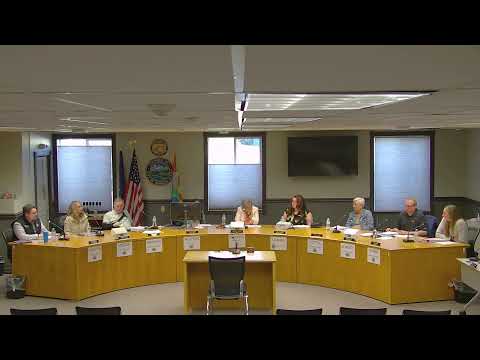
The Wasilla City Council postponed consideration of Ordinance Serial No. 25-14 — a proposal to repeal and reenact Wasilla Municipal Code Title 16, the city’s land development code — and sent the measure back for further review at the council’s June 9 meeting. Councilors entered a committee of the whole for a multi-hour review, then returned to the full council and approved the postponement with no objections.
Council members and staff said the rewrite would affect a broad range of rules that govern where and how development can occur in Wasilla — from the Downtown Overlay District and annexation procedures to complaint and enforcement processes, permit timelines, definitions for structures and buildings, landscaping rules, parking, and community water/sewer requirements. Because the ordinance would change many interconnected provisions, councilors repeatedly asked staff to clarify statutory authority, grandfathering language and administrative procedures before final adoption.
Council member Graham opened the committee discussion, saying he “asked to put this in a committee of the whole just so we can kind of go through it,” and ran the council through a long list of items staff had drafted. Staff and the city attorney responded to repeated questions about the scope of the code and where the city’s authority begins and ends. Holly, a city staff member responsible for the draft, said the code explicitly calls out certain land such as property owned by the Alaska Railroad Corporation and the University of Alaska so “we eliminate any question as to whether or not we intended to regulate that property.”
Among the substantive disagreements and clarification requests during the committee discussion:
- Complaints and anonymity: Councilors debated whether enforcement should initiate from anonymous complaints. Staff said the current practice is that anonymous complaints typically “aren’t really acted upon” and that requiring a named complainant reduces repeated, bad‑faith filings; staff proposed leaving the complaint intake process flexible and handling operational rules administratively. Council members suggested changing mandatory language in the draft so the process could be implemented in a way that encourages named complaints but retains administrative discretion.
- Annexation and commission recommendations: Multiple councilors asked whether the planning commission’s recommendations on annexation would be final or advisory and asked staff to reconcile the ordinance text with applicable annexation statutes. The city attorney and staff agreed to review state annexation language and return with clarified wording.
- Permits and grandfathering: Councilors flagged transitional provisions that allow projects permitted under the previous code to proceed. Several members asked whether the rewrite should impose a sunset or limit further extensions on preexisting permits; staff proposed to return with options (including a suggestion discussed of a 365‑day limit in some circumstances) after analyzing potential unintended consequences.
- Planner interpretations and appeal timelines: The draft gives the planner up to 30 days in writing to issue formal interpretations of code terms and makes those interpretations binding unless appealed to the planning commission. Several council members said 30 days felt long and suggested shorter timeframes or a clear appeal path; staff noted that 10–30 days are common and that a prompt written response is different from a fully researched legal interpretation.
- Definitions and technical edits: Councilors reviewed multiple definitions (for “building” and “structure,” thresholds such as 120 square feet, “exotic animals,” “pet/domestic animal,” and the definition of “church” and “family”) and proposed language tweaks for clarity and consistency. Staff said some items were intentionally patterned on comparable jurisdictions but agreed to clean up wording and eliminate duplicates.
- Junkyard and storage uses: Councilors raised concerns that the draft definition of “junkyard” (which references storage or handling of more than two unregistered or discarded items) could unintentionally sweep in lawful commercial operations (for example, lumber yards, appliance retailers or auto repair businesses). Staff said the permits and use‑specific conditions and screening requirements applied to those commercial operations and agreed to return with clearer cross‑references and criteria.
- Plat notes and historic setbacks: The draft preserves certain recorded plat notes dating to before 1986; councilors asked staff to confirm the rationale and to check whether older covenants remain valid and should continue to control dimensional standards in existing plats.
- Paving and parking: The draft requires certain commercial parking and drive areas to be paved within 12 months after an adjacent roadway is paved; some councilors asked whether that requirement should be tied to redevelopment permits or be more flexible to avoid imposing immediate cost on existing businesses.
Staff members Eric and Holly and the city attorney committed to return with statutory citations, redlined language, and comparative practice examples for other municipalities. At the end of the meeting the council took a formal vote to postpone final adoption. A motion to postpone Ordinance Serial No. 25‑14 until the June 9 regular meeting was made, seconded and adopted with no objections.
Next steps: staff will bring clarified language and suggested amendments — addressing annexation phrasing, complaint procedures, interpretation timelines, permit‑extension limits, and other items flagged by council — before the council’s June 9 meeting so members can take final action or move additional amendments at that time.