Get Full Government Meeting Transcripts, Videos, & Alerts Forever!
Get email alerts on the Advisory Committees topic
No spam. Unsubscribe anytime.
Board hears annual reports from advisory committees on special education, gifted programs, health, career and equity
Summary
Five school-board advisory committees presented annual reports June 12, with recommendations ranging from a special-education PTA liaison in every school to expanded gifted-program planning and stronger air-quality monitoring.
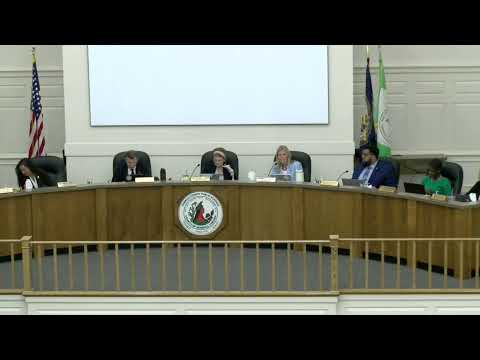
At the June 12 meeting Henrico County School Board members received annual reports from five advisory groups that advise the division on programming and community engagement: the Special Education Advisory Committee (CEAC), the Gifted Education Advisory Committee (GIAC), the Student Health Advisory Board (SHAB), the Business Advisory Committee (BAC) and the Equity Diversity Advisory Committee (EDAC).
Why this matters: these advisory committees inform the board and staff on program priorities, resource needs and family engagement strategies across core areas of student services and curriculum.
Key takeaways from each advisory update: - CEAC (Special Education): CEAC reported goals to establish a special education PTA liaison at each school (several schools have already added the role), support retention of new special education teachers by participating in novice-teacher training, and continue family education efforts such as an exceptional education expo that hosted approximately 50 vendors and more than 250 attendees. CEAC meetings are held at least four times a year; the committee aims to have at least two members per magisterial district going forward.
- GIAC (Gifted Education): The gifted advisory reported 20 committee members across five magisterial districts, student representation at middle and high school levels and ongoing work to update the local gifted plan for 2026-2031. GIAC sought additional positions to match increased identification of gifted students and plans expanded talent-development programming including family events, chess and Rubik's Cube showcases, and exploration of secondary opportunities.
- SHAB (Student Health Advisory Board): SHAB reported 20 members and recommended bolstering data collection and stakeholder survey participation to inform school-wellness policy, supporting efforts to maintain healthy learning environments and expanding family engagement on youth mental health and available supports. Board members raised air-quality monitoring and indoor-air concerns; the division said SHAB will coordinate with facilities staff responsible for air filters and building systems.
- BAC (Business Advisory Committee): BAC highlighted work connecting CTE programs with business partners, encouraged staffing and equipment support for CTE, and reported strong summer program enrollment (more than 1,000 students in grades 6-12 for summer camps; roughly 50/50 middle and high school participation). BAC also described employer partnerships that supply teachers or temporary instructors in specialized trades and reported ongoing expansion plans for health and medical programs.
- EDAC (Equity Diversity Advisory Committee): EDAC reported 72 applicants for the 2025-28 cycle and recommended a slate of up to 20 voting members, while highlighting objectives such as pathway navigation guidance for families, multilingual communications and improved application platforms for specialty-center selection. The division said it will continue collaboration across departments and advisory committees to produce accessible pathway guides and outreach.
Board members asked committee-specific questions (for example, CEAC PTA-liaison placement and SHAB student representation and air-quality advocacy) and staff described steps to support each committee's recommendations. Several board members highlighted that committee meetings are open to the public even if an applicant is not a voting member.
Most committees asked for the board's approval of officer and membership slates; the presentations described recommendations but the transcript did not record explicit board votes on each slate during the meeting.
Action and next steps: staff said they will coordinate implementation of committee recommendations, support expanded membership and return with follow-up as committees progress on goals.