
Bismarck schools told Title I funding will drop $734,000; district warns of staffing and timing challenges
Get AI-powered insights, summaries, and transcripts
Subscribe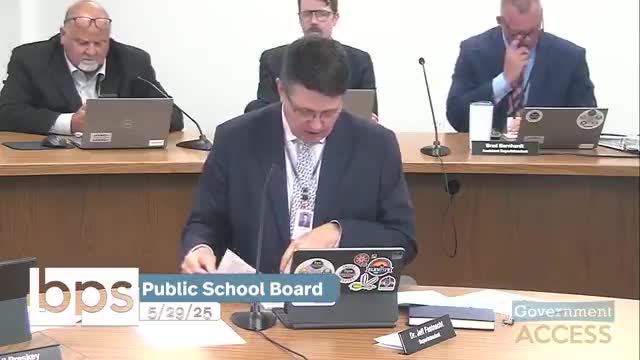
Summary
Superintendent Dr. Fosnott told the Bismarck School Board on May 29 that a late federal allocation cut will reduce the district’s Title I award by about $734,000 and that the timing complicates personnel decisions governed by state code.
Bismarck — Superintendent Dr. Fosnott told the Bismarck School Board on May 29 that the district’s federal Title I allocation will be reduced by about $734,000, a cut the district received notice of only weeks before finalizing contracts for next school year.
The reduction lowers the district’s Title I funding from roughly $4.4 million to about $3.6 million, Dr. Fosnott said, and he outlined similar potential impacts if Title II, III and IV awards are reduced by comparable percentages. “This ... will be a challenge,” he said, adding that the timing of the federal notice — in mid‑May — limits the district’s ability to adjust staffing without violating state timelines.
Why it matters: Title I dollars fund interventions and staff serving higher‑poverty schools. Dr. Fosnott told the board that about 43.9 full‑time equivalent positions are paid from Title I; moving or eliminating those positions affects how intervention services are delivered. He said Title II, which pays for professional development, could see an estimated reduction near $150,000; Title III about $10,000; and Title IV roughly $94,000 if cuts mirror Title I.
Board members pressed for options and clarity. Member Mr. Lee asked whether open elementary positions might be moved from federally funded lines into general‑fund classrooms; Dr. Fosnott said some reassignments are possible but noted principals must still meet federal program requirements and individual school needs. “You are accurate. We do have positions that we've talked about,” he said, but added that serving students under reduced staffing will require different approaches.
Dr. Fosnott warned that North Dakota statutory deadlines for notifying teachers of staff reductions complicate any immediate personnel changes. “We have to notify them in April that we're going to do that as a district,” he said, noting the May timing of the federal notice places the district past that notification window.
The superintendent described the district’s immediate steps: monitoring remaining allocations, scenario planning for spending, communicating with staff and negotiating with employee representatives. He said the district will attempt to hold contracts in place for the coming year while working to absorb the shortfall locally, which will increase pressure on the general fund.
Board members and the superintendent agreed the timing was the central challenge. “Timing's the challenge,” Dr. Fosnott said. He asked the public to understand that maintaining contracts under reduced federal funds will be a local budget decision and could constrain other spending priorities.
The board took no formal vote on program reductions at the May 29 meeting. Dr. Fosnott said staff will return with scenario planning as state and federal allocations are finalized.