Get Full Government Meeting Transcripts, Videos, & Alerts Forever!
Get email alerts on the Artificial Intelligence In Education topic
No spam. Unsubscribe anytime.
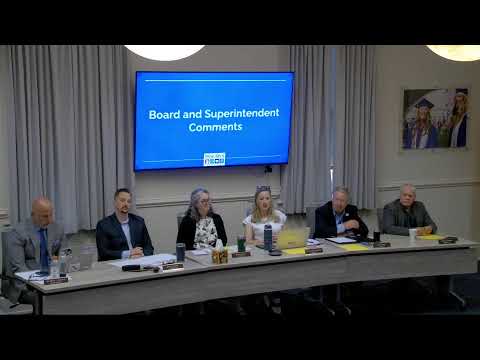
New Kent school board reviews draft AI guiding principles, committee recommends updated AUP and vendor review
Summary
School staff presented a draft set of guiding principles and protocols for use of artificial intelligence in classrooms and operations; board members emphasized caution, called for work session and board input, and staff outlined next steps including policy language, vendor review, and professional development.
The New Kent County School Board heard a presentation Monday about draft guiding principles and protocols for artificial intelligence use across the division and directed staff to continue developing policy language, vendor reviews and training materials.
The recommendation came from a multi‑member committee that reviewed regional practice, gathered teacher and student feedback and consulted guidance from the Virginia Department of Education. The committee presented principles across five domains: teaching and learning, ethics/responsible use, accessibility, privacy and security, and ongoing adaptability.
"Anytime we look at any technology usage, it should not replace the teacher," the presenter told the board, emphasizing AI should "enhance, and not replace instruction." The plan includes updated acceptable use language, classroom guidance posters for teachers and students, guidance on citation and academic integrity, and a vendor questionnaire to clarify how third‑party tools use student data.
Board members expressed a mix of caution and urgency. Board member William Reimer said he was "very, very concerned about this whole this tool," calling it "very dangerous" and urging conservative limits, including the possibility of hosting a language model in an enclosed environment. Board member Kevin Vaught countered that technology adoption cannot be stopped and said, "If we properly regulate and properly teach and properly train, we can at least keep the staff and students safe."
Staff described next steps: update the division’s acceptable use regulations to include AI, add an academic integrity statement to student handbooks, vet technology vendors for AI usage and data protection, provide professional development for administrators and teachers (beginning this summer and continuing in fall), and prepare communications and materials for parents and students.
The board did not take formal action. Members suggested a deeper work session and that one or two board members join the committee’s meetings to review policy details. Superintendent Nichols and the presenting staff committed to return with refined policy/regulation language and implementation timelines.
Why it matters: The division’s approach will shape students’ classroom experience, district data practices and teacher expectations for academic integrity. The draft emphasizes balancing exposure to AI as a workforce skill while protecting student learning and privacy.
Background: The committee’s work drew from regional meetings, VDOE material, and local teacher and student input. The draft guidance calls for transparency, minimization of personally identifiable information when interacting with AI tools, and ongoing review as tools evolve.