Get Full Government Meeting Transcripts, Videos, & Alerts Forever!
Get email alerts on the Economic Development topic
No spam. Unsubscribe anytime.
Lane County holds public hearing on Sierra Pacific Industries $253 million SIP proposal; commissioners signal support
Summary
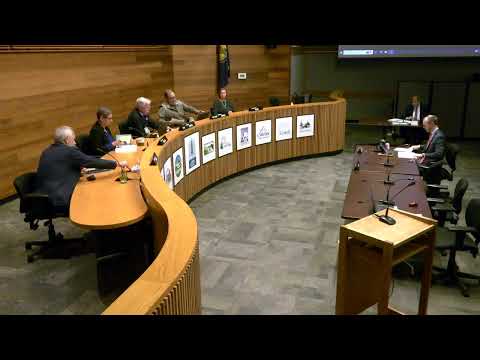
Lane County commissioners held a public hearing May 20 on Sierra Pacific Industries’ application for a Strategic Investment Program agreement that would abate some property tax on roughly $253 million in new investment at the company’s Eugene sawmill site.
Lane County commissioners held a public hearing May 20 on Sierra Pacific Industries’ application for a Strategic Investment Program agreement that would abate some property tax on roughly $253 million in new investment at the company’s Eugene sawmill site.
The SIP application would tax the first $100 million of the investment while abating taxes on the remainder; the county’s assessment staff estimated the site would still generate about $46.4 million in total tax and fee payments over a 15‑year SIP term and that the county’s share of existing and SIP taxes would be roughly $2.4 million to $2.9 million depending on the line item. Jason Harris, Lane County community and economic development manager, told the board the project meets the urban SIP investment threshold and observed the company also proposed voluntary community benefit payments, including a one‑time $525,000 payment for rural public safety or $35,000 annually over the 15 years, plus a $10,000 application administration fee.
The hearing drew business and industry testimony in favor. Tiffany Edwards, vice president of policy and community development at the Eugene Area Chamber of Commerce, said the project would retain hundreds of jobs and generate construction work for local contractors, and that “this agreement isn’t a loss of revenue. It’s a retention strategy, a growth strategy, and a commitment to Lane County’s future.” John Brown, a longtime local resident, and representatives of Wildish Companies and the Springfield Area Chamber of Commerce also urged approval, describing Sierra Pacific as a long‑standing employer, investor in workforce partnerships and a source of family‑wage jobs.
Representatives from Sierra Pacific, including Courtney Grissell, community relations manager, and Gary Young, chief financial officer, described the site plan and the company’s regional investments. Grissell said the project would consolidate three sawmill lines under one roof, modernize equipment, improve safety and increase operational flexibility. Young explained that the mill’s cogeneration facility converts biomass into renewable power and that past investments had added jobs at the site.
Jason Harris explained statutory features of the SIP: the program’s investment minimums, the tax treatment of the first $100 million versus additional investment, and the statutory requirement that an employer entering a SIP complete a first‑source hiring agreement with the state. Harris also described how the SIP community service fee (25% of a company’s tax savings under SIP rules) would be distributed among the county and other affected taxing districts and said the county would later negotiate disbursement agreements with those districts.
Commissioners asked company and staff about how site‑specific the investment was and whether equipment could be moved to another location. Sierra Pacific representatives emphasized the investment and layout are highly site specific and the project is designed to operate on the existing footprint. Commissioners said the investment would signal to other capital‑intensive employers that Lane County is competitive and noted the company’s philanthropic contributions to local programs and public safety.
No final board decision was made at the hearing. The board closed the public comment period and asked staff to prepare next steps and return with proposed agreement documents for future consideration.
The matter will be forwarded to the Oregon Business Development Commission as part of the state process if the board later approves a county SIP agreement; the county must also enter into community‑service fee distribution agreements with affected taxing districts if the SIP proceeds.