
Committee Hears Testimony on Bill to Add Photo, Signature to Michigan Bridge Card; Lawmakers Debate Costs and Access
Get AI-powered insights, summaries, and transcripts
Subscribe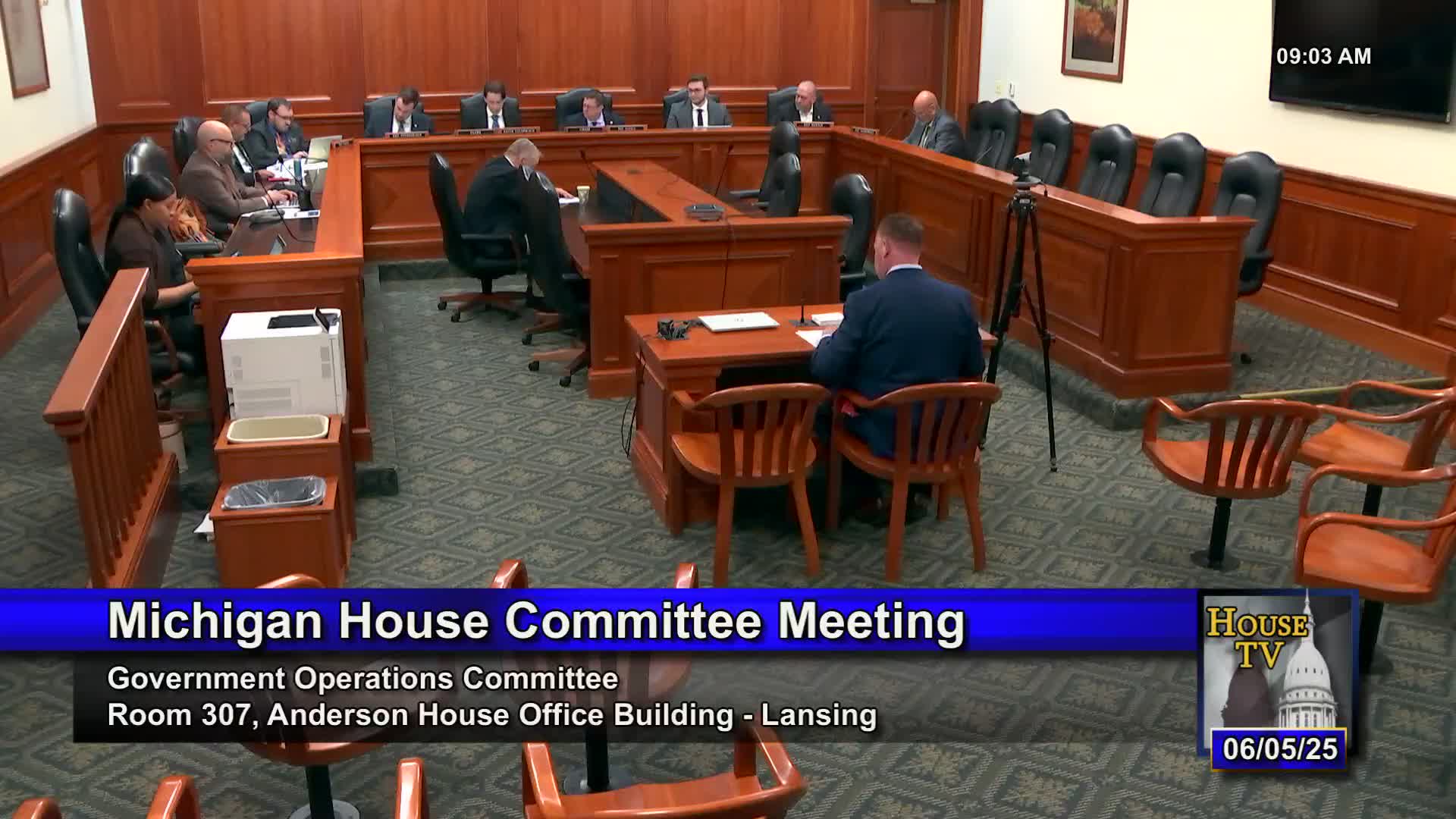
Summary
The House Committee on Government Operations on Wednesday heard testimony on House Bill 4288, a proposal by Representative Wolford that would require Michigan Bridge Cards used for food and cash assistance to include a recipient’s digital photograph and signature and to display a photo for any authorized secondary user.
The House Committee on Government Operations on Wednesday heard testimony on House Bill 4288, a proposal by Representative Wolford that would require Michigan Bridge Cards used for food and cash assistance to include a recipient’s digital photograph and signature and to display a photo for any authorized secondary user. The committee took no vote on the bill; it approved minutes from the May 30 meeting by unanimous consent earlier in the session.
The bill’s sponsor, Representative Wolford, told the committee a photo-bearing Bridge Card “could reduce the unauthorized use such as card trafficking or use by a non authorized individual” and said conversations and internal reviews drove an estimate that the state could avoid roughly $3 billion in fraud with such measures. Wolford argued the change would ensure only authorized recipients use benefits and align with earlier inspector general investigations into program losses.
Why it matters: SNAP and state cash assistance programs serve tens of thousands of Michigan households; changes to card issuance or use would affect access to benefits and require implementation by the Department of Health and Human Services (DHHS) and engagement with retailers and other agencies. Witnesses and lawmakers debated whether the potential fraud reduction justifies the administrative costs and access burdens described in fiscal agency review.
Supporters’ case: Wolford and other supporters framed the measure as a fraud-prevention safeguard. Wolford said authorized users can currently be designated without adequate verification, and that a photo requirement for both the primary recipient and one authorized user would make trafficking and sham purchases harder. Representative McFall, speaking from a law enforcement perspective, said, “we saw people using it for the purchase of drugs. We saw it being used, unfortunately, in extortion type rings … people having to turn this over to drug dealers or human traffickers,” and said stronger ID could help investigations.
Cost and access concerns: Representative Fitzgerald cited a House Fiscal Agency (HFA) review that, she said, found the cost to DHHS “would be indeterminate but likely moderate” because of one-time start-up expenses for card design, equipment, training and retailer communication; HFA also reported that any savings from reduced fraud were “indeterminate, but likely negligible,” Fitzgerald said she relayed. Lawmakers and witnesses warned the bill does not specify how or where photos would be taken, raising concerns about travel barriers for rural residents, people with disabilities and others who may lack easy access to in-person enrollment.
Implementation alternatives and limits of retail practice: Several lawmakers asked whether the state could use existing photo databases, such as the Secretary of State’s records, to avoid additional trips to DHHS offices. Wolford said using Secretary of State photos could reduce costs, but also argued that allowing self-submitted photos (for example, via smartphone) would be vulnerable to fraud. Representative VanderWaal suggested an alternative biometric approach, citing Public Act 78 (2020) as precedent that allows fingerprints to be used for purchases such as alcohol and tobacco; he urged considering existing statutory tools rather than “reinventing the wheel.”
Fiscal figures and uncertainty: Testimony included several figures and estimates that lawmakers characterized as preliminary. Wolford cited a $3 billion fraud estimate as a basis for the proposal. He and other supporters also cited estimates that initial implementation could cost the state roughly $1.5 million to $3 million per year to run a photo-enabled system, though the HFA summary described the fiscal impacts as indeterminate. Committee members asked for more precise counts of SNAP recipients and comparative outcomes from other states that have tried photo-and-signature systems.
Public-interest submissions: The committee clerk read three written positions into the record: Maureen Bolger of the Michigan League for Public Policy opposing the bill, Anna Almanza of the Food Bank Council of Michigan opposing the bill, and Christine Suave of the Michigan Immigrant Rights Center registered as neutral.
Next steps: Committee members asked follow-up questions and signaled interest in additional data from DHHS and the HFA, including the number of SNAP recipients in Michigan, clearer cost estimates, and evidence from states that have implemented similar systems. The committee did not take a formal vote on House Bill 4288 during the session.