Lifetime Citizen Portal Access — AI Briefings, Alerts & Unlimited Follows
Physician, family and teen tell Michigan committee about impacts of rare kidney disease FSGS
Loading...
Summary
A pediatric nephrologist, a mother and her teenage son described how focal segmental glomerulosclerosis (FSGS) affects patients and families, urged earlier screening, telehealth access and regulatory pathways for treatments.
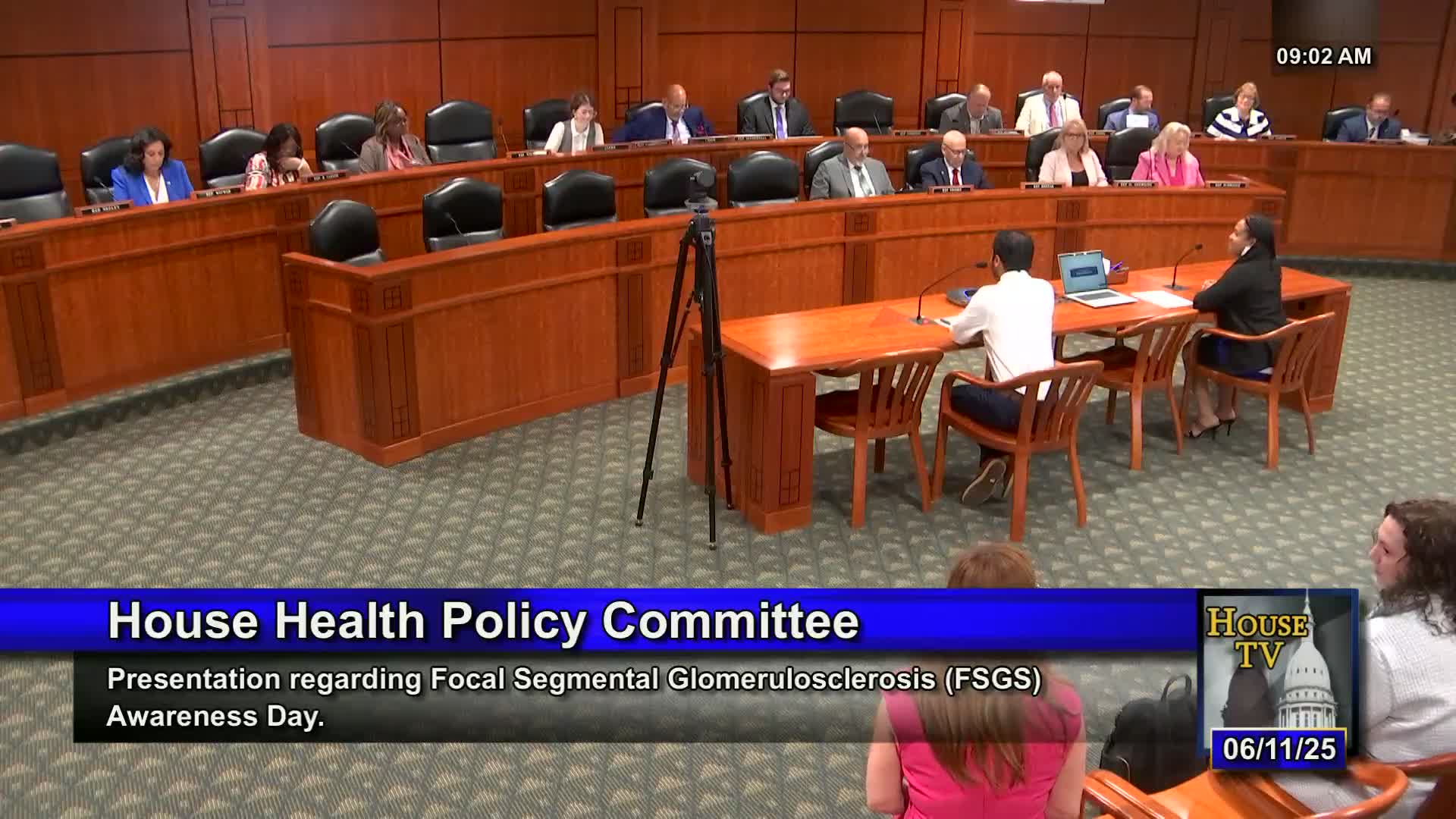
Dr. Zubin Modi, a pediatric nephrologist and researcher at the University of Michigan, told the Health Policy Committee that focal segmental glomerulosclerosis, or FSGS, is a rare kidney disease that can lead to heavy protein loss, swelling and, in many cases, progression to end-stage kidney disease requiring dialysis or transplant. "There are currently no FDA approved therapies for this disease," Modi said.
The committee heard personal testimony from Sashay Walker, who described her son Aiden’s decade-long fight with recurrent FSGS. "Aiden was diagnosed with FSGS when he was 8 years old," Walker said. She said he later developed kidney failure, received two transplants that failed because the disease recurred, spent extended periods on dialysis and underwent dozens of procedures. Their testimony stressed gaps in diagnosis and long-term treatment options.
The physicians and family emphasized three main needs: earlier and better screening to shorten patients’ diagnostic odysseys; use of telehealth to expand access to pediatric nephrology care in rural parts of the state; and clearer regulatory and trial pathways to spur drug development. Modi said researchers and industry have worked with the U.S. Food and Drug Administration on registries and endpoints that could enable clinical trials and eventual approvals.
Committee members responded with questions about disease causes, prognosis and regulatory progress. Modi said some forms of FSGS are secondary to infections or medications but that most idiopathic cases are immune-related and may have genetic contributors. He described ongoing international registry work with FDA statisticians to define trial endpoints, and said that work has been "pretty successful" and could enable sponsors to pursue therapies.
Aiden, who identified himself to the committee, described school and daily-life impacts: "School is difficult... Just life is difficult in general," he said, adding that treatments and dialysis fatigue limit normal activities. Committee members thanked the family and researchers for presenting firsthand and asked technical and policy questions about clinical trials and access.
The committee did not take formal action on policy during the testimony; the session consisted of invited testimony and a period of questions from committee members. The record shows lawmakers asked about causes, prognosis and the FDA engagement Modi described.