Get Full Government Meeting Transcripts, Videos, & Alerts Forever!
Get email alerts on the Tree Protection topic
No spam. Unsubscribe anytime.
Atlanta Council adopts major update to tree protection ordinance after months of debate
Summary
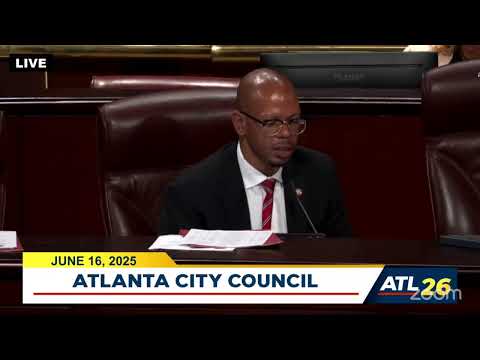
After months of negotiations with community groups, developers and city staff, the Atlanta City Council adopted a substituted tree protection ordinance and sent it to the mayor’s office for signature. Supporters called it progress; critics said it does not go far enough and pledged continued work.
The Atlanta City Council voted to approve a substituted update to the city’s tree protection ordinance on a 15-0 vote and then voted to forward the legislation to the mayor’s office for signature. The ordinance, which went through committee and substitute drafting this month, raises penalties and recompense rates and creates new implementation staff and programs.
Council member Michael Julian Bond introduced and shepherded the measure through the council as part of a package of changes. Bond said the ordinance “modernized our tree protection ordinance for the city of Atlanta,” and he thanked planning staff and members of the committee for their work.
The ordinance increases the tree recompense rate to $140 per inch (adjusted annually for inflation), doubles funding for low-income senior pruning and planting assistance to $400,000 a year, and raises the maximum penalty for illegal tree removal from $100,000 to $200,000 per acre. It also establishes additional arborist and ecology positions paid from the Tree Trust Fund, creates a registration program for tree professionals and includes minimum tree-density requirements by zoning.
Council member Liliana Bakhtiari, who had pressed for stronger preservation standards earlier in the process, urged continued work after the vote. “The movement to improve tree protections in Atlanta is not over because this passes,” Bakhtiari said. “We still wanna have a city that’s in the trees.”
Several community speakers and environmental advocates urged stronger numerical preservation standards and criticized prior drafts that they said allowed clear-cutting. Chet Tisdale, an environmental advocate, told the council the city faces “a tree loss crisis” and linked canopy loss to rising ozone and particle pollution. “We have an air pollution problem in addition to a tree loss crisis,” he said during public comment.
Council supporters said the substitute was the result of long negotiations and that additional oversight would be built into the implementation phase. Council member Isha Collins and others requested quarterly reporting to the Community Development Human Services Committee on how the ordinance interacts with the upcoming Zoning 2 rewrite; a separate resolution asking planning to report quarterly was circulated and referred to committee.
The council approved the substituted ordinance in full council and then voted 14-0 to send the measure to the mayor’s office “posthaste.” Several council members stressed the vote was a step in a multi-stage process and that additional rules and monitoring will be needed as zoning reforms are enacted.
Implementation details in the substitute include an inch-for-inch replacement option, credits for new plantings and guidance for homeowners on insurance-related removals. Critics outside the chamber said the substitute removed previously proposed preservation standards and pledged to continue advocacy for stricter rules.
The council’s action brings the city’s tree policy into effect pending the mayor’s signature and marks the most substantial rewrite of the city’s tree rules in decades; council members and staff said monitoring and follow-up will be required as projects move through the permitting and zoning systems.