Get Full Government Meeting Transcripts, Videos, & Alerts Forever!
Get email alerts on the Criminal Justice Resentencing topic
No spam. Unsubscribe anytime.
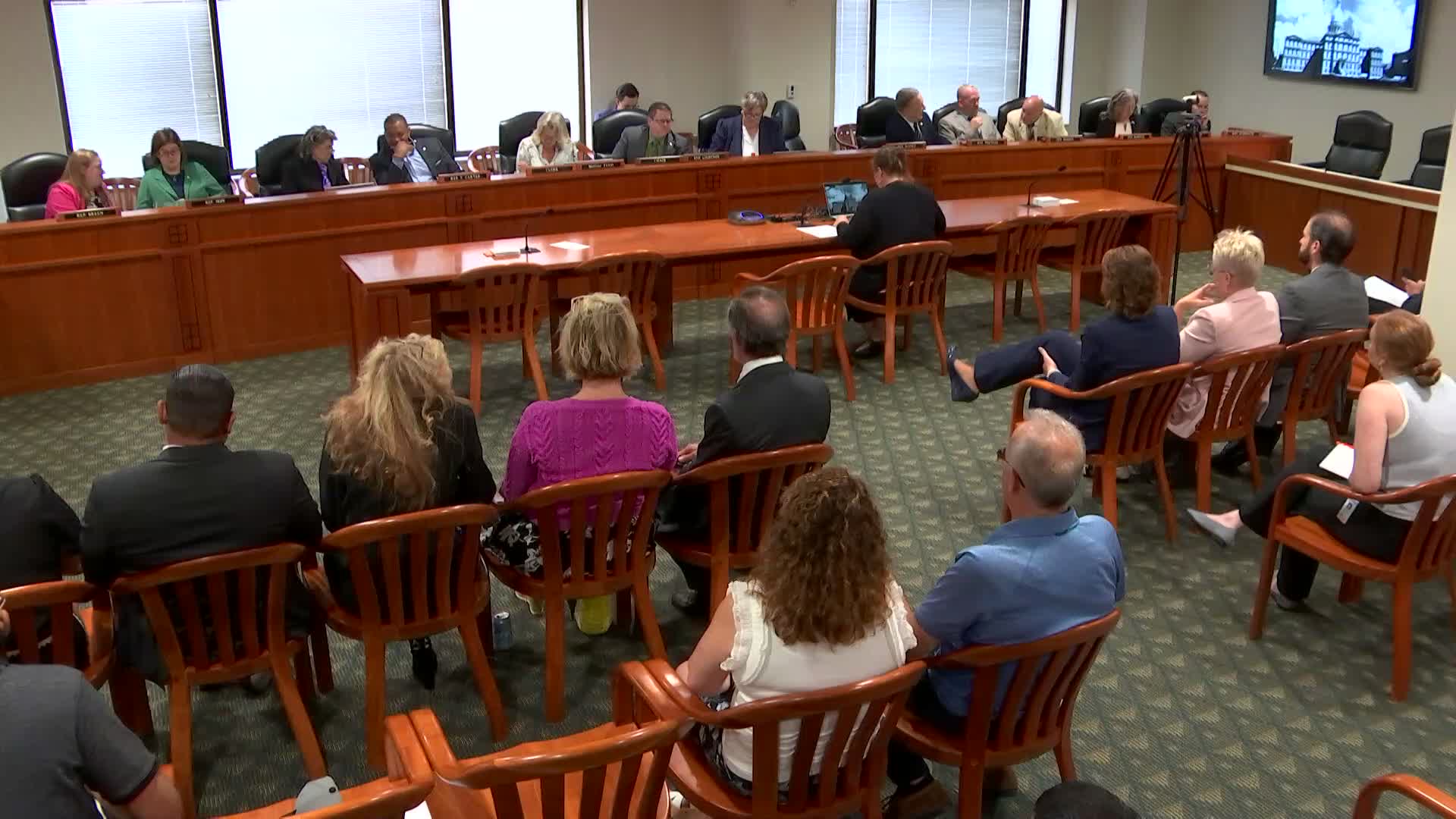
House Judiciary hears emotional debate on bills to change resentencing for 19- and 20-year-olds and expand reentry supports
Summary
Representative (author of bills) told the House Judiciary Committee that the bills before it — including House Bills 45 06, 45 07 and 45 08 — are aimed at cases involving 'the worst of the worst' among young adults and would preserve life-without-parole as an option while allowing consecutive sentences for multiple murders.
Representative (author of bills) told the House Judiciary Committee that the bills before it — including House Bills 45 06, 45 07 and 45 08 — are aimed at cases involving “the worst of the worst” among young adults and would preserve life-without-parole as an option while allowing consecutive sentences for multiple murders.
The package prompted extensive testimony from prosecutors, victims and defense and reentry advocates at the committee’s hearing. Jeff Gedding, Kalamazoo County prosecuting attorney and immediate past president of the Prosecuting Attorneys Association of Michigan, said the bills are needed to ensure “victims count” when courts resentence people after recent Michigan Supreme Court rulings. “This package of bills continues that [life without parole] as an option,” Gedding said, and it “centers victims and provides realistic timeframes for making decisions” in retroactive resentencing cases.
Why it matters: Michigan courts’ recent rulings applying juvenile‑sentencing precedents to older teens and young adults have prompted thousands of resentencing proceedings statewide. Committee members were told hundreds of cases — including ones dating to the 1970s and 1980s — will require new hearings, some of which could lead to immediate releases from custody. Supporters said the bills lay out a sequence and sentencing ranges to prioritize victim input and public safety; opponents said the measures are likely to prompt new litigation and could violate constitutional protections for young people.
Supporters’ arguments and requests
Gedding and other supporters argued that the bills would allow judges to consider the full facts of multi‑victim crimes and avoid treating multiple murders as a single offense for sentencing. “When you have multiple murders, concurrent sentencing fails to take into account one of the victims,” Gedding said, arguing that consecutive sentences give each victim their own measure of justice.
Kalamazoo County Prosecutor Gedding and Representative (author of bills) repeatedly urged fuller timelines and statutory clarity so prosecutors can decide whether to seek life without parole at resentencing. They told the panel that thousands of cases will require review and coordination with victims and that courts need workable procedures to set hearings in an orderly way.
Victims’ testimony
Roberta Gartley, who said she is the mother of a homicide victim, told the committee she opposed the Michigan Supreme Court rulings that have led to resentencings and urged lawmakers to preserve life-without-parole for offenders who committed severe violent crimes as young adults. “If someone commits felony homicide, armed robbery [or similar violent crimes], they should be punished to the fullest extent of the law regardless of their age, which is life without parole,” Gartley said.
Defense and rehabilitation perspective
Maya Menlo of the State Appellate Defender Office (SADO) and Criminal Defense Attorneys of Michigan (CDAM) testified in opposition. Menlo said the bills raise constitutional concerns — including cruel-and-unusual‑punishment, equal protection and ex post facto questions — and risk protracted litigation. “The constitution requires that courts engage in an individualized sentencing proceeding where youth is considered at that sentencing hearing,” Menlo said, arguing that the proposed minimum terms (often in the 35–50 year range) would amount to de facto life sentences for many defendants and so would be unconstitutional in all but the rarest cases.
Joshua Puckett, who identified himself as a formerly incarcerated person who served time as a young adult and now runs restorative and reentry programs, urged the committee not to remove judicial discretion. “This bill would take away those judges’ discretion to utilize their power,” Puckett said, describing his own rehabilitation and arguing that judges and prosecutors in local communities are best positioned to weigh individual cases.
Reentry and immediate-discharge issue (House Bill 4 211)
Committee members also heard from Mary Frank, legislative director for Representative Amos O’Neal, and from the Michigan Department of Corrections (MDOC) about House Bill 4 211. The bill would allow MDOC to provide reentry services — including help obtaining state‑issued identification and birth certificates and transitional housing — to people who are subject to immediate discharge after a resentencing decision.
Kyle Kaminski of MDOC said the agency supports the bill because the department currently lacks authority to contract for services for people who are immediately discharged rather than remaining under MDOC supervision. “We need to process them out of our facility essentially as fast as we can, and they return to the community,” Kaminski said. He told the panel MDOC would use existing reentry infrastructure and is not seeking new funding to deliver the services.
Angie Sprank, a reentry provider in MDOC’s Region 4, and Priscilla Bordeo of Crime Survivors for Safety and Justice described local reentry programs that have placed resentenced individuals into housing and services; Sprank said 9 of 10 people assisted in one regional program “remain successful in the community they returned to.” Bordeo, a survivor and victim advocate, said the reentry protections in HB 4 211 are “short but deep” and urged lawmakers to pass the measure to improve safety for both returning people and the communities they join.
Committee direction and next steps
The committee did not take a formal vote on the resentencing bills or on HB 4 211. Committee members signaled they want additional legal and policy work: Representative (author of bills) said prosecutors need more time and the legislature may return with clarifying language, and the chair indicated there will be continued discussion and a subcommittee meeting in approximately two weeks to advance related items.
Context and background
Lawmakers and witnesses frequently referenced U.S. Supreme Court and Michigan Supreme Court precedents on youth sentencing (including Roper, Miller, Montgomery, Czarnecki and Taylor) and MCL 769.25 (the statute governing individualized resentencing for youth in Michigan). Witnesses said the recent state-court decisions extended juvenile‑sentencing protections into the late‑teen and young‑adult age range, which has triggered a wave of resentencing proceedings.
What the bills would change (as described at the hearing)
- Preserve life‑without‑parole as a discretionary sentencing option in the most serious cases, according to proponents. - Require or authorize consecutive sentencing for multiple murders so each victim’s case is reflected in a separate sentence rather than running concurrently. - Provide prosecutors and courts clearer timeframes and procedures to prioritize and schedule resentencing hearings.
Points of disagreement to resolve
Opponents warned the package’s minimums and required consecutive sentencing raise constitutional risks that could generate litigation and delay final outcomes for victims and defendants. Supporters said the measures are a necessary legislative response to ensure victims are heard and public safety maintained when resentencings result from recent court rulings.
No formal actions were recorded by the committee during this portion of the hearing. Committee members said they will continue the conversation at future meetings and may consider statutory language revisions before any vote.