Get Full Government Meeting Transcripts, Videos, & Alerts Forever!
Get email alerts on the Senior Property Tax Relief topic
No spam. Unsubscribe anytime.
Lawmakers, advocates urge permanent and expanded property tax relief for Massachusetts seniors
Summary
At a Joint Committee on Revenue hearing, state lawmakers and advocates pressed for bills to reduce property tax burdens on seniors and people with disabilities, including proposals to make exemptions permanent, raise circuit-breaker thresholds, expand local options and create a statewide deferral program.
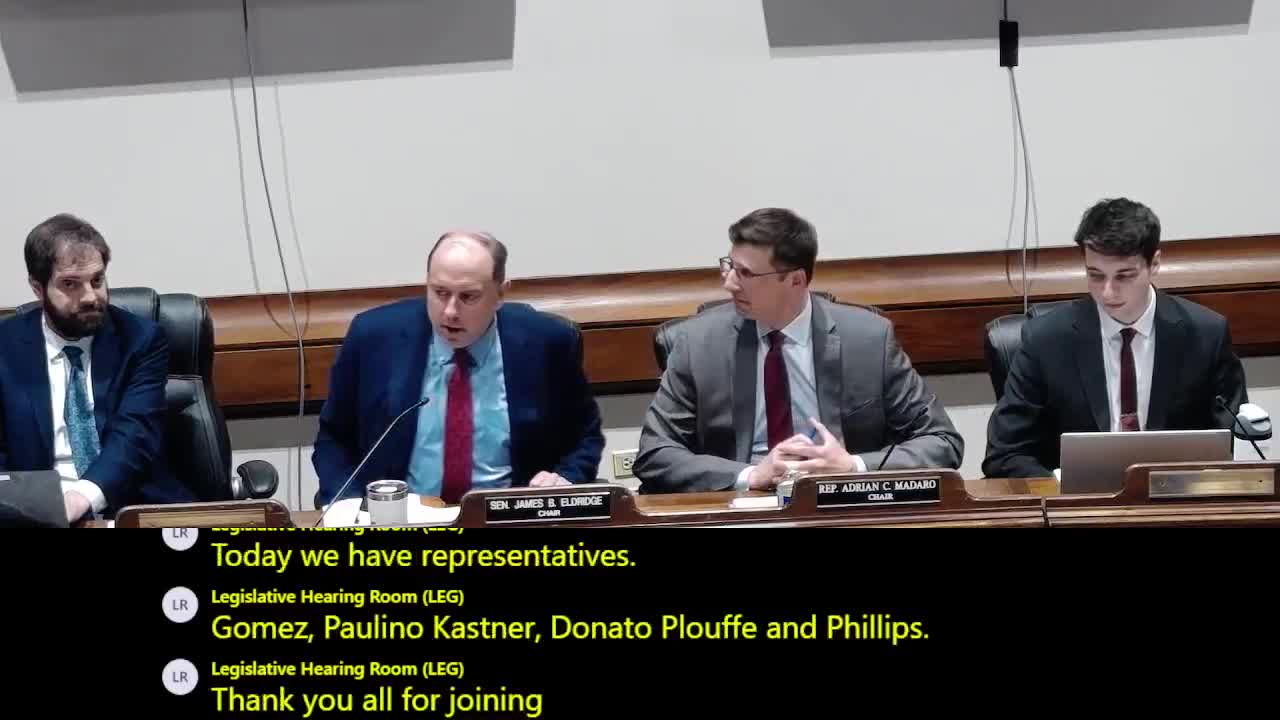
At a hearing of the Joint Committee on Revenue in Boston, state lawmakers, municipal officials and senior advocates urged approval of several bills that would change how Massachusetts taxes older homeowners and people with disabilities.
Supporters told the committee the measures — including H.3968 to make senior and disability property tax exemptions permanent and H.3198 to raise and index the circuit-breaker credit thresholds and home-valuation limit — would help older residents on fixed incomes remain in their homes.
Representative MacGregor, speaking in support of H.3968, said, "Every year, seniors and persons with disabilities across the commonwealth are required to file for their property tax exemptions...By requiring seniors and persons with disabilities to annually file for these exemptions, we're allowing people to slip through the cracks by not refiling for the tax exemption." He asked the committee to report the bill favorably.
Nut graf: Witnesses described a mix of statewide and local proposals — permanent exemptions, higher and cost-of-living–indexed circuit-breaker limits, means-tested local exemptions, expanded local options for higher exemption amounts, and a revised property-tax deferral program — and said the changes are responses to rapidly rising home values and fixed incomes that are straining older homeowners.
Most-important details
- H.3968 (sponsor identified in testimony as Representative MacGregor) would eliminate the current annual refiling requirement for the senior and disability property tax exemption so eligibility remains in place unless the assessor determines otherwise. Committee members raised questions about how municipalities would detect misuse if annual re‑certification were removed.
- H.3198 (introduced in testimony by Representative John Moran) would increase circuit-breaker income and credit limits, index them to the cost of living, and raise the maximum home valuation used to determine eligibility from $1,100,000 to $1,500,000. Representative Moran told the committee the change reflects "the reality of today's home prices in the Metro Boston area." He noted the bill would not by itself solve affordability problems but called it "one important tool".
- Multiple witnesses advocated for local-option measures: House 3099 and House 3102 were cited as proposals to authorize means-tested and expanded senior exemptions at municipal option, including increasing the local optional exemption up to $2,000 (current statutory baseline: $500, with a local option up to $1,000).
- Representative Jeffrey Scanlon (testifying for a package of bills) described a set of proposals that include eliminating the motor‑vehicle excise for low‑income seniors, creating a local property‑tax cap for low‑income seniors (thresholds described in testimony: $50,000 individual / $60,000 married; asset limit $75,000 excluding primary residence and one vehicle), and a redesigned, revenue‑neutral state program to backfill localities for tax deferrals so more seniors could use property‑tax deferral without harming municipal budgets.
Other testimony and data
- Emily Shea, Age Strong Commissioner for the City of Boston, asked the committee to favorably report H.3968 and H.3198 and said Boston delegates had filed companion bills. Shea summarized constituent concerns about rising costs and said municipal filings and outreach matter: "This would eliminate unnecessary burden on our older adults and people with disabilities and would ensure that more people receive the benefits."
- Kathleen Caleri, co‑chair of the legislative committee at the Massachusetts Association of Assessing Officers, told the committee she supported the local‑option means‑tested exemption language that aligns eligibility with the state circuit‑breaker income tax credit and noted the bills mirror home‑rule measures already filed by more than two dozen communities.
- Dave Kaufman of the Massachusetts Municipal Association said cities and towns are under fiscal pressure and that a means‑tested, locally administered exemption aligned with the circuit‑breaker would minimize administrative burden while giving local officials an option to assist residents.
- Representatives of Mass Senior Action described additional approaches including freezing assessed values or tax rates for eligible seniors, expanding and simplifying the senior work‑off program, counting retirement accounts differently for asset tests, and improving outreach. One presenter cited the UMass Boston Index of Elder Income Security, noting that "6 in 10 seniors living alone do not have the income to meet basic needs."
Questions, concerns and process notes
Committee members asked practical implementation questions. One member raised concerns that making exemptions permanent could create avenues for improper claims if assessors do not receive timely notice of a change in occupancy; witnesses and other members suggested solutions such as triggering reassessment on property transactions or verifying residency with utility or other records. Testimony repeatedly framed local option bills as tools for municipalities to tailor relief while balancing municipal budgets.
Next steps
The committee took testimony and did not take a vote at the hearing. Chairs said the committee accepts written testimony through Monday, June 30, and will consider the bills in subsequent meetings.