Get Full Government Meeting Transcripts, Videos, & Alerts Forever!
Get email alerts on the State Prep Funding Records topic
No spam. Unsubscribe anytime.
Secretary Galvin urges state funding and local record improvements to prevent 2030 undercount
Summary
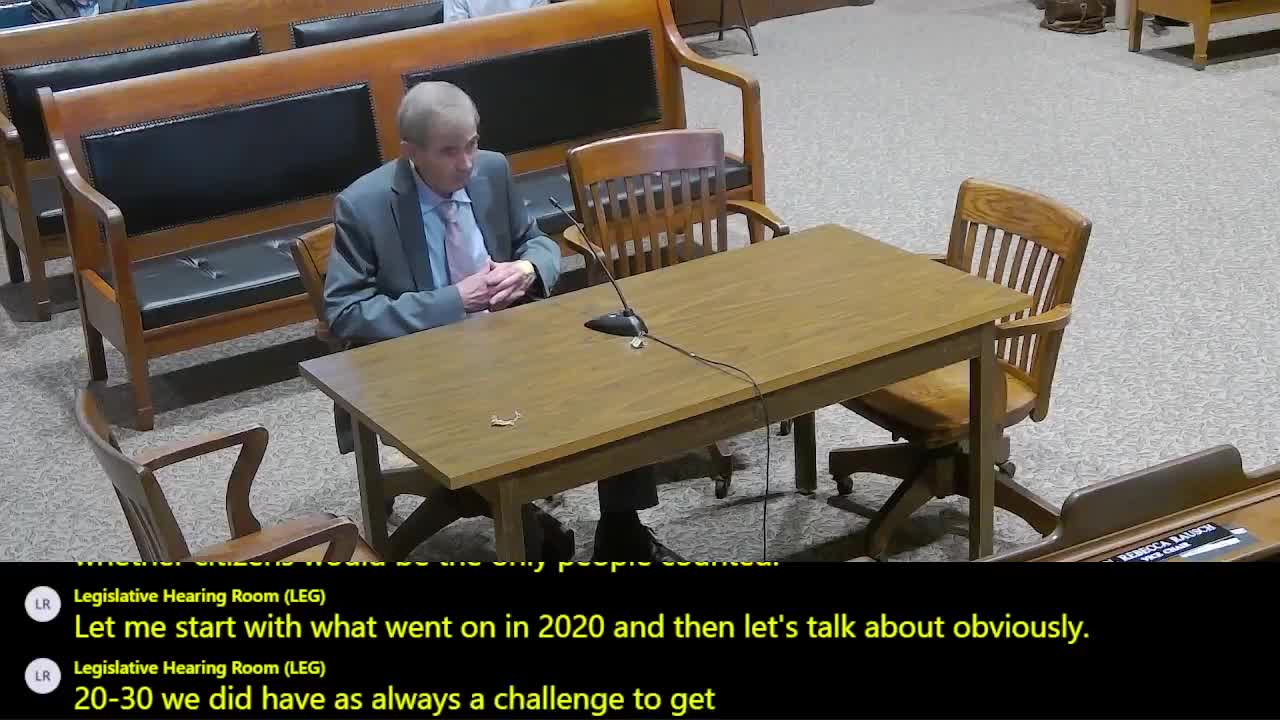
Massachusetts Secretary of the Commonwealth William Galvin told a legislative hearing that the state should expand support for municipal record-keeping and grant programs to reduce risks the commonwealth faces in getting an accurate count in 2030, citing student relocations and immigrant response hesitancy in 2020.
Massachusetts Secretary William Galvin told a legislative hearing that the commonwealth must invest in local technical assistance and outreach to reduce the risk of an undercount in the 2030 census. Galvin recounted challenges from the 2020 census — pandemic-related disruptions, litigation over citizenship questions and significant local variation in records — and said the state needs to shore up municipal lists and support community outreach.
“It's a crisis in a sense,” Galvin said, noting litigation and pandemic disruption multiplied the usual counting challenges. He described two major 2020 complications: a sudden campus shutdown that removed many students from campus addresses shortly before Census Day, and public fears among immigrant populations about whether noncitizens would be counted. To verify populations during 2020, Galvin said Massachusetts used university housing records and annual local residency lists as evidence for the Census Bureau. He said that approach helped Massachusetts reach a recorded population above 7 million and that those alternative records were offered to federal officials to support counts.
Galvin told the committee local capacity is uneven and in some communities knowledge about record-keeping procedures eroded after staff turnover following 2020. He said municipal clerks and school officials remain crucial to producing reliable annual lists and building records that feed programs such as LUCA, and he urged legislative support for funding to assist municipalities in preparing accurate records.
On budgetary steps, Galvin said he requested an additional $500,000 for the state’s census line item to create technical-assistance grants for municipal work and LUCA participation. He said the House adopted that request but the Senate did not; the matter was in conference at the time of the hearing.
Galvin also identified operational concerns the committee should track: the U.S. Postal Service’s irregularities could affect address match quality, and local governments will need help validating subdivisions and conversions of nonresidential buildings into housing units. He recommended convening municipal, planning, school and outreach staff now to catalog local changes and to standardize documentation that could be used for LUCA submissions and to respond if field follow-up becomes necessary.
Galvin told senators the state has worked closely with the University of Massachusetts Donahue Institute and the Secretary of State’s office on prior rounds and would continue to coordinate with federal liaisons and municipal staff. He said the state intends to expand outreach and technical assistance to communities that report declining response rates or weaker address records. No formal policy or expenditure decision was made during the hearing; Galvin’s comments were presented as guidance and a request to the legislature.