Get Full Government Meeting Transcripts, Videos, & Alerts Forever!
Get email alerts on the Education Programs topic
No spam. Unsubscribe anytime.
Garfield Heights board hears educational-advancement review, including SEL rollout and attendance gains at Maple Leaf
Summary
The district's Educational Advancement Department reviewed initiatives including a new employee reporting portal, a revamped RFP process, an SEL system (Satchel Pulse/AIMSweb transition), restorative-practices training, Parent University, and building-level work that helped reduce chronic absenteeism at Maple Leaf Elementary.
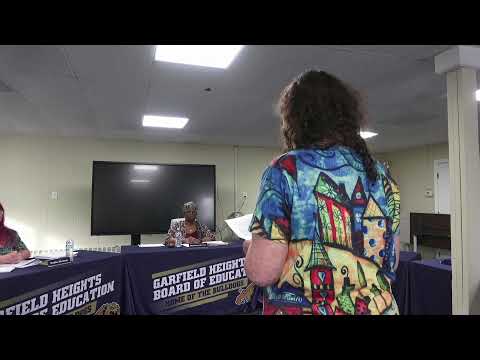
The Garfield Heights City School District Board of Education on June 16 heard a detailed report from the district's Educational Advancement Department about programs the department says expanded student supports, family engagement and internal processes during the 2024'25 school year.
The presentation, led by Yolanda Hamilton and Tim Hurd of the Educational Advancement Department, outlined changes the department said were intended to improve student outcomes and streamline district operations. Hamilton said the department partnered across human resources, communications, curriculum and school leadership to develop educational-advancement plans and support building-level goals.
"We are excited to be able to present ... a snippet of all of the work that we've done as a department," Yolanda Hamilton said during the presentation. The department described several administrative changes intended to reduce duplication and improve contract and provider selection, including a new employee reporting portal and a revised request-for-proposal process that the presenters said aligns vendor selection to data-driven building needs.
Tim Hurd described the district's social-emotional learning system and intervention tracking. "This year we continued SATCHEL Pause," Hurd said, adding that the district recorded 1,589 students in Tier 1 supports, 132 students newly assigned to interventions this year, and 34 students in Tier 3 at the time of the presentation. Hurd said the district is considering switching some SEL measures to aimsweb next year because it integrates academic and SEL screening and may be more familiar and cost-efficient for teachers.
Hamilton highlighted building-level work on chronic absenteeism, saying Maple Leaf Elementary produced the largest reduction in chronic absenteeism this year after implementing its educational advancement plan. The board package includes Maple Leaf's plan, Hamilton said; she described outreach efforts such as postcards to families that informed parents of students' missed days and local incentives to boost attendance.
The department also described Parent University, which launched this year with a mix of live and recorded classes in partnership with Cleveland Clinic and Dress for Success. Hamilton said the program began as a semester offering and will expand in the fall; early sessions were small (the largest single class attendance reported was seven) but listening sessions drew about 28 community members and will guide future scheduling and topics.
Presenters said restorative-practices training for deans of student engagement replaced a more punitive first response to conflict; deans now lead restorative circles as the initial step in resolving student harm. The department reported 52 restorative circles run across buildings and said the change was intended to keep students in school while addressing behavioral incidents.
The presentation also touched on Project 13, an "alumni bridge" effort to connect recent graduates with mentoring and transitional supports, and on several grants and small awards the department said expanded program resources (presenters cited a $13,000 award for anti-bias work and a $1,000 microgrant to support a special education family night).
The presentation prompted brief board questions about data collection and program evaluation. Hurd said the district is working to correlate SEL measures with MTSS/intervention outcomes and to provide more frequent, building-level data reviews so staff can intervene sooner.
The board took no formal action on the report; presenters said the department will continue program implementation over the summer and report back as programs evolve.