Get Full Government Meeting Transcripts, Videos, & Alerts Forever!
Get email alerts on the School Budget topic
No spam. Unsubscribe anytime.
East Stroudsburg Area SD adopts 2025–26 budget, approves 2% millage increase amid $20M–$30M shortfall
Summary
School business consultant presented an independent review that found the district likely to finish 2024–25 about $12 million in the red and a preliminary 2025–26 gap near $28 million. After hours of discussion, the board adopted the fiscal 2025–26 general fund budget as amended and approved a 2% millage rate increase.
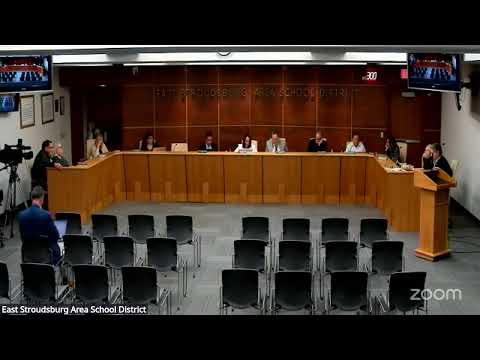
The East Stroudsburg Area School District board voted June 16 to adopt a $214,028,000 general fund budget for fiscal year 2025–26 and to raise its millage rates by 2 percent after an independent budget review identified a large shortfall.
Jim Mirabelli of School Business Consultants told the board his team’s independent analysis showed the district would “come in somewhere around a $12,000,000 deficit” for 2024–25 and that next year’s budget, as adjusted by the consultants, pointed to a larger gap if no additional actions or revenue occur.
The nut graf: Mirabelli’s presentation focused on audited AFR data, staffing and enrollment trends, salary and benefit increases, health insurance trust reserves, and charter-school tuition accounting. Board members pressed for clarity on monthly reporting practices and on assumptions used in the forecast before voting.
Mirabelli said the district’s software and recent HR/budget integration gave confidence in the salary-and-benefits numbers that make up roughly 80 percent of spending, but he warned other line items and one-time revenues were masking structural pressure. “We believe that in the current year, you’ll come in somewhere around a $12,000,000 deficit,” he told the board.
Key points from the consultant and administration presented to the board: - Salaries and benefits rose markedly from 2023–24 to 2024–25; Mirabelli reported nearly $15–16 million in net new personnel-related expense year over year after standard offsets. - The district’s local property tax base has been flat in recent years and certain one-time revenues (ESSER stimulus reimbursements, rental-sinking fund reimbursements, bus-related reimbursements) will not recur in 2025–26, reducing projected revenues. - The health insurance trust reserve has dropped below recommended levels; Mirabelli said the trust’s target was four months of reserves and the district was near 3.4–3.6 months after catching up missed retiree payments. - Enrollment-versus-staffing: over the past five years staffing rose about 7.3% while enrollment fell about 4.8%, a divergence the consultant flagged for review.
Board discussion focused on the accuracy and timing of monthly reports, the risk of relying on one-time revenues, and whether to raise local taxes now or risk deeper cuts to programs and staff next year. Several board members said they preferred a modest millage increase to preserve program continuity; others urged caution given uncertainty about the state budget and potential future state aid changes.
After debate the board amended and approved the general fund budget and, by roll call, approved a 2% increase in the district’s millage rates. The board recorded the adopted millage figures for Monroe and Pike County portions of the district as part of the motion (district staff to publish the certified millage rates and tax impacts in line with legal notice requirements). The board also directed continued work with consultants and administration to refine forecasts and pursue the consultant’s recommendations.
Mirabelli and district staff recommended several follow-up steps to address the shortfall, including: continuing use of Forecast5 analytics, detailed staffing reviews, early preparation for fiscal year 2026–27 budgeting, evaluating whether cafeteria-monitor costs can be charged to the cafeteria fund to relieve general-fund pressure, and pursuing potential state actions on charter-school tuition. Mirabelli also advised changing how month-end reports are presented while prior-year audit reversals are still pending so the board receives clearer, less misleading figures.
The board voted on multiple ancillary items during the meeting, including committee recommendations, contract awards and personnel actions. Several board members asked administration to provide supplemental detail on large purchases that were approved by committee (for example, an audio-visual replacement item that drew questions at the board table).