Get Full Government Meeting Transcripts, Videos, & Alerts Forever!
Get email alerts on the Budget topic
No spam. Unsubscribe anytime.
Smithfield manager proposes 47¢ tax rate, recommends utility fee increases in FY 2025–26 budget
Summary
Town Manager presented a proposed FY 2025–26 budget that reduces the property tax rate to 47¢ while raising electric rates 3.5% and sewer charges 3.1%; the council held a required public hearing and heard multiple public comments about impacts and local priorities.
The Town of Smithfield held a public hearing on the proposed fiscal year 2025–26 budget during which Town Manager presented a proposal that lowers the property tax rate from 57¢ to 47¢ per $100 of assessed value while raising electric rates by 3.5% and sewer charges by 3.1%.
The budget matters because the town completed a revaluation that increased assessed property values on average by about 70% (subject to ongoing county appeals), creating significant "sticker shock" for taxpayers even though the manager’s proposal reduces the tax rate. Manager said the revenue-neutral rate after the revaluation is about 42¢, and the proposed 47¢ rate would still leave residents with higher bills where values rose most.
Manager’s presentation laid out key numbers and reasons. He told the council that Smithfield has kept the 57¢ rate for more than two decades and that this revaluation created a larger tax base; the town can lower the nominal rate because assessments rose. The manager also described line items in the three main funds: a $3.8 million capital program in the general fund, $1.75 million in electric capital expenditures, and $3.6 million in the water and sewer fund. He recommended using about $300,000 of utility savings to blunt sewer rate increases and keep resident fees lower for the coming year. The manager said the county is increasing wastewater treatment charges roughly 9.7%, and the town plans to pass through only about a 3.1% increase to customers effective Sept. 1.
The proposal also includes several personnel and equipment items: two replacement police cars (about $138,000), a K-9 unit (about $16,000), one new public safety aid (non-sworn), one final $230,000 installment for a fire engine already funded over multiple years, three new firefighter positions (the fire chief had requested more), one additional fire inspector and vehicle, two public works sanitation operators, and one line-locator position funded from utility fees (not property taxes). Water-system items include water intake improvements ($300,000), East Smithfield waterline work ($400,000), South Smithfield ($425,000), and AMI meter work ($300,000). The manager said no new debt is proposed in this budget.
Several funding sources and constraints were discussed. The manager noted a state-maintained POW bill allocation of roughly $440,900 for streets and that the town plans to add $2 million from fund balance to the street resurfacing program to reach nearly $2.5 million in resurfacing work next year. He said the town aims to keep the general fund balance above 25% and that the electric fund’s balance is approximately 60%.
Public commenters raised affordability concerns and local priorities. Angela Williams, who identified herself as a relative of the late Councilman Marlon Lee and a Smithfield native, asked whether funds earmarked for park-court resurfacing could be reallocated to support the Sareyard (Sareyard/Sarah Yard) Center in 2026 as a memorial investment; the manager and council said program and partnership cost-sharing made that a more complex question. Tamara Barber, a resident who identified herself during public comment, asked whether property taxes can be paid monthly through county arrangements to avoid a single lump-sum payment; staff replied that Johnston County’s tax collections office can explain payment arrangements and that many taxpayers set up payment plans or begin saving early in the year. Others, including Richard Buckner and Edward Barfield, asked about staffing levels for police and public safety aids and how schedules would cover weekends.
Council members asked staff to produce updated spreadsheets showing departmental reductions already discussed in budget workshops (manager said departments have proposed roughly $700,000 in cuts) so the council can consider alternatives before final adoption. Councilman Scott asked the council to consider discounting the proposed utility rate increase for residential electric customers once an outstanding electric debt obligation falls away next July; other council members asked the manager to model scenarios and provide figures for potential targeted rate relief.
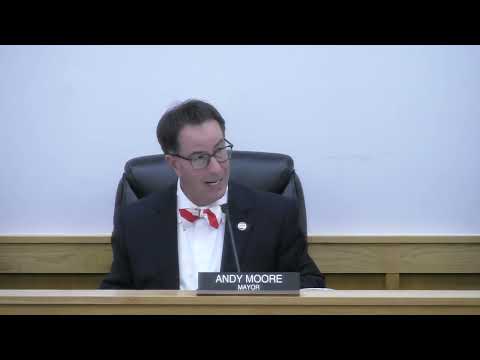
No final budget ordinance vote was taken at the hearing. The council opened the public hearing by motion, heard the manager’s presentation, accepted public comment and then closed the hearing. The mayor said additional budget work sessions will continue, and the council may revise the proposed rate and spending levels before adopting the budget later in the month.
The budget hearing also included time for citizen remarks on other items; the council repeatedly said the FY 2025–26 proposal is not final and that staff will return with more data and possible adjustments.
The council will continue deliberations at follow-up budget meetings when staff provides the requested departmental reduction spreadsheets and modeling on alternate rate scenarios.