Get Full Government Meeting Transcripts, Videos, & Alerts Forever!
Get email alerts on the Student Behavior topic
No spam. Unsubscribe anytime.
Board hears concerns on early-age behavior, screen time and social-emotional supports
Summary
District staff told the board they are seeing more extreme behavior at earlier grades, are reworking social-emotional learning curriculum and are reducing non-instructional screen time while expanding counseling and behavioral supports.
Board members and staff spent part of the LCAP presentation on student behavior and social-emotional supports, noting that more severe behavioral incidents are appearing at younger ages and that the district is adjusting curriculum and staffing responses.
Staff said teachers and principals are reporting earlier-onset aggression, anger and other maladaptive behaviors among some students, which staff described as appearing even in kindergarten and first grade. That pattern predates the pandemic in staff remarks but was described as exacerbated by COVID-era device use and changes in home and school routines.
District actions identified in the presentation included: switching social-emotional learning curricula where site-level data showed a program was not working, expanding counselor and dean-of-students coverage at select sites (the slides referenced a dean of students position at Baldwin Lane and an assistant principal, Scott Hurd, providing intermittent coverage), looking for ways to deploy CCSPP and other targeted funds for behavioral support, and considering additional on-campus bilingual aides and a district-level student liaison to support social-emotional needs for secondary English learners.
Staff also described a district emphasis on reducing noninstructional "screen time" in class and tightening approval and use of streaming content. The presentation described limiting movie use through a licensed provider (Swank) with administrative approval rather than open streaming via Apple TV or platform subscriptions, and imposing a guideline that longer clips (for example, over 15 minutes) require explicit instructional justification.
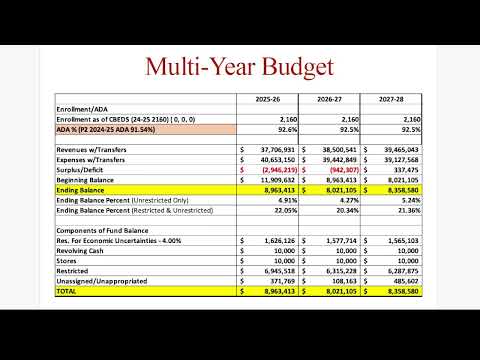
Board members asked staff to consider the staffing implications of behavior trends, noting that while the district plans some staffing reductions in its multiyear projection, student behavior needs could require additional aides or counselors funded from restricted grants. Staff said they are reviewing grant sources, including CCSPP and expanded-learning funds, for possible targeted hires.
Ending: Staff said they will return with more specific proposals linking observed behavior trends to staffing and program recommendations as part of upcoming planning sessions and the LCAP adoption process.