
Washougal council hears midterm strategic‑plan update; staff to seek council input on community funding options
Get AI-powered insights, summaries, and transcripts
Subscribe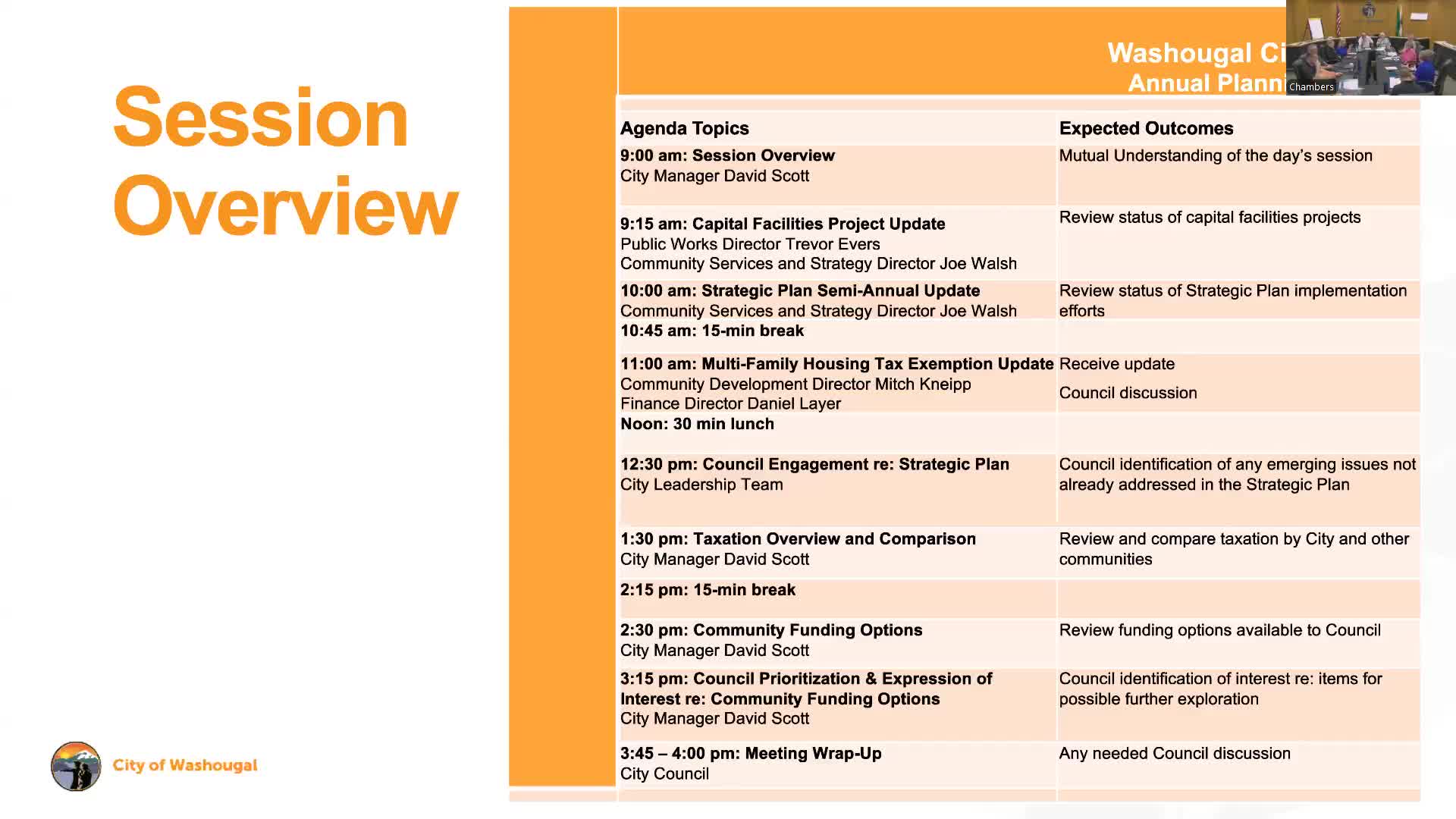
Summary
Staff reported Washougal is about halfway through its 2023–2028 strategic plan and presented a community funding planning framework; councilors were asked for feedback rather than asked to take action.
City staff told the Washougal City Council on Wednesday that the municipality is roughly halfway through its 2023–2028 strategic plan and presented an accompanying community funding discussion to help pay for operations and capital priorities in the plan.
Staff framed the session as an opportunity to identify emerging issues and to collect council preference for potential revenue options, not as a request to adopt any tax or fee. “Our thinking is we don't need this big course correction...but we want to make sure we’re not missing, from your perspective, some emerging issues,” a staff presenter said.
Why it matters: the strategic plan sets the city’s priorities for operating programs, capital investments and outreach. Council guidance on funding approaches will shape budget proposals and staff outreach ahead of the next biennial budget cycle.
What staff reported
Staff summarized progress on the plan’s five priorities: economic development and community prosperity; financial health and core services; a vibrant town center; smart growth; and redefined community identity. Highlights included a new economic development manager position and a pilot “Gateway to Success” program for small businesses that the city launched in May. Staff also said a performance dashboard is in development to show progress publicly.
Staff outlined a menu of potential funding approaches to support the plan, including grant seeking, enhanced grant‑writing capacity, transportation and infrastructure grant programs, and district‑based funding such as a metropolitan parks district. Staff said some funding sources will require voter approval and that staff will return with more detailed proposals after additional outreach.
Community‑level examples and metrics
Staff presented performance measures: median incomes and living‑wage job counts have risen in recent years, staff said, and survey responses show improved perceptions of parks and community appearance compared with prior surveys. Staff said some metrics require longer observation windows and that staff are building a public dashboard to track progress.
Next steps and outreach
Staff said they will continue community engagement and suggested small‑group exercises during the meeting for councilors to brainstorm emergent items the plan may have missed. Staff emphasized that any revenue proposals would be discussed publicly and likely require more detailed outreach, possibly an open house or targeted online materials.
Discussion vs. action
Council discussion focused on priorities to elevate in the final plan and on potential communication strategies with residents. No formal funding decisions or ordinance actions were taken at the meeting.