Get Full Government Meeting Transcripts, Videos, & Alerts Forever!
Get email alerts on the Planning Design Review topic
No spam. Unsubscribe anytime.
Architectural board warns staff‑led design review rewrite could curtail citizen oversight as council reopens code for HB‑1293 compliance
Summary
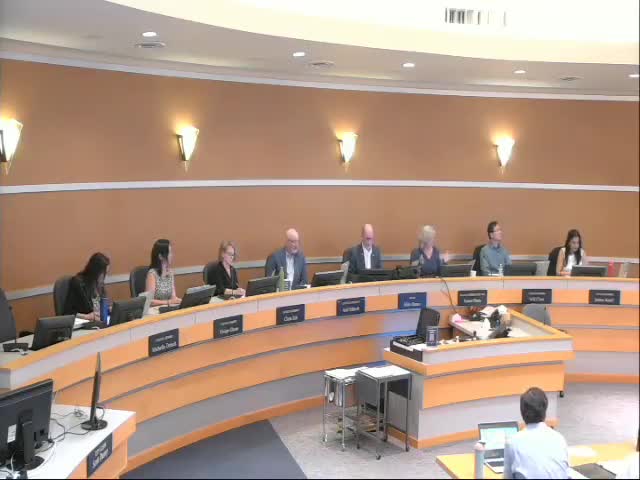
The Edmonds City Council continued a public hearing May 27 on design review code amendments to comply with state law that limits discretionary review; planning staff recommended moving compliance items forward and phasing non‑mandatory design refinements, while the Architectural Design Board warned the process risks reducing citizen oversight.
The Edmonds City Council continued a public hearing on May 27 on proposed design review code amendments intended to comply with state streamlining requirements and to replace subjective language with clear, objective standards.
Planning staff said the changes respond to House Bill 1293 and are aimed at eliminating the two‑phase downtown review process, consolidating scattered design criteria and replacing non‑measurable language with clear, objective standards that staff can administer without discretionary hearings in most cases. “HB 1293 requires us to streamline design review. It allows us or requires us to have no more than one public hearing,” planner Brad Shipley told council; staff described a phased approach that would place compliance‑required changes before council while moving non‑required refinements to a later phase.
Several members of the Architectural Design Board (ADB) and members of the public raised procedural concerns. Kim Bearer Augustavo, identified in the packet as ADB chair, criticized the staff process and the level of ADB involvement. “The staff and developers will now be the ones deciding what Edmonds should look like with no citizen oversight,” she said, arguing that ADB perspectives had not been adequately included and that a long‑range design character could be lost if standards are not carefully tailored.
Staff acknowledged the ADB comments and said the draft separates “required for compliance” items (such as eliminating subjective language and removing the two‑phase downtown process) from “beyond compliance” items that could be refined in a phase‑3 process. Planning staff said they would accept council direction on which non‑compliance items to move into the phase‑3 refinement schedule.
Shipley said required compliance changes include consolidating design standards into the zoning code, removing vague words such as “encourage,” and specifying measurable features (for example, weather protection extents or facade transparency percentages) so that staff can approve projects administratively when the standards are met. Items beyond compliance included broader frontage‑type standards and certain district‑specific treatments that staff proposed for later refinement.
The public hearing record shows written comments from ADB member Corbett Locke and other stakeholders; staff noted those comments were incorporated into the packet following an initial incorrect attachment. Planning staff also said they had received developer comments cautioning that overly prescriptive design requirements can make projects infeasible and urged a careful balance between clarity and flexibility.
Council did not adopt an ordinance at the May 27 meeting; staff said they plan an additional draft review and a potential adoption on June 10, with a phase‑3 refinement period available to address non‑required standards and design board input.
The ADB chair urged council to slow the process if necessary to preserve local design character; staff replied that state law limits the scope of discretionary process in favor of clear, objective standards but that the city could use the phase‑3 process to develop locally tailored standards for historic or character‑sensitive zones.
No council vote was held; the record remains open and staff will return with revised drafts and a schedule for phase‑3 refinements.