Get Full Government Meeting Transcripts, Videos, & Alerts Forever!
Get email alerts on the Municipal Budget topic
No spam. Unsubscribe anytime.
Residents present 'Keep Edmonds Vibrant' poll results; urge $12 million levy lid lift and $9 million in new non‑property revenues
Summary
A volunteer group called Keep Edmonds Vibrant presented results from an online civic poll and focus groups to the Edmonds City Council at its May 27 meeting, urging the council to pursue a $12 million levy lid lift and at least $9 million in non‑property revenue measures to address a projected budget shortfall.
A volunteer group called Keep Edmonds Vibrant presented results from an online civic poll and focus groups to the Edmonds City Council at its May 27 meeting, urging the council to pursue a $12 million levy lid lift and at least $9 million in non‑property revenue measures to address a projected budget shortfall.
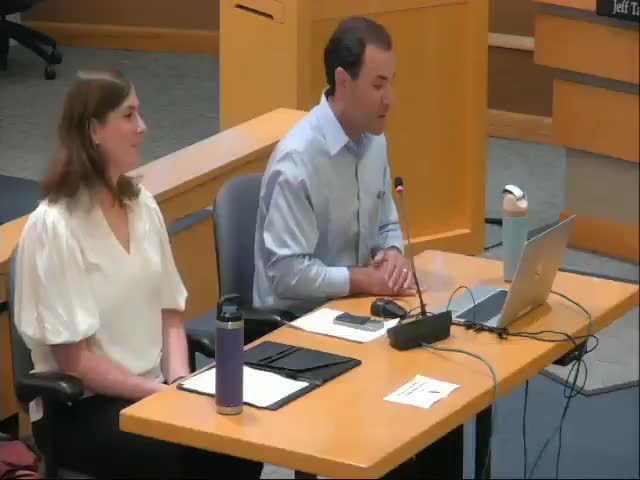
The group’s co‑organizer, Adele Safriwe, told the council that the team used two focus groups and the open‑source Polis platform to solicit ideas and that nearly 600 members of the community participated in the online conversation, casting 43,395 votes. “We are on track to reach financial insolvency by 2027, as you can see in this budget,” Safriwe said during the presentation.
Keep Edmonds Vibrant summarized its findings as four sequential goals: define a vision of a ‘‘vibrant Edmonds,’’ estimate the cost of running that city, identify long‑term revenue sources and recommend policy options to the council. The volunteers said their “apples‑to‑apples” comparison with peer cities showed Edmonds’s per‑resident spending lags comparable cities and that full funding of a ‘‘vibrant’’ level of services would cost roughly $65 million in 2025 — about $19 million more than current operating levels. The group recommended a $12 million levy lid lift and a concurrent pursuit of roughly $9 million in immediate non‑property revenue options they say could be implemented before year‑end.
“Polis enables community members to vote on ideas and submit ones they feel are missing from the conversation,” Matthew Gunther, one of the volunteers, said, describing the online tool the group used. Eric Hauser, another volunteer, listed options the group prioritized as immediate‑term revenue, including a local business and occupation tax, paid downtown parking, additional school‑zone cameras and hiring a grant writer; Hauser said the group estimated about $9 million in immediate potential revenue from a set of such measures.
Volunteer Elise Hill promoted the levy proposal and gave the illustrative homeowner impact: “For the median homeowner in Edmonds, the levy would mean an increase of approximately $52.53 per month,” she said, adding that income‑based property tax exemptions exist for eligible residents. Hill said the group would campaign for the levy while asking the city to pursue the $9 million in non‑property revenues concurrently.
Council members asked for more data. Council member Nand requested the methodology behind the group’s $1 million estimate for additional revenue from adding three school‑zone cameras; the volunteers said they used Linwood’s experience as a reference and that the net estimate anticipated enforcement and court processing costs, but they did not provide the full calculation at the meeting. Council member Chen and others repeatedly pressed the presenters to note that the group’s survey was not a scientifically representative sample and asked the presenters to provide their underlying spreadsheets and demographic breakdowns.
Council reactions were mixed but generally respectful. Council President Tippett defended scheduling the presentation, saying the volunteers had aggregated input from many residents. Council member Olson thanked the presenters and noted the group’s work added a useful public perspective to staff and consultant analyses. Several council members urged the city’s finance staff and the group to coordinate so council can compare the volunteer analysis with the city’s official budget and consultant recommendations.
Keep Edmonds Vibrant told the council it will publish the slide deck and executive summary in early June; presenters said the deck will include the full list of ideas and the community comments captured in the Polis tool. The group asked the council to commit to pursuing at least $9 million in non‑property revenues before the end of 2025, alongside any levy the council decides to place before voters.
Council did not take formal action on the group’s recommendations during the meeting. The agenda item was a presentation and the council directed staff and the volunteers to exchange underlying data and follow up at upcoming budget workshops and meetings.
The presentation drew public comment both supporting the volunteers’ effort and calling for transparency in city budget communications. Several speakers who said they had participated in the volunteer poll urged the council to consider the group’s recommendations; others asked the council to publish clearer analysis of budget assumptions and trade‑offs so residents can evaluate proposals.
Keep Edmonds Vibrant’s materials and the council’s subsequent staff budget work are expected to be part of ongoing budget discussions over the summer.