Get Full Government Meeting Transcripts, Videos, & Alerts Forever!
Get email alerts on the Economic Development topic
No spam. Unsubscribe anytime.
Entrepreneur pitches LifeRaft biochar plant near Atalissa; promises odor reduction, jobs, and research ties
Summary
William "Will" Cowell of LifeRaft presented a proposal to build a biochar production facility on U.S. Highway 6 near Atalissa, describing feedstock sources, production capacity, estimated jobs and local partnerships; he said the company would seek a rezoning to industrial and has not yet submitted zoning paperwork.
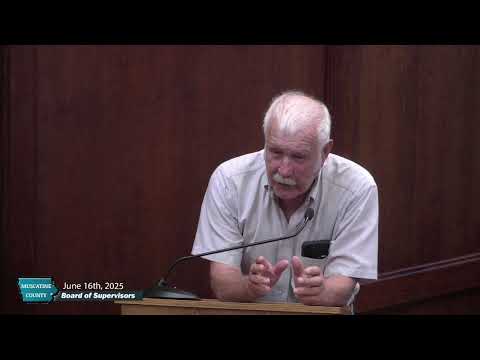
William “Will” Cowell, founder of LifeRaft, presented plans on June 16 to the Muscatine County Board of Supervisors for a proposed biochar production facility along U.S. Highway 6 about 4 miles outside of Atalissa.
Cowell described biochar as a porous, carbon-rich soil amendment made by pyrolyzing organic waste and said his company would convert municipal and industrial wood waste and other plant-based residues into biochar and compost additives. He said the facility would operate two reactors at full scale, produce roughly 18,000–20,000 tons of biochar a year and consume about 100,000 tons of feedstock annually; LifeRaft has not submitted rezoning applications and is seeking local feedback before doing so.
Cowell said LifeRaft plans to source material from municipal brush piles and industrial wood waste within roughly a 50-mile radius; he described potential arrangements in which municipalities and contractors would avoid tipping fees while LifeRaft receives ground or baled material. He said each reactor would process about 5 tons of feedstock per hour and that the company initially expects to install two reactors. He also described company-produced byproducts — a synthetic gas and oil — that would be used to fuel the process, reducing outside fuel needs.
On employment, Cowell estimated about 55 direct jobs at full scale, including entry-level driver and maintenance roles paying about $30–$35 per hour and supervisory positions above $100,000 annually; he said LifeRaft will provide on-site training and a ‘train-the-trainer’ model. Cowell said the company has secured roughly $7 million in initial investment for the site and has investor commitments to fund additional buildout if needed.
Neighbors asked about odor, noise and truck traffic. Cowell said the biochar process is intended to reduce ammonia and odor when blended into composting operations and that the reactors operate at roughly 80 decibels at the machine — but would be enclosed in a building. He estimated daily inbound tonnage of roughly 120 tons per day to serve two reactors and suggested 5–10 semi truck deliveries per day; he said grinding operations would occur off-site at municipal facilities when possible.
On permits and regulation, Cowell said the project would need Iowa DNR emissions permits and follow state rules about landfill disposal of biological materials; he also mentioned that the USDA has a federal initiative recognizing biochar as a soil amendment and that he had spoken last year with Congresswoman Mariannette Miller-Meeks (R) about the topic. Cowell said he is not requesting county funding or tax relief and plans to work with local contractors, farmers and Iowa State University on a proposed $2.4 million, six-year research program tied to the site if it proceeds.
Cowell repeatedly emphasized that LifeRaft would only take waste material and would not divert material from existing agronomic uses. He said the company had canvassed residents within a 700-foot radius and would involve neighbors in planning for lighting, traffic routing and other operational concerns.
The board took no formal action. Supervisors and residents asked technical and operational questions; Cowell provided contact information and said he would not submit rezoning or building applications until he had gauged local reaction.