Lifetime Citizen Portal Access — AI Briefings, Alerts & Unlimited Follows
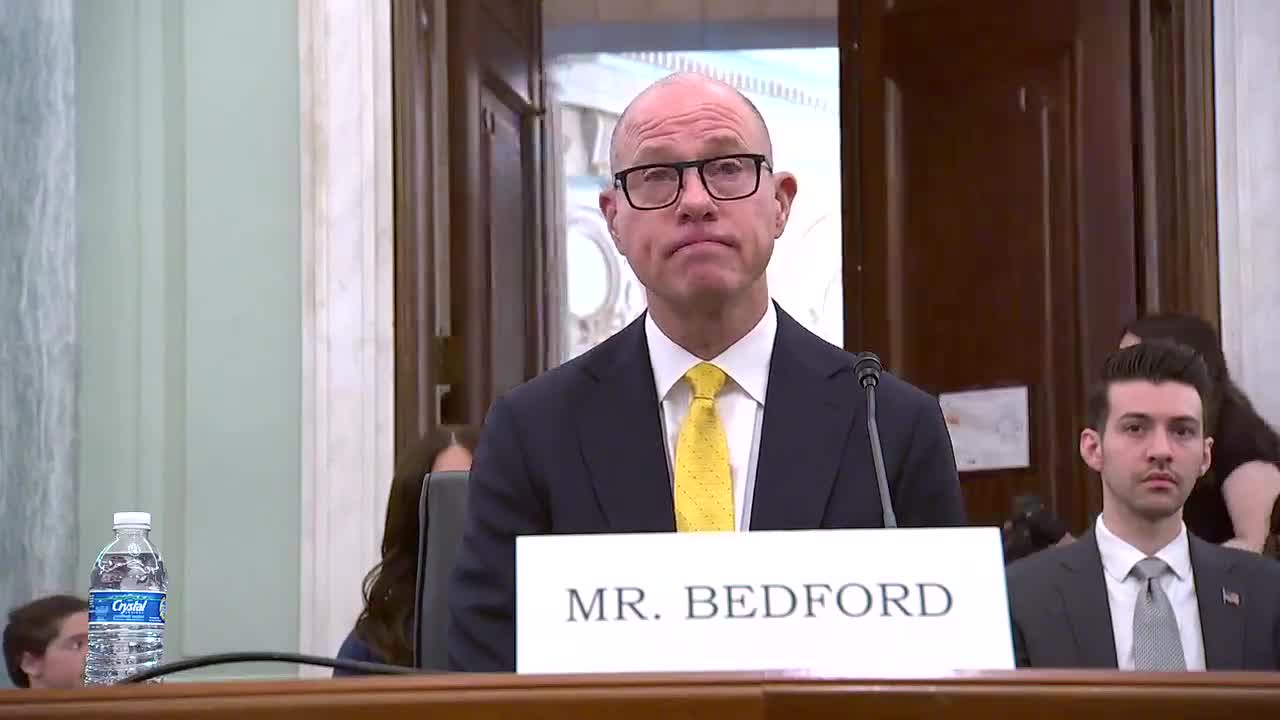
Spectrum, commercial space fees and new aviation technologies spotlighted in Bedford hearing
Loading...
Summary
Senators questioned nominee Brian Bedford on spectrum‑sale interference risks, user fees for commercial space launches, integration of drones and air taxis, and the FAA's capacity to procure and deploy technology quickly; Bedford urged collaboration and cautious, test‑based rollouts.
Senators used parts of the hearing to press Brian Bedford on issues at the intersection of new technologies, spectrum policy and agency procurement practices: whether spectrum auctions pose interference risks to aircraft systems, whether commercial space launches should pay user fees, how to integrate drones and air taxis into the national airspace, and how the FAA should move faster on procurement.
Why it matters: Rapid technology adoption — from commercial space launches to advanced air mobility and AI‑enabled maintenance tools — is changing demands on the national airspace system and on FAA oversight, equipment and spectrum policy. Senators emphasized that poor rollout or insufficient testing can create safety risks.
On spectrum, Senator Maria Cantwell and others asked about proposed upper C‑band auctions in the reconciliation language. Bedford said he was "not informed enough to formulate an opinion" on specific band allocations but said lessons from previous rollouts (which required aircraft filters to prevent radio‑altimeter interference) must guide a cautious and collaborative approach. Senator Cruz defended the committee’s pipeline language, saying the bill stages auctions and would leave industry and regulators flexibility to mitigate interference.
On commercial space, the committee discussed a reconciliation proposal to phase in user fees for launches and re‑entries over 10 years; Bedford said he supports designing the NAS to accommodate increased space launch cadence and agreed industry should help bear some operating costs.
On new aviation technologies — drones, air taxis, supersonic — Bedford said the FAA should be a partner and leader and called for test corridors and use of existing research centers, including the Center for Advanced Aviation Technologies. He told senators the agency should leverage commercial and academic testing sites and cited Texas A&M’s consortium as an example.
Several senators pressed Bedford on procurement speed and accountability. Bedford called for a more commercial procurement approach, clearer project plans, and contractual deliverables that would shorten timelines for getting equipment into service. The committee emphasized that billions in proposed modernization funding must be accompanied by strict oversight and measurable milestones.
Bedford also said the industry and FAA should experiment with AI and machine learning in a ‘‘targeted, safe, cyber‑secure way’’ to support predictive maintenance and capacity planning, while acknowledging data‑security and explainability concerns.