Citizen Portal

Interior proposes unified U.S. Wildland Fire Service to streamline federal wildfire response

3841632 · June 11, 2025

Get AI-powered insights, summaries, and transcripts

Subscribe
AI-Generated Content: All content on this page was generated by AI to highlight key points from the meeting. For complete details and context, we recommend watching the full video. so we can fix them.

Summary

Secretary Burgum told senators the budget reforms federal wildland fire management by creating a centralized U.S. Wildland Fire Service within the Department of the Interior to unify suppression, mitigation and coordination across multiple federal agencies.

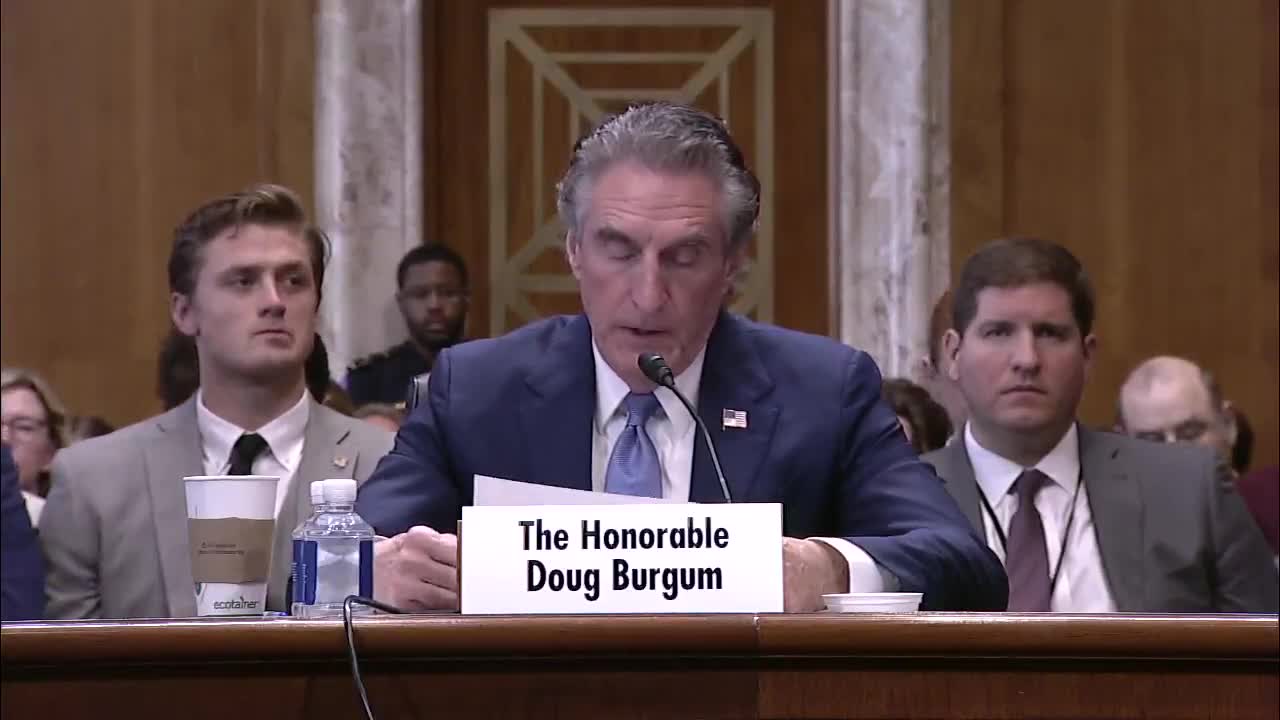
Secretary Doug Burgum told the Senate Energy and Natural Resources Committee that the FY2026 proposal consolidates federal wildland fire responsibilities into a single U.S. Wildland Fire Service within the Department of the Interior, a change the administration says will improve operational coordination and response.

"The budget reforms federal wildland fire management to create operational efficiencies by unifying federal wildland fire responsibilities into a new centralized, U.S. Wildland fire service, within the Department of Interior," Burgum said. He told senators the consolidation would improve coordination among multiple agencies, standardize pay and benefits for wildland firefighters, and create a single set of technology and aviation assets to deploy where needed.

Burgum cited examples he said the department can build on: the Interagency Fire Center in Boise, Idaho, and cooperative models in Alaska that co-locate resources and align state and federal response. He argued that faster deployment and better technological tools would reduce the total cost and the human risk of late responses.

Several senators praised the idea during the hearing. "I think it's a very sensible proposal," Sen. Angus King said in a brief exchange, and Sen. John Hoeven and Sen. Steve Daines highlighted the need for improved coordination and technology. Senator Joe Justice and others described the recommendation as the kind of executive, operational reform they expected from a former governor.

Committee members asked follow-up questions about implementation: whether personnel would be reassigned, how pay and retirement would be unified, and how the new structure would interface with the U.S. Forest Service, states and tribal partners. Burgum said the proposal would not force immediate relocation of staff; rather, it would create unified leadership and planning across currently separate federal firefighting organizations.

Why it matters: Federal wildland fire responsibilities are currently split across multiple Interior agencies and the U.S. Forest Service, making cross-jurisdictional response and asset allocation more complex during increasingly intense fire seasons. Senators from both parties signaled appetite for coordination improvements but asked for detail on near-term implementation, labor questions and interoperability with state and tribal fire organizations.

What comes next: Burgum said the department and the White House would continue planning and legislative partners on Capitol Hill could introduce measures to adjust authorities; senators asked the department for follow-up briefings and operational plans.