Get Full Government Meeting Transcripts, Videos, & Alerts Forever!
Get email alerts on the Munitions topic
No spam. Unsubscribe anytime.
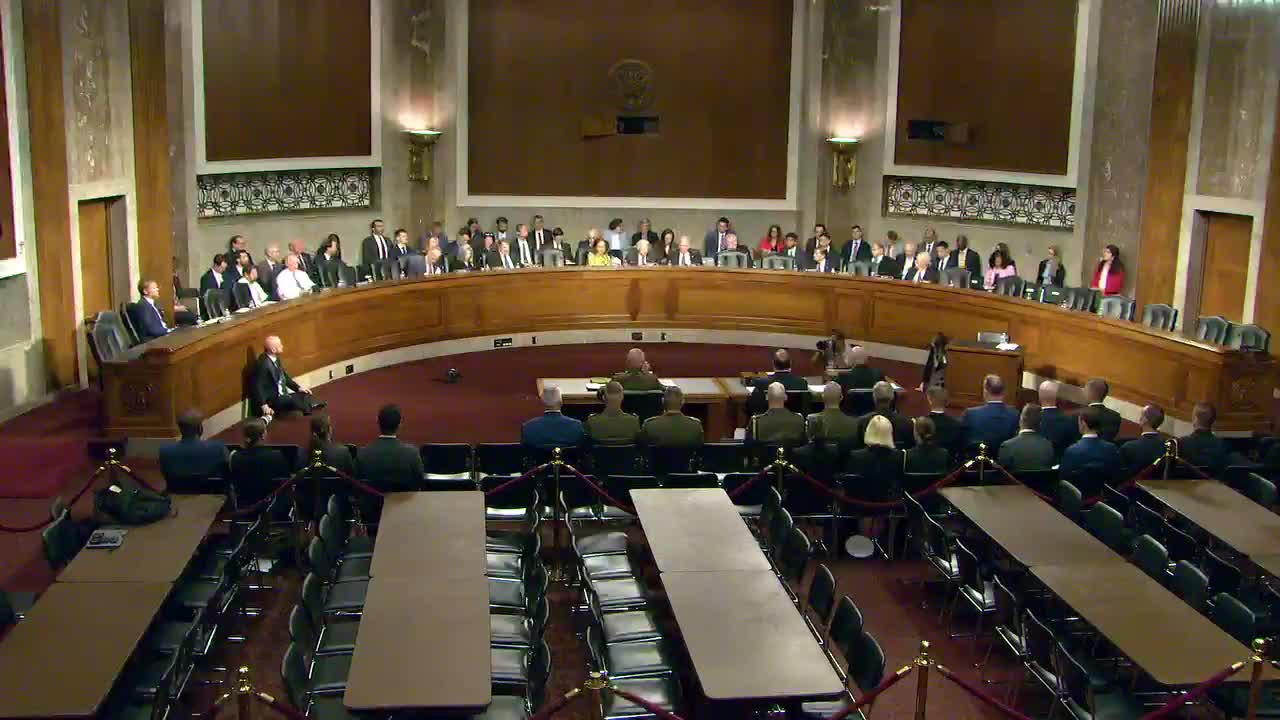
Senators and Navy warn of munitions shortfall after high expenditures in the Red Sea
Summary
Lawmakers asked the Navy about shortages caused by recent operations and whether reconciliation or base budgets will backfill munitions production; Navy leaders said they are reviewing contracts and exploring new suppliers and manufacturing methods.
Senators warned that recent operations in the Red Sea have strained the munitions industrial base and asked Navy leaders how the department will replenish stocks and increase production capacity.
Senator Joni Ernst and Senator Deb Fischer pressed the witnesses about high rates of ordnance expenditure, including Tomahawk and other missiles, and whether production is keeping pace. Senator Fischer said, “We are expending missiles far faster than we are producing them,” and asked what the Navy planned to do to increase production.
What the Navy said: Secretary John Phelan said he had not yet completed a review of munitions contracts but acknowledged the problem and said “fully funding our munitions industrial base is critical and very important.” Admiral Kilby said the Navy is examining nontraditional vendors, additive manufacturing and plans to “double down on traditional munitions” such as SM‑6, SM‑2, LRASM and maritime strike Tomahawk. He added that lack of competition in some programs is a concern and that “even if it is producing a missile that isn't quite as effective as the SM‑six, that's better than 0 missile in your magazine.”
Why it matters: Senators framed munitions capacity as a readiness and deterrence issue; sustained operations require predictable production rates and spare capacity in the industrial base. Committee members sought concrete steps to expand capacity, increase competition and remove single‑source bottlenecks.
Follow‑up requested: Senators asked for written updates on contract reviews, planned increases in production rates, and the extent to which reconciliation or supplemental funding would be relied on to accelerate munitions buys.
Ending: The committee left the hearing with a clear focus on ordnance production as a near‑term readiness vulnerability that requires budgetary and acquisition action.