Citizen Portal

Interior secretary backs Trumpadministrationbudget; senators warn cuts would cripple agencies and tribal programs

3841632 · June 11, 2025

Get AI-powered insights, summaries, and transcripts

Subscribe
AI-Generated Content: All content on this page was generated by AI to highlight key points from the meeting. For complete details and context, we recommend watching the full video. so we can fix them.

Summary

Secretary Doug Burgum told the Senate Energy and Natural Resources Committee that President Trump's FY2026 budget requests $14.4 billion for the Department of the Interior, a plan the administration says will increase energy production and reduce overhead.

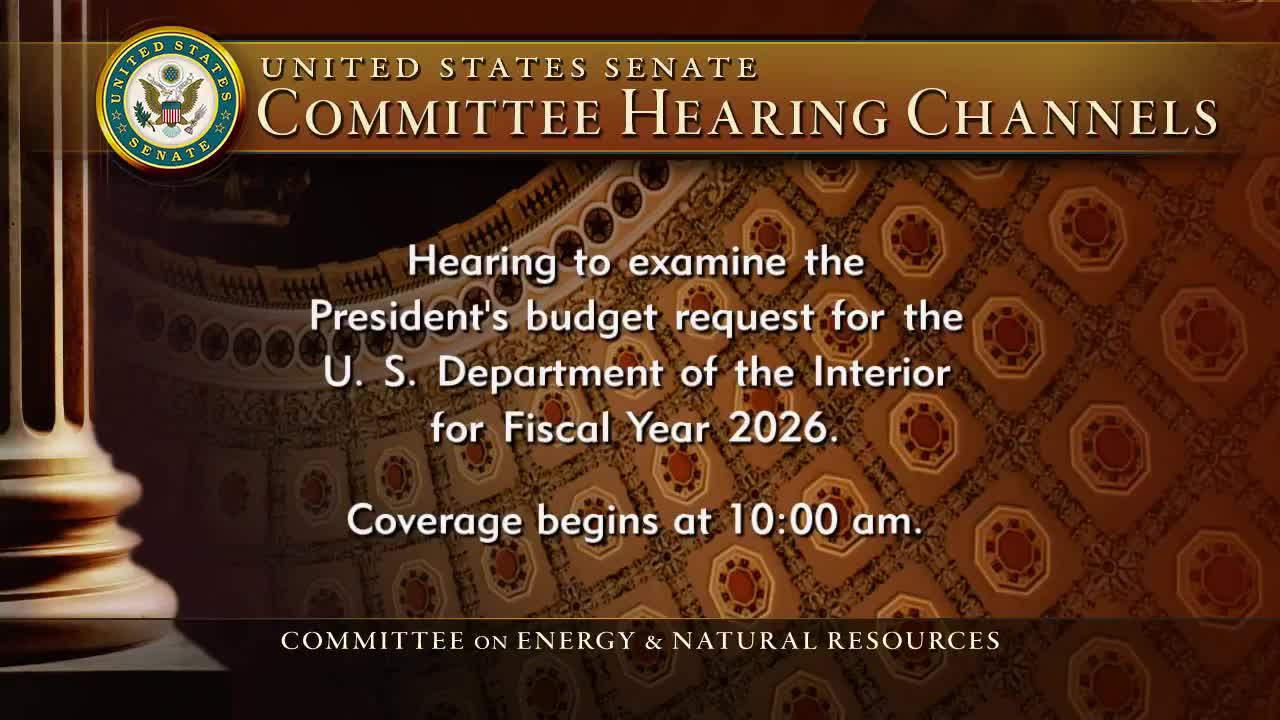
Secretary Doug Burgum told the Senate Energy and Natural Resources Committee on the opening day of the FY2026 hearing that President Trumps budget requests $14.4 billion in current authority for the Department of the Interior and aims to prioritize energy production, streamlined operations and reduced overhead.

The committee's ranking member, Sen. Martin Heinrich, said the cuts proposed in the request would leave the department unable to meet its mission, citing reductions he said were about 30% across some programs and near-40% for the U.S. Geological Survey. "This proposal would kneecap the scientific research we need to understand how our natural world is changing in the face of a changing climate," Heinrich said during his opening statement, warning the budget would "do irreparable harm to Indian country" by cutting the Bureau of Indian Affairs and the Bureau of Indian Education by more than 30%.

Burgum framed the request as part of a broader administration effort to increase revenue from public lands and mineral development, accelerate energy production, and reform duplicative programs. "President Trump's 2026 budget requests 14,400,000,000.0 in current authority for the department, providing significant savings to the American people," Burgum said, adding the administration seeks to expand oil production and mining for critical and rare earth minerals and to streamline permitting.

Senators pressed for details. Heinrich and others raised specific program impacts senators associated with the proposed cuts: a 35% reduction to the Bureau of Land Management, proposed elimination of the WaterSMART program, and near-40% reductions to USGS programs that, as Heinrich noted, could include curtailing wildlife disease labs and migratory bird research. Heinrich also said park operations could be reduced by 30% and that, under his reading, many smaller park units could face transfer or disposal to meet the budget target.

Burgum and senators repeatedly said additional, detailed budgeting information and project lists will be necessary for oversight. Burgum said the department is working on data systems and emphasized that some revenue from land disposals and leases can be cycled back into recreation and deferred maintenance projects. He cited examples in Southern Nevada where small land dispositions funded visitor centers and other local projects.

No formal actions or votes were taken at the hearing. Senators asked for additional material for the record and for more detailed breakdowns of staffing and program-level impacts. Chairman and ranking member exchanges indicated follow-up questions will be due to the committee for responses from the department.

Why it matters: The Interior Department manages hundreds of millions of acres of public lands, river and reclamation projects, and programs with direct effects on tribes, agriculture, recreation and scientific monitoring. Changes to core funding levels or to how land and mineral assets are used could affect services, revenue flows and long-term stewardship of federal lands.

What comes next: Senators requested supplemental information and timelines; committee staff will accept questions for the record. Burgum and committee members said they will continue to exchange data on visitation, staffing and specific program impacts to inform the appropriations process.