Senators press Forest Service on timber production target, Tongass and Black Hills impacts
Get AI-powered insights, summaries, and transcripts
SubscribeSummary
Senators pressed Chief Schultz about the administration's timber production goals, Alaska-specific concerns for the Tongass and Chugach, and regional plans to address sawmill shortfalls in the Black Hills.
Senators used the appropriations hearing to press the Forest Service on how the administration's timber agenda and proposed budget changes would affect regional economies, tribal relationships and local workforce capacity.
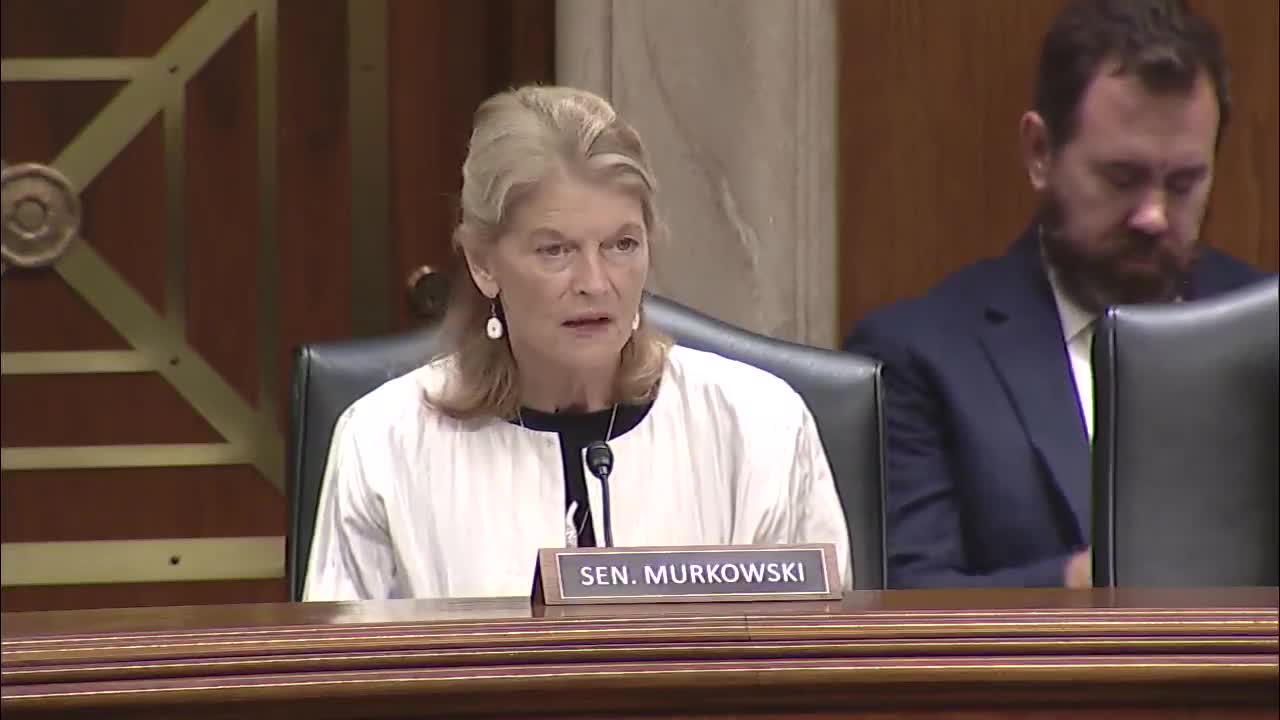
Chair Lisa Murkowski emphasized Alaska's timber and mineral potential, saying the Tongass and Chugach "play a very key role" in Southeast Alaska's economy and that many local communities are entirely within the National Forest System. Murkowski described local concerns about staffing and morale at visitor sites — "I have to tell you, the morale is shot" — and said the Forest Service must remain a partner for local economic activity and subsistence uses.
Senator Mike Rounds and others pressed Chief Schultz on the Black Hills National Forest, where timber sales have declined and sawmills face higher shipping costs. Schultz said Forest Service staff recently convened industry, conservation groups and local officials to create a short‑term and long‑term plan; he said a short‑term plan should be forthcoming within about two weeks and that the agency has detailed personnel from another region to assist timber staff in the Black Hills.
Schultz also described a national timber strategy that the Forest Service developed in response to an executive order to "immediately expand American timber production," including a goal to increase domestic timber production by 25% over five years. He said an initial allocation analysis modeled outcomes tied to an additional $200,000,000 in funding, and that regional increases would vary depending on where additional money is allocated — Region 2 (which includes the Black Hills) showed a small projected near‑term increase under that preliminary allocation because higher likelihood of output elsewhere affected distribution decisions.
Murkowski and others also asked about mineral permitting, roadless rules and co‑stewardship agreements with tribes; Murkowski noted the Mendenhall Visitor Center in Juneau and a co‑stewardship arrangement with the Tlingit and Haida tribes as examples of local partnerships reliant on Forest Service staffing.
Other regional points: senators from North Dakota praised Forest Service work on noxious weed control and asked for continued attention to prairie dog management and access for grazers on the Little Missouri National Grasslands.
Why it matters: senators said the president's timber agenda could only succeed if the Forest Service can provide workforce capacity, timely permitting and partnership with tribes and states. The chief pledged visits to Alaska and to work with local officials to develop timber strategies and short‑term plans for hard‑hit areas such as the Black Hills.