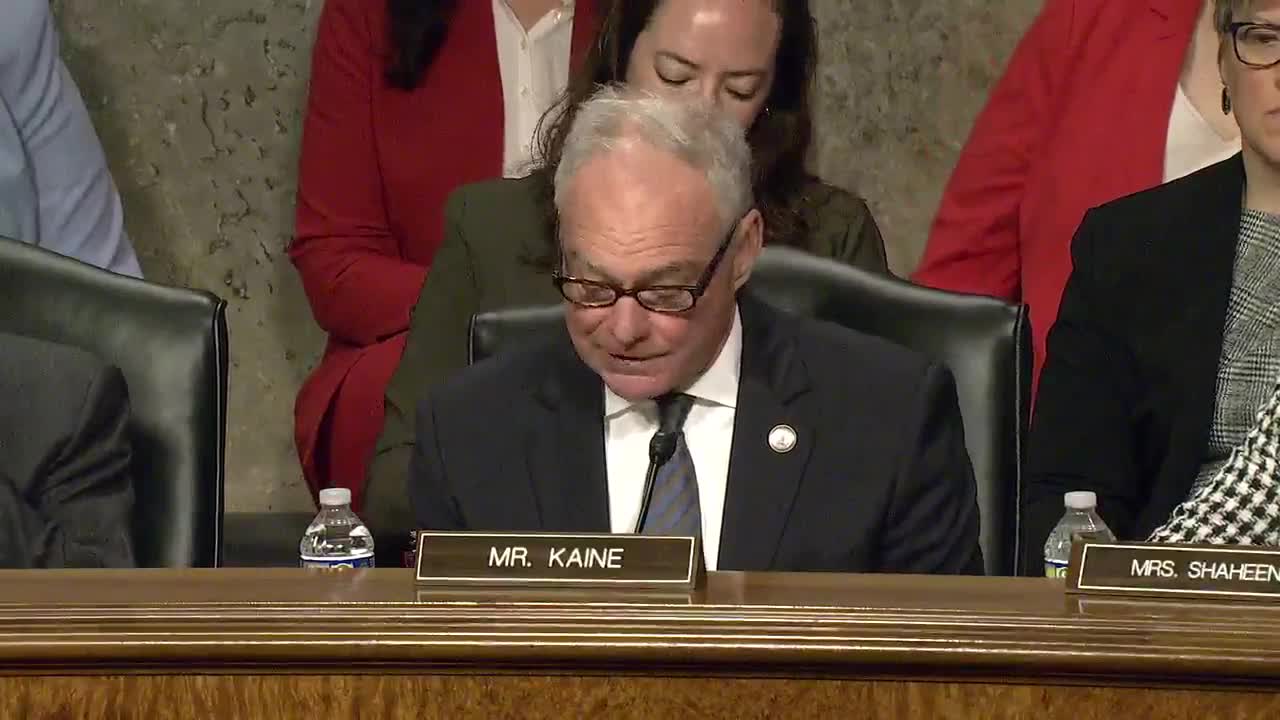
Senators split over use of Guard and Marines in Los Angeles protests; fears of dangerous precedent
Get AI-powered insights, summaries, and transcripts
SubscribeSummary
Multiple senators raised constitutional and civil‑liberties concerns after testimony about the deployment of National Guard and active‑duty Marines to Los Angeles without a state request; supporters said the president acted to protect lives and federal property.
Senators on the Armed Services Committee debated the legal and policy implications of deploying National Guard units and active‑duty Marines to Los Angeles to protect federal property, with Democrats warning of a dangerous precedent and some Republicans defending the president’s actions.
The dispute surfaced early in the hearing when Senator Tim Kaine said “The president's decision to deploy thousands of guardsmen and women to quell protests in Los Angeles without a request by the California governor ... is nearly unprecedented,” and later warned that deploying active‑duty forces for civilian protest response is “very, very dangerous.”
Why it matters: Democrats emphasized civil‑liberties risks and the potential erosion of the traditional balance between state governors and the federal executive over Guard activation. They said use of active‑duty forces for domestic policing risks politicizing the military and damaging public trust. Supporters argued the president acted within legal authority to protect federal officers and property when local capacity was overwhelmed.
Key testimony and exchanges: Senator Richard Blumenthal said the “use of the military in this way a risk to our national security” and announced plans to propose reforms to the Insurrection Act to add safeguards. General Eric Smith told the committee that Marines deployed to the operation “do have crowd control training” and that the units involved were “there to protect federal property and federal personnel.” Senator Tom Cotton argued the president had authority and defended the federal response as necessary when local officials declined to request assistance.
Training, authorities and limitations discussed: Witnesses and senators drew distinctions among roles and legal authorities: - Training and capabilities: General Smith said the deployed marines had training in crowd control at their home station and were equipped with shields and batons. He told lawmakers the marines did not have arrest authority and were “there to protect federal property and federal personnel.” - Legal authority and safeguards: Several Democratic senators argued that the Insurrection Act and related authorities require reform or clearer guardrails; Senator Kaine and others said they would pursue NDAA amendments. Republican senators said the administration had legal grounds to act when state authorities declined to intervene.
Impact and concerns for the force: Senators warned of potential morale and reputational effects on troops. Senator Richard Blumenthal said that using Marines in this manner “threatens to be a stain on their honor and a blow to their support and credibility among Americans.” Several lawmakers asked about mental‑health preparedness; General Smith said mental‑health services remain available and he had “no heightened concerns” about the fitness of marines for the assigned protection mission.
What the committee asked next: Members requested clearer coordination records between Defense Department commands and local law‑enforcement agencies, documentation of training and rules of engagement for domestic employment, and written follow‑ups on legal authorities used to mobilize active‑duty forces.
Ending note: The committee’s debate underscored an unresolved split in Congress over when and how the federal government should use National Guard and active‑duty forces to respond to domestic civil disorder.