Get Full Government Meeting Transcripts, Videos, & Alerts Forever!
Get email alerts on the Stablecoins topic
No spam. Unsubscribe anytime.
Senate hearing: Treasury says stablecoin bill could boost demand for U.S. Treasuries
Summary
Treasury Secretary Bessent told a Senate appropriations subcommittee that legislation to require stablecoins be backed by cash or short‑dated U.S. Treasuries would expand dollar usage and create new demand for Treasuries, while regulators consider tailoring bank capital rules tied to Treasuries.
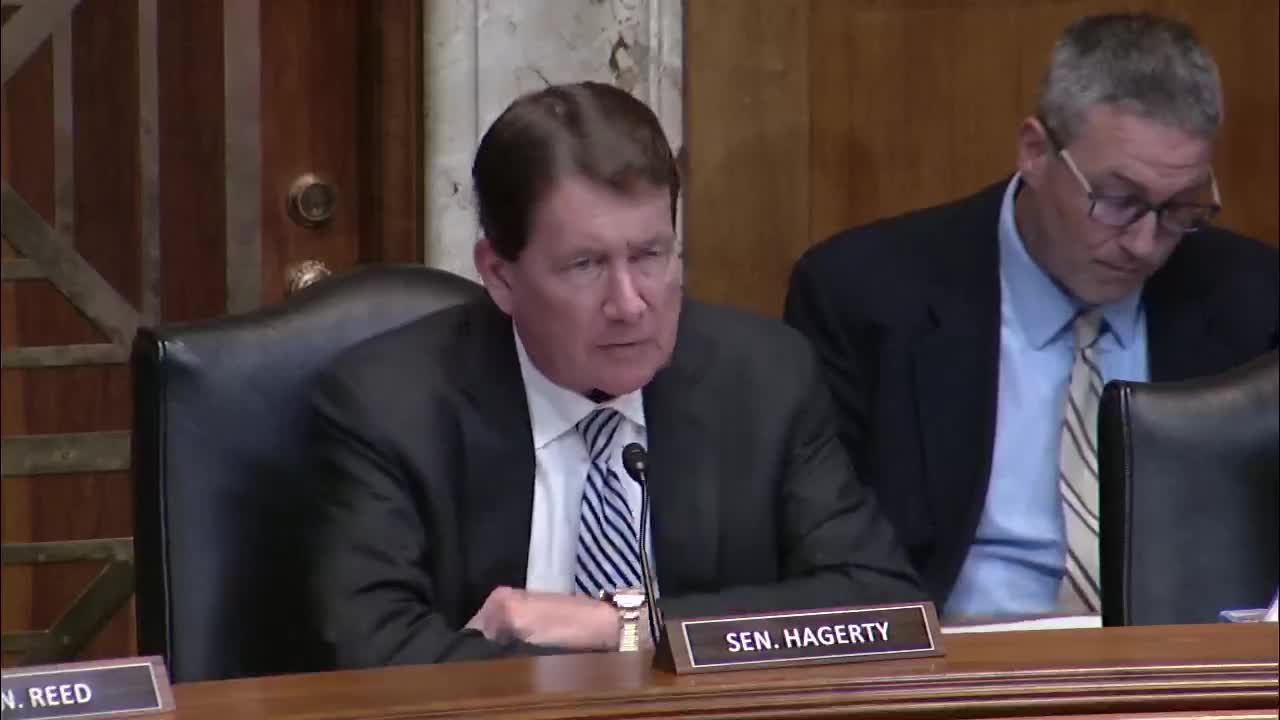
Senate Appropriations Subcommittee Chairman Haggerty and other senators questioned Treasury Secretary Bessent on the potential market impacts of the Genius Act, a bill that would require stablecoins to be backed by cash or short‑dated U.S. Treasury securities.
Secretary Bessent, Secretary of the Treasury, told the subcommittee that the administration supports measures to keep the U.S. “the world leader in digital assets,” saying such legislation “will create a market that will expand US dollar usage via these stable coins all around the world.”
The committee pressed Bessent on how the bill’s reserve requirement could affect demand for U.S. Treasury debt. A senator cited private estimates that the Genius Act could expand the stablecoin market from about $240 billion today to $2 trillion by 2028, with “most of the reserves likely to be held in US treasuries.” Bessent said he could “see it greatly exceeding that.”
Committee members also asked about adjustments to the supplementary leverage ratio (SLR), a bank capital standard that treats Treasuries and reserve balances the same as other assets. Bessent said Treasury and financial regulators are “working via FSOC and the regulators, OCC, the FDIC and the Fed to coordinate a change in the supplementary leverage ratio for the purchase of treasuries,” adding that the department expects a change in direction though “we don't know the exact magnitude in terms of how it might affect yields.”
Senators pressed on timing and market effects. Bessent compared the SLR issue to medical risk and said the current rule “doesn't differentiate,” arguing a tailored approach for low‑risk assets could support markets. He declined to provide a specific timetable or quantitative yield impacts, saying regulators have discussed a tapering approach and the department “doesn't know the magnitude” but knows the “direction of travel.”
The subcommittee also discussed stablecoin market growth figures raised by senators at the hearing: references included an increase from roughly $4 billion in early 2020 to more than $200 billion today and private estimates of growth to $2 trillion under the Genius Act. Those figures were cited by members during questioning; the Treasury witness did not provide independent estimates beyond saying the administration expects growth and greater dollar usage.
The hearing record will include written opening comments and follow‑up questions for the record, which members said they would submit to Treasury for further detail on market and regulatory modeling.
Less urgent details from the hearing: senators noted the potential for stablecoins to improve settlement speed and reduce friction in cross‑border payments. Bessent emphasized that any regulatory or capital‑rules changes would be coordinated with banking regulators.