Senate aides, Forest Service chief spar over plan to move wildfire operations to new U.S. Wildland Fire Service
Loading...
Summary
Senators pressed Forest Service Chief Schultz about the administration's proposal to move most wildfire personnel and programs into a new U.S. Wildland Fire Service inside the Department of the Interior, and about workforce reductions and readiness for an active fire season.
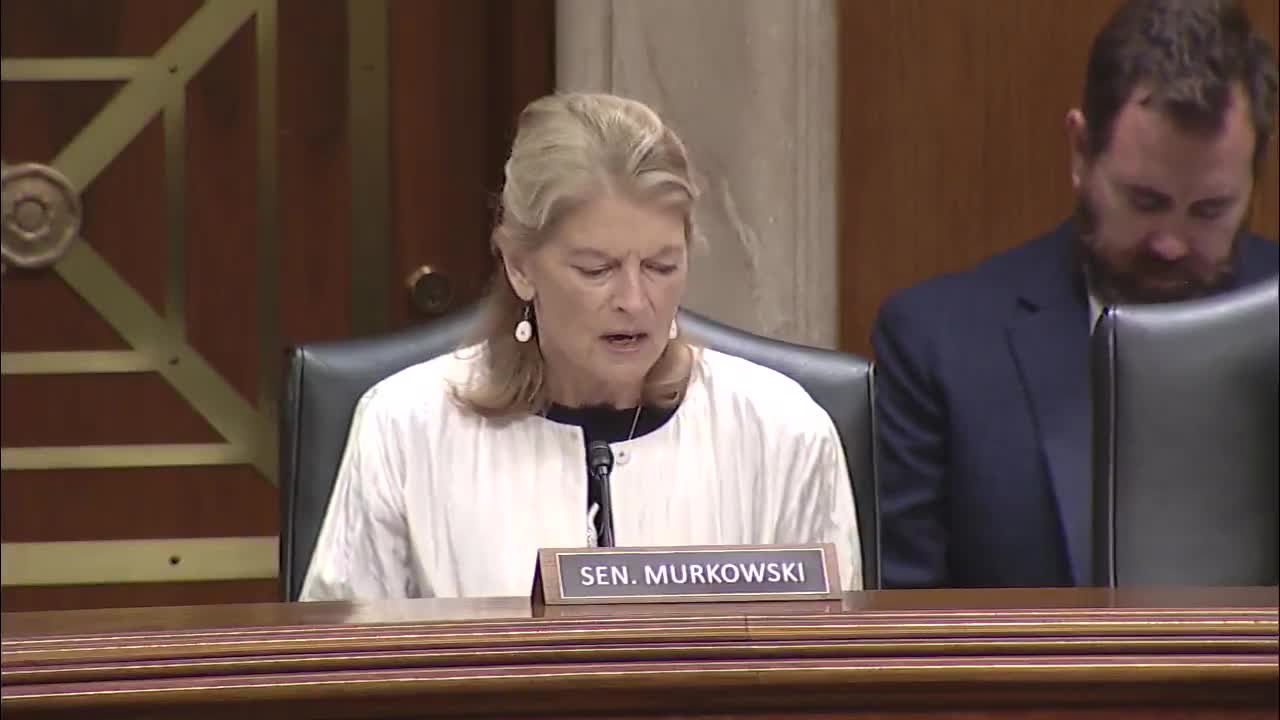
Senate Appropriations Subcommittee Chair Lisa Murkowski opened the hearing by pressing U.S. Forest Service Chief Schultz on the administration's proposal to transfer most wildfire personnel and activities from the Forest Service to a newly created U.S. Wildland Fire Service within the Department of the Interior.
Murkowski said the plan "proposes a drastic reorganization of our nation's wildfire capabilities" and asked Schultz to explain "how the administration envisions this whole restructuring working and really what it means to the Forest Service as an agency." The chief responded that the intent is "to standardize things across the board and have a unified firefighting force" and that details are still being worked out with Department of the Interior.
Why it matters: senators said the proposal could affect on-the-ground firefighting coordination, fuels management and the Forest Service's relationships with states and local partners. Several members warned that the changes come as the nation faces a hotter, drier fire season and as the agency has lost staff through voluntary departure programs.
Committee members repeatedly sought concrete assessments of readiness. Chief Schultz told the panel the Forest Service has "just under 11,000" frontline firefighters hired so far — "our goal is to have about 11,300 at full capacity" — and that the agency is "a little bit ahead of where we were last year at this time". On incident management teams (IMTs), he said there are 37 teams nationally now compared with about 42 a year ago, and that roughly half the personnel on those teams are Forest Service members.
Several senators pressed on workforce losses tied to incentive programs. Senator Patty Murray and others said thousands of skilled employees left the agency via voluntary separation incentives. Schultz confirmed two rounds of the Deferred Resignation Program (DRP) and other voluntary retirements resulted in roughly 4,200 voluntary departures in one round and a later 600 in another; he said about 1,400 employees with fire qualifications left and the agency has reached out to ask whether those people would return for the coming season. "We did not have a mass firing," Schultz said, describing the departures as voluntary, and added the agency is doing "lateral movement" to fill critical vacancies.
Senators also sought detail on how the consolidation would affect the National Interagency Fire Center (NIFC) and local roles. Schultz said the Forest Service already has representation at NIFC in Boise and that fuel-reduction programs and initial/extended attack operations proposed to move would still work under agreements with states and other cooperators. "The Forest Service would still be the one making those decisions," Schultz said when describing how fuels work could be done through partnerships while the Forest Service retained decision authority for National Forest System land management.
Concerns remained about how a new firefighting bureau would coordinate with forest-management activities (like prescribed thinning and invasive-species work) that senators said must align with wildfire prevention. Senator Jeff Merkley and others warned that moving firefighting out of the Forest Service while also cutting other programs could reduce on-the-ground capacity. Murkowski asked whether the reorganization could impede the administration's goal of increased timber production; Schultz said he could not guarantee there would be no impacts but pledged to correct problems "as we learn information." He said the consolidation is not aimed at this summer and that more specifics would be developed over the next year.
The hearing produced no formal outcomes; senators repeatedly said they would review the budget proposal and exercise oversight in the appropriations process.