Lifetime Citizen Portal Access — AI Briefings, Alerts & Unlimited Follows
NIH director defends FY2026 budget and agency reforms amid bipartisan alarm
Loading...
Summary
Director Jay Bhattacharya, newly confirmed head of the National Institutes of Health, defended the administration's fiscal year 2026 budget request and agency reforms at a Senate Appropriations subcommittee hearing, saying the changes will prioritize urgent health needs, strengthen foreign‑funding oversight and address risky research practices.
Director Jay Bhattacharya, newly confirmed head of the National Institutes of Health, defended the administration's fiscal year 2026 budget request and a package of agency reforms at a Senate Appropriations subcommittee hearing, saying the changes are intended to prioritize urgent health needs, strengthen oversight of foreign funding, and improve scientific reproducibility.
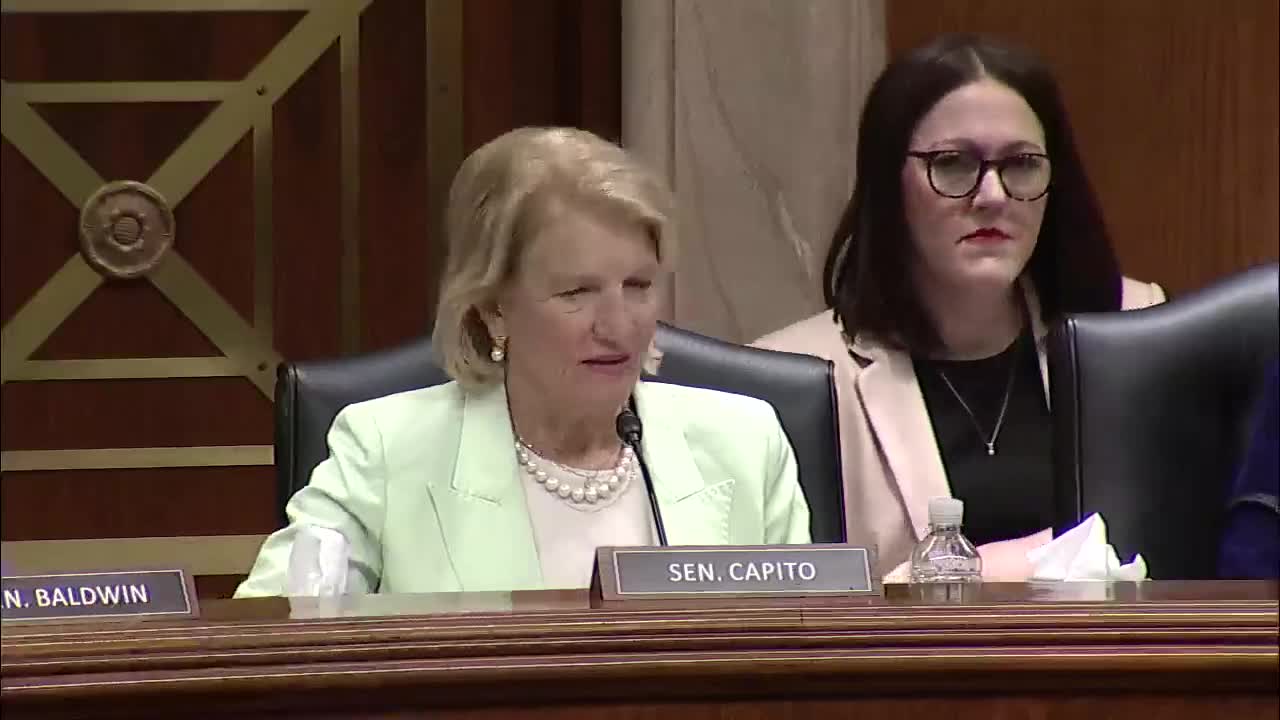
The hearing chair, Senator Shelley Moore Capito, opened by asking Bhattacharya to explain how the FY2026 request would “continue efforts from NIH to reduce illness, enhance health” and to support research in smaller and rural states. Bhattacharya said he joined the administration’s goals to accelerate innovation by integrating data science, to improve oversight of funding abroad, and to stop what he described as “dangerous gain of function research.” He said the NIH must restore public trust and “mend our relationships with the public” while supporting science that leads to better prevention and treatment.
Why this matters: senators on both sides of the aisle warned that the administration’s budget — which the chair and members repeatedly described as proposing roughly an $18 billion reduction (about 40% of current discretionary NIH funding) — would sharply reduce the number of awarded grants, disrupt ongoing research and economic activity tied to NIH funding, and damage U.S. global leadership in biomedical research.
Key details and director’s defense
• Size and aim of the request: Senators at the hearing characterized the request as an $18 billion (about 40%) reduction to NIH discretionary funding for FY2026. Bhattacharya described the document as the administration’s starting point for a negotiated budget with Congress and repeatedly offered to work with lawmakers on implementation details.
• Forward funding: Lawmakers raised a planned shift to forward funding multiyear grants — allocating multi‑year project funding in a single year — and warned this would further reduce near‑term spending on research because out‑year portions would be set aside (“escrowed”) rather than spent next year. Bhattacharya called the forward‑funding approach a budget proposal that, in his view, can increase long‑run flexibility but acknowledged the importance of managing any transition to avoid disrupting ongoing science.
• Indirect cost cap: Senators pressed Bhattacharya about the administration’s proposed 15% cap on indirect (research‑related) costs. Senator Susan Collins said Congress had included language since 2018 preventing NIH from arbitrarily imposing such a cap; Collins asked whether Bhattacharya had reviewed alternate models proposed by outside advisers. Bhattacharya said he had discussed ideas in planning stages and committed to work with Congress while noting some aspects are subject to litigation.
• Oversight, foreign funding and risky research: Bhattacharya said NIH is implementing new policies to require foreign institutions receiving NIH funds to follow the same payment and data‑sharing rules as domestic grantees and that the agency is “actively identifying and ending dangerous gain‑of‑function research.” He framed those steps as accountability measures tied to taxpayer stewardship.
• Reproducibility and incentives: Bhattacharya emphasized addressing the reproducibility problem in biomedical science by incentivizing replication, data sharing and reward structures that do not penalize replication work.
What senators said
• Bipartisan concern about scale: Multiple senators — including Capito, Tammy Baldwin (ranking minority on the subcommittee), Richard Durbin, Patty Murray and Susan Collins — voiced strong bipartisan concern that proposed cuts and operational changes would interrupt clinical trials, force universities to curtail research, and incentivize researchers to move abroad.
• Commitments and negotiations: Bhattacharya repeatedly characterized the request as the administration’s opening position, said he was “absolutely committed” to supporting high‑priority research (including Alzheimer’s, cancer, diabetes and addiction research), and pledged to work with Congress on indirect cost policy, forward funding implementation, and appeals for grant pauses or terminations.
Ending note
Bhattacharya told the committee he took the job to advance biomedical research and to “make America healthy again” by focusing on science that meets public health needs and improving oversight and reproducibility. Lawmakers left the hearing emphasizing their intention to assert appropriations authority and said they would press for detailed answers about the budget’s practical effects before finalizing FY2026 funding.