Get Full Government Meeting Transcripts, Videos, & Alerts Forever!
Get email alerts on the Mtss Non Exclusionary Discipline topic
No spam. Unsubscribe anytime.
Albert Lea schools report mixed gains from MTSS and non‑exclusionary discipline grants; suspensions fall overall
Summary
District staff told the school board the state MTSS grant and a non‑exclusionary discipline initiative produced classroom wins—notably literacy gains in some classrooms and a drop in total suspensions—but singled out persistent disproportionality for special‑education and nonwhite students and uncertainty over federal Title II/III funding.
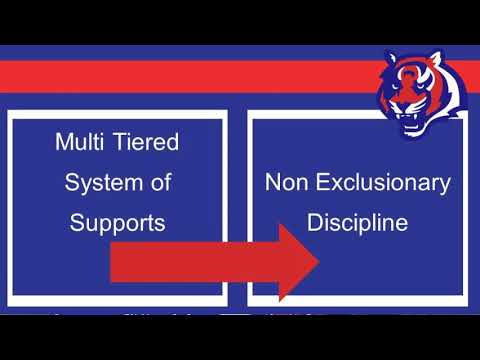
Tanya, a district grants presenter, told the Albert Lea Public School District board at a June study session that the district was delivering a combined update on two linked programs: the state Multi‑Tiered System of Supports (MTSS) grant and the non‑exclusionary discipline grant. “We are here this evening. Jamie Donaldson is our MTSS coordinator for Albert Lea Area Schools,” Tanya said, introducing the presenters and the report.
The presentation highlighted three MTSS goals—math proficiency, reading proficiency and reducing out‑of‑school suspensions among students with individualized education programs (IEPs)—and summarized preliminary results, classroom interventions and next steps. The district reported a decline in total in‑ and out‑of‑school suspensions from 567 last year to 388 this year, and staff said the drop reflects a mix of targeted interventions, behavior supports and changes in practice.
The improvements were uneven. On early math assessments administered with FastBridge (referred to in the presentation as FastBridge/FAST), one elementary school increased proficiency from about 53% to 76% and an eighth‑grade cohort rose roughly 5 percentage points; however, the district did not meet its overall math goal of raising spring proficiency from 58% to 61%. In reading, district leaders said they fell just short of a target to move students in grades 2–9 from 43% to 46% in the “low risk and above” category, though several classrooms posted larger gains after adopting structured‑literacy practices and intervention curricula.
Jamie Donaldson, the district MTSS coordinator, described classroom‑level successes and expansion plans for next year. “We do have tiger support teams at each of our schools,” Donaldson said, explaining that elementary teams meet weekly to discuss students needing general‑education interventions and to match strategies to students’ social‑emotional and academic needs. Donaldson also said the district will emphasize class‑wide (tier 1) interventions and better progress monitoring at the secondary level, and that more staff—including paraprofessionals—will complete state‑required structured‑literacy training.
District staff pointed to specific instructional materials and trainings that produced gains where they were implemented with fidelity. At third grade, teachers who used UFLI Foundations for intervention saw one class move from roughly 42% to 59% proficiency; several kindergarten classes that completed structured‑literacy training moved from mid‑30s proficiency to well over 60% by year end. Life Space Crisis Intervention (LSCI), a set of tangible intervention practices used in some elementary settings, was cited as producing measurable classroom‑level gains.
Board members and administrators pressed for more granular data. Mary Jo, a board member, asked whether the grant’s disproportionality target addressed racial or economic disparities; staff clarified the grant’s focus is racial disproportionality. Tanya said she would provide building‑level breakdowns—special education, ethnicity and free‑and‑reduced‑price (FRP) status—so principals can use the information for continuous school improvement planning.
Both grants target reductions in disproportionality. Staff reported the district’s proportion of students receiving special education services is 21.5% districtwide, while out‑of‑school suspension rates for students with IEPs had been around 23% in prior reporting. The non‑white share of out‑of‑school suspension occurrences was reported at 55% last year, with a grant goal to reduce that to 48%; the district’s non‑white student population is about 45%. Tanya called for expanded culturally responsive practice training and stronger restorative practices, saying a recent implicit‑bias training “fell pretty flat” and did not meet staff needs.
Budget and implementation questions remain. Tanya said non‑exclusionary discipline grant funds expire this year, while MTSS funds continue one more year and the district may reapply for the state MTSS cycle. Federal Title II and Title III funds—used primarily for professional development and English‑learner services—had not yet been approved; the district currently has Title I funding approved but is “holding” until II and III allocations are finalized. Tanya told the board that fiscal year 2024 spending for non‑exclusionary discipline included roughly $69,000 toward an elementary dean position (a pooled amount, not per dean) and an additional $3,500 in one‑time funds to be spent by Oct. 1 for training.
Superintendent Krenz urged caution in interpretation and emphasized consistency of practice across buildings as a key implementation issue. “That consistency that we were talking about … there’s a wide variance between administrators,” Krenz said, adding that discipline practice starts in the classroom and that the district needs clearer guidance and supports so teachers and principals communicate uniformly. Several board members asked staff to return with building‑level explanations for the suspension declines and to identify whether specific leadership practices drove differences between schools.
Board Chair Klot and staff closed the item by noting next steps: staff will provide the full MTSS grant report in the board update packet, supply building‑level breakdowns of the disproportionality data, and continue rollout of structured‑literacy training and targeted interventions. The board received the report and had no immediate vote on policy changes.
Ending: The board scheduled its next regular meeting for Monday, June 16 at 5 p.m.; staff said more detailed grant documentation and building‑level data will be provided to the board before that meeting.