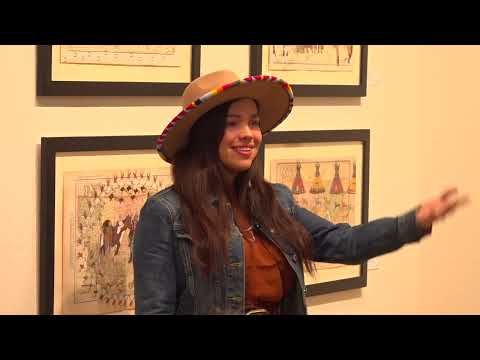
Aspen Deckard links Salish language, ledger art and bison history in Missoula gallery talk
Loading...
Summary
Artist and Salish-language speaker Aspen Deckard described the history of ledger art, Salish language features and a multi‑generation buffalo story during a gallery program in Missoula. The talk connected artworks on display to removal, the Dawes Act and local efforts to present Indigenous history in public art.
Aspen Deckard, an artist and fluent Salish speaker, traced the history of Salish ledger art, language and the tribe’s buffalo herds during a public gallery talk in Missoula on the final week of the current exhibition. Deckard placed her own contemporary ledger pieces in the context of 19th‑century ledger art traditions and the early reservation era, and she told an extended traditional story about efforts to preserve bison on the reservation.
Deckard said ledger art is less about European‑style portraiture and more about family and group identity: “The faces aren't seen in ledger art because unlike more European portraiture art, it's more about identity being tied to your family design.” She explained how artists revive the genre today while adding landscapes, mountains and local place‑names to the imagery.
The nut of Deckard’s talk was a history of displacement and adaptation. She described the 1855 Hellgate treaty negotiations, the later removal of Salish families from the Bitterroot Valley to the Flathead Reservation and the impact of settler harvests and policies. She recounted a three‑generation family story in which a relative gathered orphaned buffalo calves and returned them to the reservation; that herd later supplied animals that repopulated several public herds, including animals that contributed to Yellowstone’s bison population.
Deckard walked the audience through features of the Salish language and signing used to accompany images, demonstrating a buffalo sign (kway kway) and discussing vowel‑harmony patterns that shape pronunciation. She also described regional dialect differences in consonants (an r→l shift among Interior Salish varieties) and noted that many place names and plant words predate more recent history.
The talk tied several artworks on display to specific histories: a ledger piece Deckard described as depicting the Bitterroot removal, a beaded cradleboard now held at the Nine Pipes Museum, and a ledger panel that references Arlee horse races and the community’s “dancing boy” motif. Deckard said she chose to omit soldiers’ figures in some pieces to emphasize resiliency rather than only trauma.
Speakers in the program noted forthcoming public displays tied to Deckard’s work. A gallery host said the venue plans a year‑long ledger art presence in 2026; an audience member said a large Bitterroot removal mural on a Missoula utility building will be unveiled with a ribbon cutting on Oct. 13. Deckard closed with a short question‑and‑answer period on seasonal restrictions for some oral stories — she explained that elders often reserve certain coyote and winter stories for months when there is snow or other seasonal signals.
This presentation was part of a series of three talks accompanying the exhibition and included questions from the audience about language, climate impacts on seasonal storytelling and the history of the bison herd.