Get Full Government Meeting Transcripts, Videos, & Alerts Forever!
Get email alerts on the Law Enforcement Retirement topic
No spam. Unsubscribe anytime.
Committee orders actuarial review of bills to create new state law‑enforcement retirement plan
Summary
A Georgia House committee voted to send House Bills 337 and 808 to actuarial review. Sponsors said the bills would create a new State Law Enforcement Officer retirement plan and expand eligibility to additional public safety personnel; committee members were warned the change would be expensive.
A House committee voted to send House Bills 337 and 808 to actuarial review after presenters said the measures would create a new State Law Enforcement Officer retirement plan and substantially expand who is eligible.
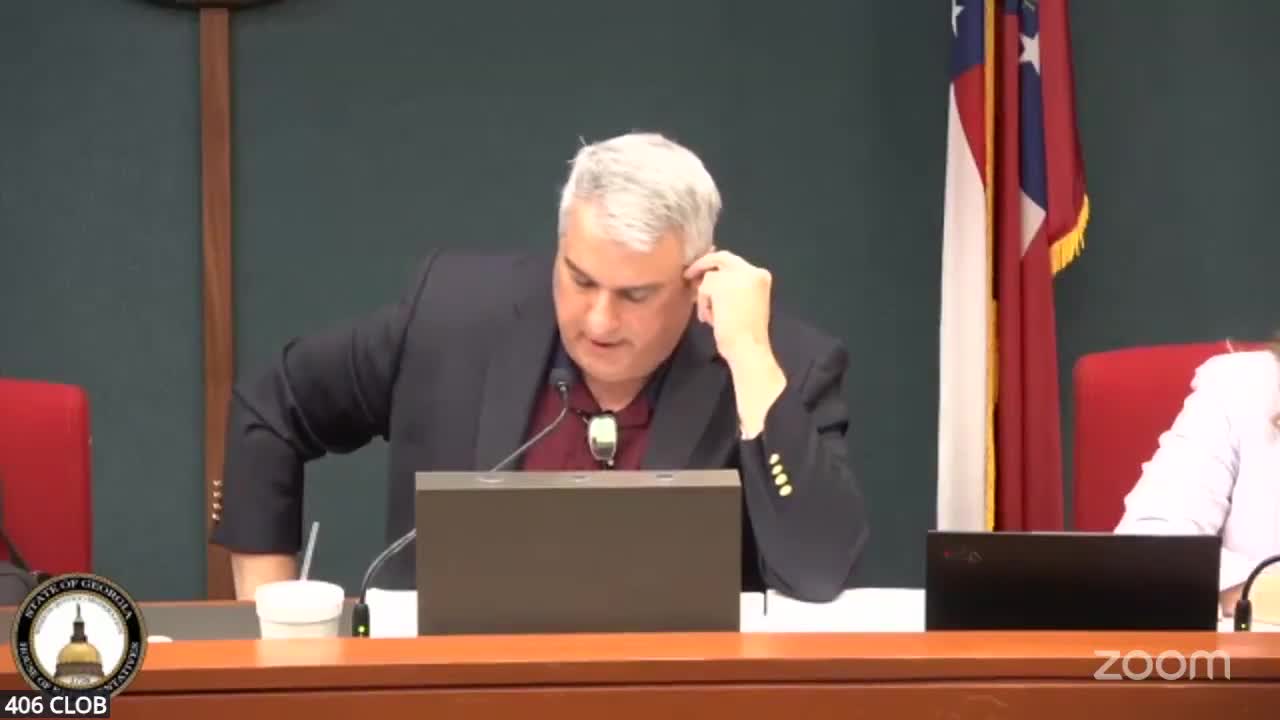
The committee chair described House Bill 337 as creating “a new state law enforcement retirement plan called the SLEO,” and said it mirrors a bill from the 2023 session. The chair said the bill would change the current accrual structure for covered, post‑certified employees and asked the panel to authorize using state resources to perform an actuarial review before any legislative action.
Why it matters: Committee members and staff said the bills could carry a large fiscal cost and affect multiple agencies that employ state law‑enforcement personnel. The chair said the broader Bill 808 would add employees who are not post‑certified but who perform front‑line public safety work, including staff in the Department of Community Supervision and juvenile justice.
Committee discussion focused on who the bills would cover and the likely cost. The chair said the expanded package would be “gonna be expensive” and estimated a total liability “around $200,000,000.” The chair also cited a staff estimate that placing the change as an injection into the Employees’ Retirement System (ERS) would carry a specific actuarial cost of about $192,800,000. ERS staff and actuaries said the actuarial review would quantify total liability and first‑year costs, and that a single actuarial study typically costs “somewhere from $10,000 to $25,000.”
Representative David Horner asked whether affected employees would remain eligible for ERS; committee staff responded that members would remain eligible for ERS but that the sponsor expected many to opt into the new plan. Committee members also asked for employee and employer rate details; staff said participating members were currently at a 5% employee contribution and that other contribution details would be part of the actuarial analysis.
Formal action: Representative Warner moved and Dean Gerald Green seconded that the committee send the bills to actuarial review. The motion carried unanimously on voice votes recorded in the meeting.
The committee did not approve either bill itself; members emphasized that the committee was authorizing a study only and that any policy decisions would follow the actuarial findings.
The bills were introduced by or at the request of the Department of Public Safety; the chair said the measure was brought forward by Commissioner Wright (then of the Department of Public Safety). The committee asked staff to return the actuarial results and cost breakdowns before any further legislative action.