
Albemarle presents Gallup employee-engagement results; division sees modest gains
Get AI-powered insights, summaries, and transcripts
Subscribe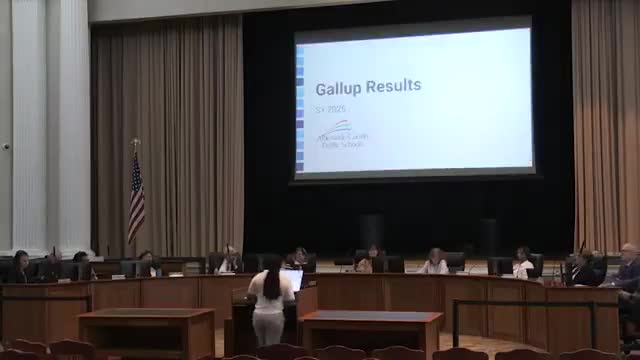
Summary
ACPS reported a modest year-over-year increase in Gallup engagement measures after 2,229 staff responses; engaged employees rose from 38% to 42% and the engagement ratio improved to 3.82:1. The division outlined next steps including 90-day action plans and targeted leadership supports.
Albemarle County Public Schools leaders on June 12 presented results from the division’s fourth administration of the Gallup employee engagement survey and described targeted steps to translate findings into action.
Shay Carter Shiflet, who led the presentation, said the division received 2,229 responses and reported gains across several indicators: the percentage of engaged employees rose from 38% last year to 42% this year, and the ratio of engaged to actively disengaged improved to 3.82 to 1. She said the division’s trended mean increased from 3.83 to 3.92.
Shiflet highlighted strengths such as agreement with item Q2 (“I have the materials and equipment I need to do my work right”) and Q5 (“My supervisor or someone at work seems to care about me as a person”), and singled out Q4 (recent recognition) and Q6 (someone encouraging development) as opportunities for growth. “This is our fourth administration of [the] Gallup engagement survey,” she said, and noted the survey is used to guide leadership decisions and targeted support.
Presenters described “intentional partnerships” with six schools and departments, including transportation and Henley Middle School, where teams are developing 90-day action plans. Shiflet said those leaders set up recurring feedback loops and twice-monthly check-ins to analyze data and implement changes rather than treating the survey as a one-time measurement.
Board members asked about response-rate validity and next steps. Shiflet said the raw response count was only about 200 fewer than the prior year and that Gallup’s minimum recommended threshold was approximately 75% for comparable peer groups; she said the division “exceeded it, and we maintained it very closely this year.” Dan Redding and other staff noted targeted interventions such as strength-based professional learning and localized action planning for schools and departments.
Division leaders said the next steps include sharing data with school and department managers, aligning Gallup goals to school strategic plans, training additional leaders on CliftonStrengths, and monitoring 90-day plans. The presenters framed the survey and follow-up work as part of a broader strategy to increase staff engagement and, ultimately, student outcomes.