Get Full Government Meeting Transcripts, Videos, & Alerts Forever!
Get email alerts on the Landscaping topic
No spam. Unsubscribe anytime.
Pearland officials debate tree species, spacing and maintenance standards in UDC update
Summary
Consultants recommended a tree classification and soil-volume approach to improve long-term viability of plantings. Councilors and commissioners raised concerns about trees under power lines, species selection for drought and storm resilience, and enforcement of landscape maintenance.
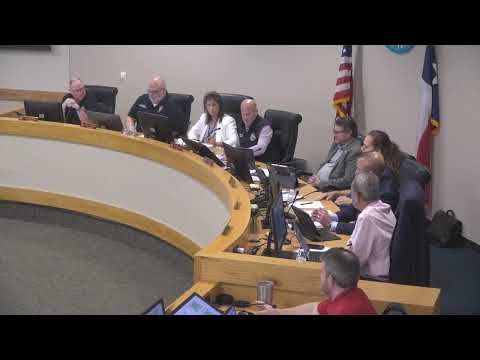
Design Workshop and city staff on Monday outlined proposed changes to Pearland’s landscape standards to improve long-term viability, storm resilience and visual character.
Consultant presentations said current landscape rules lack a tree/plant classification system and do not address soil-volume requirements needed for healthy tree growth. The team recommended replacing strict spacing minimums with soil-volume requirements or offering soil volume as an alternative, adopting an updated plant-material list focused on native and well-adapted species, and aligning maintenance standards with best practices for hurricane-prone areas.
Commissioners and council members raised several practical concerns. Multiple speakers noted conflicts between large canopy trees and overhead utilities; one commissioner warned that shallow-root trees can uplift underground piping where high-density polyethylene conduit is used. Council members suggested setting setbacks from lines or encouraging buried utilities where feasible, but staff and utility-experienced attendees said undergrounding is expensive and has trade-offs, including harder-to-find underground faults after major storms.
Speakers suggested pragmatic updates rather than blanket new requirements: allowing hedges or lower-growing species under lines, offering alternative approved species when three-foot shrubs are unavailable, and providing disaster-declaration flexibility so property owners have a reasonable window to replace plants after freezes or wind events. One council member pointed to examples of native-vegetation maintenance in Parks and suggested applying similar palettes in commercial landscaping so plantings are resilient and locally appropriate.
Design Workshop’s initial recommendations included creating an approved and regularly updated plant-material list, adopting soil-volume standards for trees, updating spacing guidance based on species and ground cover, aligning maintenance requirements to best practices, and using enhanced landscape areas as an incentive for developers to gain reduced setbacks or additional density.