Get Full Government Meeting Transcripts, Videos, & Alerts Forever!
Get email alerts on the Enforcement Administration topic
No spam. Unsubscribe anytime.
Pearland workshop flags enforcement gaps, staffing limits and abandoned-site options in UDC rewrite
Summary
Consultants and city leaders discussed unclear approval tracks in the UDC, limited code-enforcement staffing, and options to declare private projects abandoned so the city can require site remediation or return to dirt.
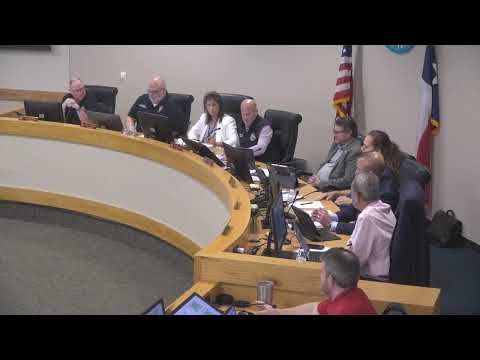
City staff, Planning & Zoning commissioners and council members at a joint workshop discussed gaps in how Pearland’s Unified Development Code is applied and enforced, including limited enforcement resources and ways to handle stalled or abandoned private projects.
Design Workshop presented the section on enforcement and administration and said the UDC currently contains ambiguous approval tracks, formatting issues that make requirements hard to find, and prescriptive technical rules that can trap applicants. The presentation recommended clearer graphics and approval-flow charts, moving fees out of the UDC into a separate development-fee schedule, and expanding outreach and virtual pre-application materials.
Council members focused on two enforcement-related issues: staffing for code enforcement and mechanisms for stalled private projects. Council Member Shavarria and others asked for the current enforcement staffing level; staff answered that the code enforcement team has eight full-time employees and that the last hire was in 2017. Multiple speakers said that limited personnel and vague enforcement language reduce the city’s ability to secure long-term compliance.
The group also discussed private projects where construction has stopped and site improvements remain incomplete or unsecured. Staff described brainstorming options that would give the fire marshal or building official clearer local authority to determine whether a site is abandoned and then require remediation. Staff said that for public improvements the city already requires performance bonds and bid bonds, which name the city as an obligee. For private projects, staff and legal representatives suggested defining “abandonment” in the UDC and creating evidence-based procedures and potential court remedies to force remediation or site restoration.
Council and commissioners stressed the need for common-sense flexibility in application but also for predictable standards so staff are not “handcuffed” in decisions. One commissioner urged that the UDC be drafted with guidelines that allow staff discretion and fewer variance requests; another warned that without enforcement staff and processes, new rules will not be effective.
Design Workshop’s initial recommendations in this topic area included improving UDC legibility with charts and graphics, requiring regular updates to the development-fee schedule, providing virtual pre-application materials, extending procedural timelines to reduce re-starts in approval steps, allowing staff approval where appropriate, and adopting a regular UDC-update cadence. Staff was asked to return with options on abandoned-site definitions and remedies and to provide data on enforcement staffing and historical hiring dates.