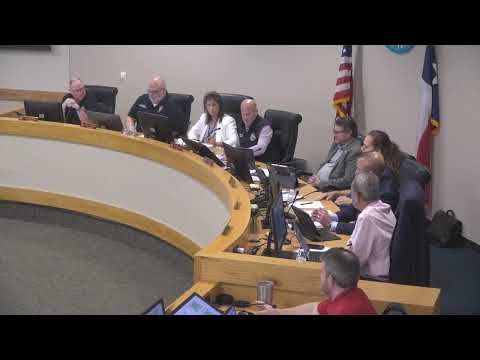
Pearland workshop considers loosening rules for food trucks and creating permanent "food truck courts"
Loading...
Summary
Design consultants and city officials discussed clarifying where mobile food units can operate, reducing permitting barriers for temporary and recurring events, and creating standards for permanent food truck courts while preserving health and safety oversight.
Pearland city officials and design consultants on Monday discussed proposed changes to the Unified Development Code (UDC) that would expand where food trucks and mobile food units can operate and create standards for food truck courts.
Consultant Claire Hempel of Design Workshop said the team is “looking to increase flexibility around how and when food trucks are allowed” and to “clearly define food trucks or mobile food units within the UDC, referencing the official Texas food establishment rules.” The presentation noted some state bills from the recent Texas legislative session could affect final recommendations.
The discussion centered on three practical gaps in current rules: unclear definitions and standards for food trucks, a permitting approach that treats many food truck operations as temporary events, and the absence of a defined land use category for food truck courts. Vance (city staff) explained that under the current code, mobile food units typically operate under a temporary-activity permit and “a site within a general commercial district would get 6 per year or 6 opportunities for a temporary event per year.” He and other staff said that in some cases microbreweries or similar uses are allowed to host food trucks by right, but the code lacks a single, citywide approach.
Council members and commissioners raised operational concerns. One commissioner suggested designating a location around Independence Park for a permanent or semi-permanent food truck area; another council member asked whether there should be limits on number of trucks per lot and whether trucks could remain overnight. Council Member Cozza stressed that trucks must meet health, fire and building regulations: “This would be specifically medallion trucks. They have to meet all of our health code and fire code and building code requirements for the unit as well as the handling of food.”
Other points raised by council and commissioners included: - Allowing landowners (shopping centers, churches, businesses) to host food trucks without requiring the property owner to obtain a separate temporary-event permit every time; staff said the code currently requires the property to hold the temporary-event permit to invite a vendor. - Creating a defined “food truck court” use with standards for amenities (seating, shade, drinking water, restrooms), site plan requirements, and location criteria so such courts can be treated as a primary use where appropriate. - Considering an extended emergency permit for use after major storms or power outages (examples suggested: 14 days to three weeks) so food trucks can serve as temporary community relief sites.
Design Workshop’s initial recommendations presented to the council and Planning & Zoning Commission included defining food trucks and food truck courts in the UDC, reassessing zones where food trucks could operate by right, making temporary-event permit rules less restrictive for recurring or semi-permanent operations, and creating site and amenity standards for permanent food truck courts. Ali Pollock (Design Workshop) said extending approval windows for certain permits and clarifying approval tracks would reduce the number of applications that must restart the approval process.
The council and commission asked staff to continue refining options and confirmed additional public outreach is planned; Design Workshop and city staff encouraged one-on-one conversations and public stakeholder meetings currently under way.