Get Full Government Meeting Transcripts, Videos, & Alerts Forever!
Get email alerts on the City Audit topic
No spam. Unsubscribe anytime.
Baker council hears audit showing $22.35 million net position; members press on utilities, cemetery and benefits
Summary
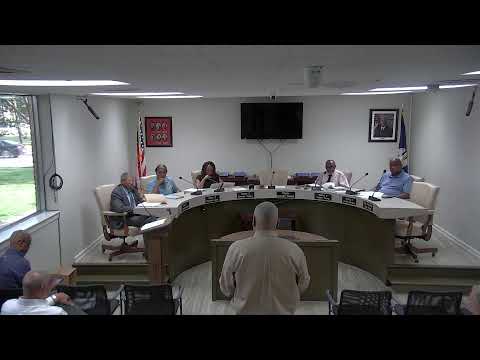
Auditors presented the City of Baker's annual financial audit at a council work session. The report showed a $22,350,695 net position; council members pressed staff for details on utility infrastructure costs, a cemetery funding shortfall, retirement and dental benefits, 911 dispatch data and several fund deficits.
Auditors presented the City of Baker's annual financial audit at a City Council work session, reporting a net position of $22,350,695 and prompting council members to ask for additional detail on utility projects, cemetery funding, retirement benefits and 911 dispatch costs.
The audit presentation was led by Donald Ford, president of the auditing firm, with Dennis McElroy serving as lead auditor. Ford directed council members to the government-wide financial statements and the highlights on the audit's pages, saying, "Total assets were $55,551,517" and describing the net change in position. Ford also summarized the income-statement figures: "total charges for services, $4,486,047 against expenses of 4,036,736," producing a net of about $449,312.
The session focused on questions from council members and staff clarifications. Mary Sue, a city finance staff member who introduced the auditors, explained a drop in business-type net position was driven by utility work: "We had a lot of activity going on in our utility department. The water well project'a lot of infrastructure work done." She told the council that decreased public-works expenses from 2023 to 2024 reflected completion of major infrastructure projects.
Council members raised several line-item questions. They noted a litigation-related figure of $261,943 on the governmental activities statement and asked for the underlying cases; Mary Sue explained those items relate to holds or distributions ordered through the court system. Council members also flagged a group of funds shown with deficit balances; Mary Sue said those deficits resulted from expending project funds during the year and that transfers and future revenues were part of the planned recovery.
Members pressed on revenue classifications and "other" contributions. Mary Sue said capital grants include state contributions and private donations tied to specific events or projects, citing a recent $50,000 state contribution for council-chamber upgrades as an example. On charges for services in public works, Mary Sue clarified those are fees such as zoning and inspection charges: "That's what we charge the customer." She pointed the council to the audit's schedule of federal awards for additional detail.
Several council members raised operational concerns. On utilities, members discussed the need to maintain infrastructure and the pressure of rising operating costs; one council member framed the challenge plainly: "The rates gotta go up like everything else go up because the cost of running a horse is going up." (The speaker used "horse" as a shorthand for the utility system.) On bad debt in the utility fund, Mary Sue explained that the amount reflected unpaid customer balances and the city's practice of holding deposits against final bills.
Retirement and post-employment benefits drew sustained attention. Council members asked about the city's other post-employment benefit (OPEB) obligations and retiree coverage; Mary Sue summarized: "The other post employment benefits is health insurance. You pay for your retirees." The audit also lists a small dental benefit; Mary Sue confirmed, "There is a little bit of dental." Council members discussed the cost implications of continuing those benefits for current retirees and of changing future offerings.
Council members also asked about 911 dispatch arrangements and costs. One council member requested data to evaluate the city's use of the parish communications/dispatch system and asked staff to provide how many 911 calls originate in Baker and what the city pays into the system.
The audit presentation included investment and cash items: council members asked about certificates of deposit earning roughly 2.5 percent and about the city's management of those instruments. The audit flagged the city's net position as a measure used by creditors; Ford and staff noted the $22,350,695 figure as the balance reported on the government-wide statements.
No formal motions or votes on policy changes were recorded during the work session. Council members asked staff to provide supplemental schedules and data cited during the presentation'including the schedule of federal awards, details underlying litigation entries, a breakdown of the "other" revenue line and call-volume/cost data for 911 dispatch'to support follow-up decisions.
The auditors said they had no reportable deficiencies that changed the audit opinion during the presentation; council members thanked the auditors and finance staff for preparing the report and indicated they would review the requested supplemental material ahead of future budget and policy discussions.