Get Full Government Meeting Transcripts, Videos, & Alerts Forever!
Get email alerts on the Auto Repair Residential Ordinance topic
No spam. Unsubscribe anytime.
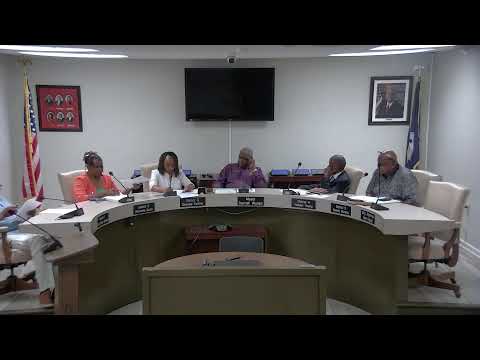
Baker work session debates ordinance to curb commercial auto repairs in residential yards
Summary
Baker councilors and staff discussed a proposed ordinance to prohibit commercial automobile repairs and oil changes conducted for pay in residential yards.
Baker councilors and staff discussed a proposed ordinance to prohibit commercial automobile repairs and oil changes conducted for pay in residential yards, tighten stormwater protections and clarify enforcement steps. The body did not vote; staff were directed to revise the draft and run it by the city attorney before formal introduction.
The discussion centered on language that would allow residents to work on vehicles they own but would ban repeated, commercial‑style repairs and any activity that discharges oil to ground or drainage. “It shall be unlawful to conduct a automobile oil change at a resident … or residential area, but only upon only upon automobiles that are exactly owned by the resident,” read a version of the draft presented during the session.
Council members and residents said the existing code is vague and administratively weak, making enforcement difficult. Speakers pointed to a recently passed stormwater ordinance and federal standards cited in the meeting as reasons to adopt clearer local language to avoid jeopardizing grants and to give code enforcement and police a concrete standard to act on.
Residents who spoke described ongoing problems with neighbors running full‑time repair operations from private yards. One resident, Miss Collins, told the group the practice has continued despite prior complaints: “You should be held accountable. You’re allowing that to happen.” Council members and staff discussed a stepped enforcement approach: an initial courtesy letter tied to an ordinance citation, subsequent code‑enforcement follow‑up, and, if needed, police or marshal involvement and municipal citations.
On details, the group agreed to remove language tying the allowance to ‘‘relatives’’ and to replace a 24‑hour completion window in the draft with a 72‑hour limit for completing vehicle repairs after work begins. The draft also proposes civil fines currently discussed at $250 for a first violation and $500 for repeat violations; the session participants said those amounts and the enforcement stages will be finalized by the city attorney.
Councilors asked that the new ordinance explicitly repeal the portion of the existing code they identified as conflicting: section 1, item 7(g) of the older home‑occupation ordinance, which currently lists on‑site automobile repair as a prohibited home occupation. Staff said the repeal language will be added to section 4 of the draft so the single conflicting provision is removed and the new ordinance governs.
Officials said the mayor’s office will treat early complaints as administrative matters first (letters and investigation) and escalate to police or court only if violations continue. Staff committed to sending the revised draft and explanatory language to the mayor’s office and council via email and to present a finalized ordinance to the attorney’s office for review before introduction.
The work session concluded without a vote on the ordinance; the body adjourned after the drafting directions were recorded.