
Planning board approves 8-unit Holly Street housing project, with conditions on culvert, stormwater and design
Get AI-powered insights, summaries, and transcripts
Subscribe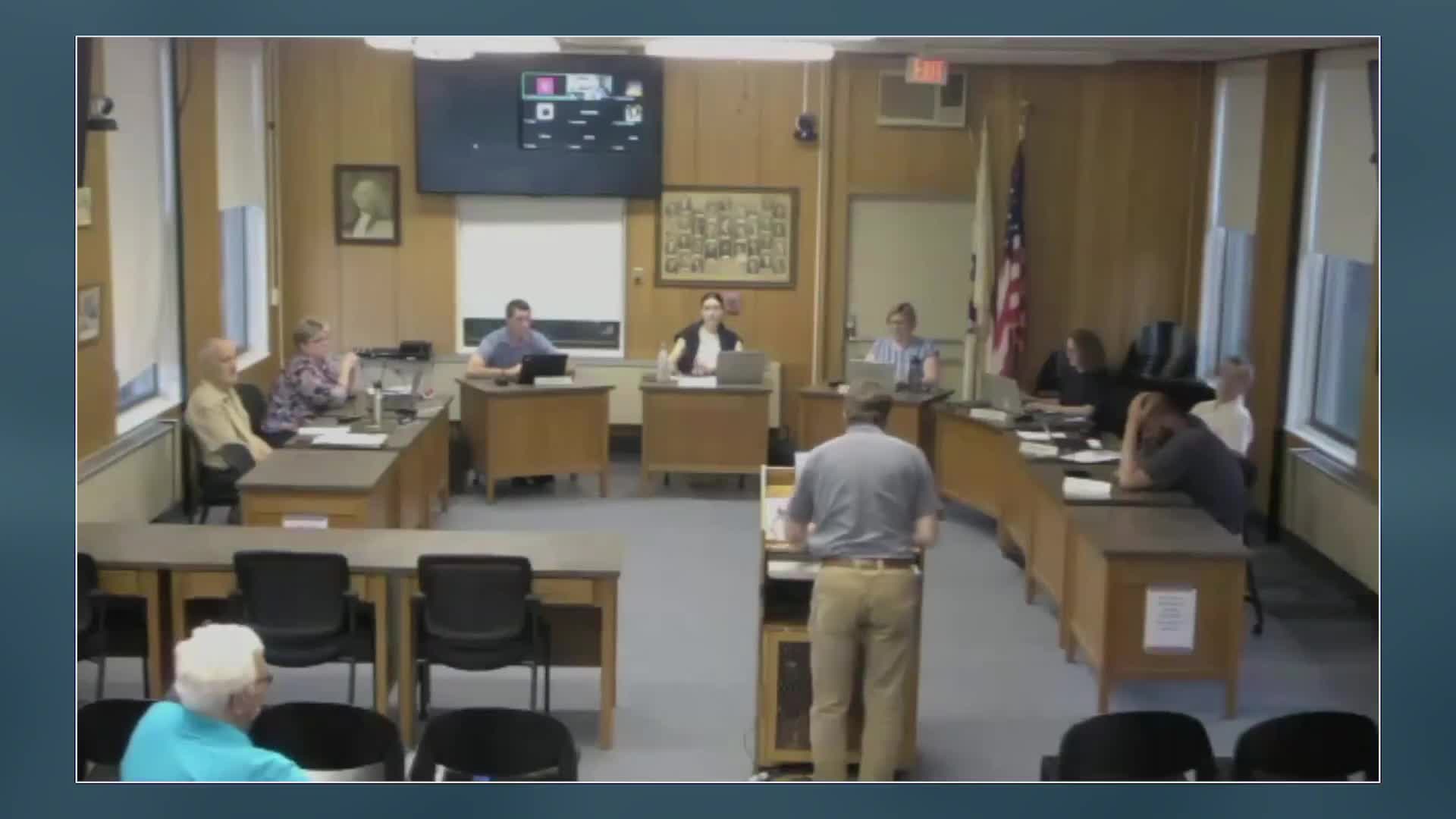
Summary
The Planning Board approved a three‑building, eight‑unit townhouse development at 111 Holly Street with waivers for first‑floor height and lighting spillover, and with conditions requiring DPW sign‑off on stormwater connections to a historic culvert and several final documentation steps before permits.
The Northampton City Planning Board on June 12 voted to approve a site plan to redevelop 111 Holly Street into three buildings containing eight condominium units, subject to conditions addressing stormwater connections, a historic culvert running beneath the lot, and final plan adjustments.
Doug Searle, a landscape architect with Berkshire Design Group, presented the project on behalf of Norwich Properties, LLC and described the site as a 0.55-acre cleared lot with an existing 2,200-square-foot commercial building. Searle said the proposal would remove the existing structure and build one two‑story, four‑unit building fronting Holly Street and two smaller, two‑unit buildings behind it. The project provides two parking spaces per unit (one garage stall and one driveway space) plus four overflow spaces, for 20 spaces total.
Architect Scott Laidlaw said the design follows the city’s character-based guidance for the Central Business Side Street district by placing buildings close to the sidewalk, adding front porches and breaking facades into human‑scale elements. He said exterior materials would include painted LP SmartSide siding and board‑and‑batten accents; windows are a mix of fixed and single‑hung units, and the applicant said it will consider divided‑light muntins if the board desires more traditional window profiles.
Planning staff and DPW raised technical issues tied to an existing brick culvert that carries Market Street Brook under the parcel. The board learned the culvert dates to the mid‑19th century and that DPW has requested the owner create a formal easement and wants to inspect the existing structure during demolition. DPW also asked that stormwater discharges meet the city’s TSS requirements; applicants said they currently show deep‑sump catch basins but are prepared to use hydrodynamic separators or other devices DPW requires to meet an 80% total suspended solids (TSS) removal target.
Searle told the board the project has been laid out to avoid disturbing the culvert and that roof drains and paved runoff would be directed into a revised treatment system that discharges into the existing culvert via manholes. DPW asked for confirmation of pipe depth where water and sewer lines cross the culvert; staff said connection permits will be required before construction.
The board heard public comment from a nearby property owner, James Krasinski, who praised the project’s porches and asked that exterior materials and window styles be consistent with the neighborhood. Several board members and staff also asked the applicant to show final street‑tree details with structural soils and to provide tree‑protection fencing for an adjacent maple tree.
Before voting, the board considered several waiver requests and staff recommendations. The board granted waivers for the First‑Floor height (zoning guideline of 12 feet; proposed just under 11 feet for this residential design), for a photometric property‑line cutoff (applicant proposes building‑mounted downcast sconces rather than site poles), and for a full traffic study based on the site’s prior commercial use and the limited trip generation expected for eight units. The board also accepted a waiver request related to stormwater reporting because DPW indicated the system appears to have capacity but required DPW confirmation.
The board approved the site plan unanimously after a motion to close the public hearing. Conditions recorded in the approval include: - Final DPW sign‑off on stormwater treatment and on any connection to the Market Street Brook culvert, including a recorded easement if DPW requires access. - Use of hydrodynamic separators or other devices to meet an 80% TSS removal requirement if DPW specifies them; final devices to be noted on construction plans. - Submission of final construction and civil plans at least 15 days before issuance of building permits; recorded stormwater maintenance agreement before permits issued. - Structural soils for street‑tree plantings and tree‑protection measures for the adjacent maple demonstrated prior to construction. - No utility equipment (electric/gas mechanicals) mounted on the street‑facing building facades; rooftop or screened locations to be used. - As‑built lighting report and final photometrics before certificate of occupancy; damaged public sidewalk panels repaired if damage is attributable to construction.
Board Chair (unnamed) said the approval reflected the board’s interest in increasing housing supply while protecting the subsurface culvert and ensuring DPW and Conservation Commission concerns are resolved before permits are issued. The decision authorizes the applicant to proceed to final design and building permits after satisfying the listed conditions.