Get Full Government Meeting Transcripts, Videos, & Alerts Forever!
Get email alerts on the Mosquito Control topic
No spam. Unsubscribe anytime.
Charleston County mosquito control outlines spraying, prevention and health risks
Summary
Charleston County Mosquito Control detailed late-night truck sprays, aerial treatments, larvicide use and resident actions during a podcast recorded in early June, citing West Nile virus and Eastern Equine Encephalitis as local risks.
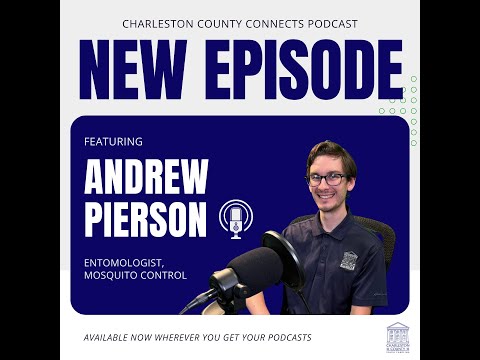
Charleston County Mosquito Control described its summer practices and public-health rationale for mosquito control during an early June episode of the Charleston County Connects podcast.
"All mosquitoes require water," said Andrew Pearson, entomologist with Charleston County Mosquito Control, explaining that many county species are floodwater mosquitoes whose eggs hatch after rain. He said the agency uses larvicides, ground truck spraying and aircraft to reduce adult mosquito populations and the diseases they can spread.
The program favors preemptive larval treatments where possible. "We'll treat with things like methoprene, which is an insect growth regulator, and we'll put out briquettes that'll last for up to a hundred and fifty days," Pearson said, adding those briquettes are placed in ditches and storm drains so hatching mosquitoes never mature to biting adults.
When larvicide placement is not feasible, Charleston County deploys ultra-low-volume, or ULV, truck sprays and aerial applications. "ULV...is generally treated about two-tenths of an ounce per acre or a teaspoon spread over a football field," Pearson said. He said truck treatments usually run between 10 p.m. and 6 a.m. to minimize exposure to "people, pets, and pollinators," and the county uses helicopter and airplane treatments when it needs to cover large areas quickly.
Pearson said the main diseases of concern locally are West Nile virus and Eastern Equine Encephalitis (EEE). He also noted that dengue is sometimes imported when people are bitten while traveling and then return home; local transmission would require a local mosquito to bite an infected person and then bite others.
The entomologist urged residents to reduce breeding habitat on private property. "Anything that holds water in your yard" can breed mosquitoes, Pearson said, noting standing water the size of a bottle cap can be sufficient. He recommended tipping or rinsing birdbaths weekly, cleaning gutters, removing water-holding containers such as tires and tarps and using larvicide dunks for persistent depressions.
On personal protection, Pearson recommended repellents that contain DEET, oil of lemon eucalyptus or picaridin and noted that products should be EPA-registered and used according to label directions. "The label is the law," he said, explaining that county applicators are licensed pesticide applicators and must follow product labels; the county does not treat for insects not listed on a product's label, such as "no-see-ums."
For service requests, Pearson said residents should use the mosquito control survey on the county website to request a property water check or truck spray; he also provided the county phone number (843) 202-7880. He closed by emphasizing protection of vulnerable groups: "We're especially concerned about children, the elderly, [and] folks who have some kind of compromised immune system."
The broadcast presented operational details and public-advice content but did not announce new regulations, budget changes or policy votes by Charleston County government.