Get Full Government Meeting Transcripts, Videos, & Alerts Forever!
Get email alerts on the Home Based Business Fees topic
No spam. Unsubscribe anytime.
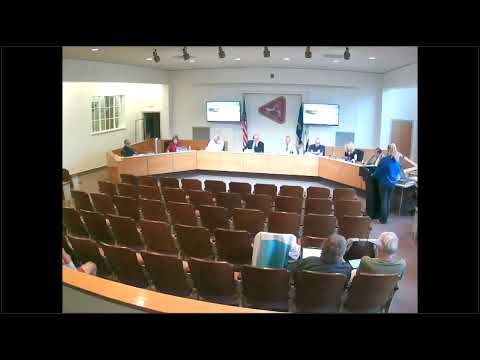
Residents, providers press council over perceived inequities in home-based business fees
Summary
Home-based business owners and providers urged the Ogdensburg City Council to address what they described as inconsistent enforcement and a discriminatory fee structure for home-based businesses, especially in-home day care providers; councilors debated a proposed task force and staff urged limited further use of management time.
Home-based business owners and residents pressed the Ogdensburg City Council on uneven enforcement and what speakers described as a discriminatory user-fee process for home-based businesses, particularly in-home day-care providers.
Advocates said the city’s current method of charging extra water/sewer or user fees to some home-based businesses — and not others — lacks transparency and reliable enforcement. “The city continues to treat home based business owners differently and unfairly compared to those who operate in the commercial setting,” said Kylie Morrow, an in-home day-care operator, during public comment. “It is a policy issue, and it’s a community issue.”
The complaint traces to a change in local enforcement following mailing of affidavits and follow-up inspections; speakers said some recipients were charged while others were not, and at least one resident said affidavits were signed by people other than the addressees. A public commenter said that, after code changes and outreach, only about eight known businesses remained on the list used for enforcement earlier in the year. Another speaker argued the fee should be a one-time charge rather than an annual user fee.
Several council members and staff described the issue as complex. City Manager Bonnie Kronos told the council staff had tried to create a consistent process and had already reduced fees significantly. “We put a process in place,” she said at the meeting, noting staff time and enforcement limits. Management emphasized that, without water meters, there is no objective way to measure individual household water use and that a flat-rate user fee inevitably produces inequities.
Council discussion focused on two paths: (1) creating a task force or work group with elected officials, members of the public and staff to vet the issues and proposals; or (2) leaving the adopted code and enforcement in place and allowing staff to continue implementation. Councilor Stevenson moved for a task force; the motion did not gather the support required, and several council members, including Mayor Tully, said they preferred to let management continue enforcement and suggested the issue be closed unless four votes supported further study.
Councilors emphasized differing priorities. Some members called for a work group to ensure all affected residents feel heard and to identify ideas that might resolve enforcement confusion; others said the issue consumed too much staff time and that the reduced, current fee (described in public testimony as $165 per year in recent council actions) is small relative to city budgets and that enforcement resources are limited.
No new ordinance or formal change resulted from the discussion. The council did not adopt a task force; management was directed to continue current enforcement and to pursue complaints submitted by the public for investigation under existing procedures. Several speakers in public comment urged the council to reconsider and to adopt a fairer, clearer system.
Ending: Council members acknowledged the political sensitivity of the issue and left open the possibility of future action if public pressure or new information emerges. For now, staff will continue implementing the recently amended code and respond to formal complaints under the city’s existing enforcement process.