Get Full Government Meeting Transcripts, Videos, & Alerts Forever!
Get email alerts on the Emergency Services topic
No spam. Unsubscribe anytime.
Madison County EMS asks board for ambulances, Lucas devices and emergency operations center funding
Summary
County EMS presented equipment and facility requests including ambulances, automated CPR devices, new monitors and a proposed emergency operations center, and gave price estimates for replacements and upgrades.
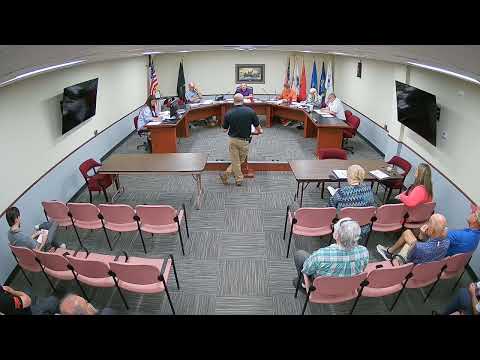
Madison County EMS Director Bobby Smith told the Board of Commissioners on June 24 that the county’s emergency medical services need new ambulances, medical equipment replacements and a permanent emergency operations center.
Smith said recent procurement and supply delays have stretched vehicle delivery timelines and that the department is budgeting to buy trucks and ambulances more frequently than it has historically. “We ordered 2 more when we were standing there. And they were saying at that point, it was gonna be 3 years,” Smith said of ambulance chassis delivery timelines.
The department gave board members itemized cost estimates: Lucas automated CPR devices at about $21,000–$25,000 each, four to replace existing units at an estimated $87,139; patient monitors at about $50,000 each; power-loading systems for ambulances and powered stretchers at roughly $30,000 each; and an approximate $250,000 per new ambulance figure used in multi‑year planning. Smith warned that some monitor models purchased earlier are experiencing large-scale reliability problems and said neighboring counties had already replaced similar monitors.
Smith also proposed a $75,000-per-year request, described to commissioners as an allocation toward establishing a county emergency operations center (EOC) that would provide a shared working space for EMS, 911, fire, sheriff and other departments during storms or other incidents. He described the EOC as a co-located operations room with monitors and workstations to coordinate response during disasters and training in non‑emergency times.
Commissioners and staff discussed options for including power-load systems in the build of future ambulances to save retrofit costs, and whether some station functions (training rooms, meeting space) could be combined with planned or existing fire facilities. Smith stressed the county should plan for long‑term facility needs as call volumes grow in areas such as Colbert and along development corridors.
The conversation included operational details — personnel strain from repetitive lifting, maintenance needs for station buildings and the tradeoffs of housing EMS equipment at existing fire department properties versus independent county facilities — but no formal budget decision was recorded at the meeting.
Bobby Smith, EMS, said he will supply commissioners with a written, per‑item cost breakdown to inform later budget decisions.
Ending: The board deferred any final commitments to the formal budget process; staff and department leaders were asked to return detailed cost breakdowns and scheduling options before the board adopts final fiscal year appropriations.