
Council hears shortages of court reporters and interpreters; OCA explores digital reporting and AI‑assisted document translation
Get AI-powered insights, summaries, and transcripts
Subscribe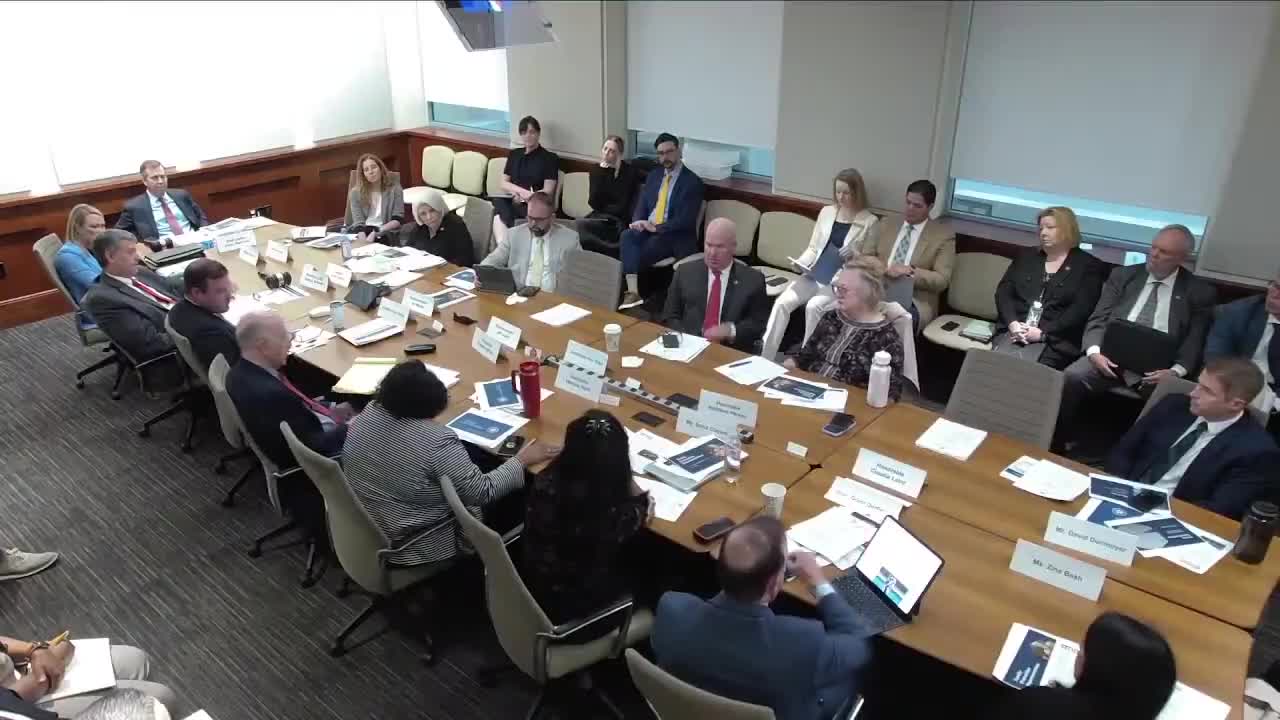
Summary
OCA staff briefed the council on two workforce shortages — certified shorthand reporters and court interpreters — and on pilot uses of technology. The council discussed potential steps including reciprocity/apprenticeship paths for reporters, a study of digital reporting, and use of AI tools to draft translated documents with human validation.
OCA leadership presented an update on certified shorthand reporters and court interpreters and described technology pilots to mitigate shortages.
Court reporters OCA reported the certified shorthand reporter pool has declined about 15% since 2005, though there were modest new certifications in recent years (95 in 2023 and 114 in 2024). Staff noted the shortage is concentrated where courts compete with private markets and where new courts have been added. OCA described statutory changes enacted in 2019 that allow eased licensing paths (reciprocity, apprenticeship and provisional certification) and said those mechanisms brought roughly 48 reporters into service, 24 of whom are currently active. OCA will study additional options including national testing, remote reporting and oral stenography (voice‑writing) as adjuncts to recruiting and retention.
Court interpreters and AI translation of documents OCA staff said the interpreter workforce is concentrated in urban areas; 51 counties have at least one court interpreter. Oral exam pass rates are low, and the state has not added many certified interpreters in recent years. OCA said it will convene the Licensed Court Interpreter Advisory Committee to review best practices and recommendations.
OCA also demonstrated a small proof‑of‑concept using public AI tools to translate short model court forms into Spanish. The translation draft was produced in minutes and showed useful terminology matches, but the presenters cautioned the output required human revision to correct truncations, formatting and occasional “hallucinations.” OCA recommended building validated translation databases, training tools, and human‑in‑the‑loop workflows so AI‑drafted translations can speed turnaround while preserving accuracy.
Why it matters Council members said the shortages create scheduling delays and force local courts to choose between hiring reporters, using contractors, or pursuing digital alternatives. OCA’s planned study of digital reporting and continued exploration of technology and alternative credentialing were presented as tools to address the workforce problem while preserving accurate court records.
Ending OCA will begin the statutory study of digital court reporting required by the omnibus bill and will convene interpreter advisory groups and pilot technology for validated translations, with follow up to the council on recommendations.